Uzbekistan Advances Uranium Production with Innovative In-Situ Recovery Technology

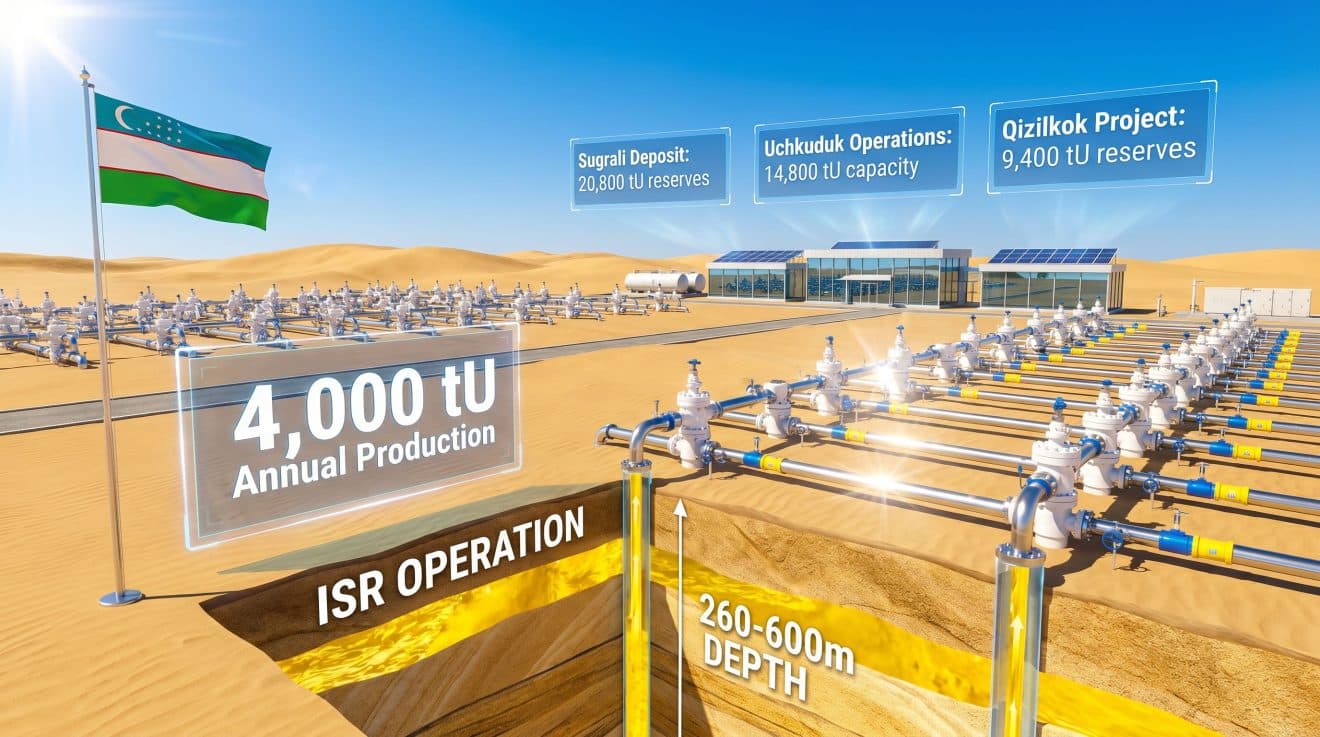
Uzbekistan is strengthening its role in the global uranium market through the adoption of advanced in-situ recovery (ISR) technology, transforming how the resource is extracted and processed.
The country is currently among the world’s top uranium producers, with output reaching around 7,000 tonnes in 2025, driven largely by operations of state-owned company Navoiyuran.
Shift to modern mining methods
ISR technology, widely used in Uzbekistan, allows uranium to be extracted by injecting a solution underground to dissolve the mineral, which is then pumped to the surface. This method significantly reduces the need for traditional mining infrastructure such as open pits or underground shafts.
Experts say the technique is particularly effective in the geological conditions of the Kyzylkum Desert, where sandstone deposits allow efficient fluid circulation.
Cost and efficiency gains
At new projects such as Qizilkok, Navoiyuran has introduced a low-reagent oxygen-based leaching process, which reduces chemical use and lowers production costs by up to three times compared to conventional methods.
The technology also improves recovery rates and minimises environmental impact, making it a key part of Uzbekistan’s long-term mining strategy.
Expanding production capacity
Uzbekistan’s uranium sector is supported by a large resource base, with more than 40 deposits across the country. Major sites such as Sugrali, Uchkuduk and Qizilkok are driving production growth and helping meet global demand for nuclear fuel.
The government aims to further expand uranium mining and processing capacity by 2030, positioning the country as a стабильный supplier in international markets.
Balancing growth and sustainability
While ISR is considered more environmentally friendly than traditional mining, experts note the importance of strict monitoring to protect groundwater and surrounding ecosystems.
As demand for nuclear energy increases worldwide, Uzbekistan’s combination of technological innovation and resource potential is expected to play a growing role in the global energy transition.