Indirect U.S.-Iran Peace Talks Loom as Iranian Envoy Lands in Pakistan

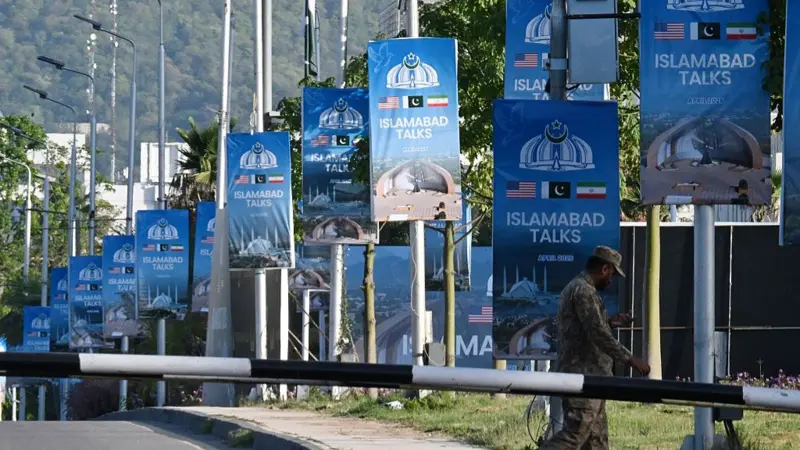
Iranian Foreign Minister Abbas Araqchi travelled to the Pakistani capital of Islamabad on Friday to explore proposals for resuming peace negotiations with the United States, Reuters reports. The diplomatic push offers a glimmer of hope for resolving an eight-week conflict that has resulted in thousands of casualties and triggered massive disruptions across global energy markets.
While U.S. President Donald Trump stated on Friday that Tehran plans to present an offer to satisfy American demands, the exact details of the proposal remain unknown. Trump refrained from naming his negotiating counterparts but confirmed his administration is dealing directly with the current leadership.
Despite the optimistic tone from Washington, Iran’s foreign ministry took to X to clarify that Iranian officials have no plans to meet face-to-face with U.S. representatives. Instead, Tehran’s concerns will be relayed through Pakistani mediators.
Special envoys departed for Pakistan
This indirect approach comes even as White House press secretary Karoline Leavitt announced that U.S. special envoys Steve Witkoff and Jared Kushner were scheduled to travel to Pakistan on Saturday. Leavitt added that Vice President JD Vance, who previously led a round of unsuccessful negotiations, is also prepared to join the diplomatic mission.
The ongoing war has led to a costly stalemate characterised by an aggressive U.S. bombing campaign and Iran’s strategic blockade of the Strait of Hormuz. The standoff has choked Iranian oil exports whilst driving U.S. petrol prices to multi-year highs.
In Islamabad a heavy security presence was visible as Araqchi headed straight to the Serena Hotel to meet Pakistani Foreign Minister Ishaq Dar. Further bolstering the mediation efforts, Qatar’s Emir Sheikh Tamim bin Hamad Al Thani pledged his nation’s support during a telephone call with Trump. Araqchi noted on social media that his diplomatic tour will also include stops in Oman and Russia to coordinate on regional developments.
Meanwhile U.S. Defence Secretary Pete Hegseth suggested Iran still has an opportunity to secure a favourable deal provided the nation verifiably abandons its pursuit of nuclear weapons.
The urgency of the talks is underscored by the dire situation in the Strait of Hormuz. Trump recently demanded an «everlasting» agreement and imposed a reciprocal blockade on Iranian shipping. Currently the world’s most vital energy shipping route is almost entirely paralysed. Shipping data revealed that only five vessels crossed the strait over a 24-hour period on Friday compared to the pre-war average of 130.
Markets in shock
Oil markets remain jittery as traders assess the historic supply shock. On Friday Brent crude futures rose slightly to settle at $105.33 a barrel while U.S. West Texas Intermediate dropped 1% to $94.88.
Adding complexity to the geopolitical landscape is the parallel conflict in Lebanon. Although Israel and Lebanon agreed to extend a U.S.-brokered ceasefire for another three weeks, hostilities show little sign of truly abating.
Hezbollah lawmaker Ali Fayyad dismissed the truce as meaningless in the face of ongoing Israeli military operations, pointing to recent assassinations, shelling and the demolition of southern Lebanese villages. Israel’s military confirmed it had killed six armed Hezbollah operatives on Friday, maintaining a volatile environment that Tehran insists must be pacified as a strict precondition for broader peace talks.