
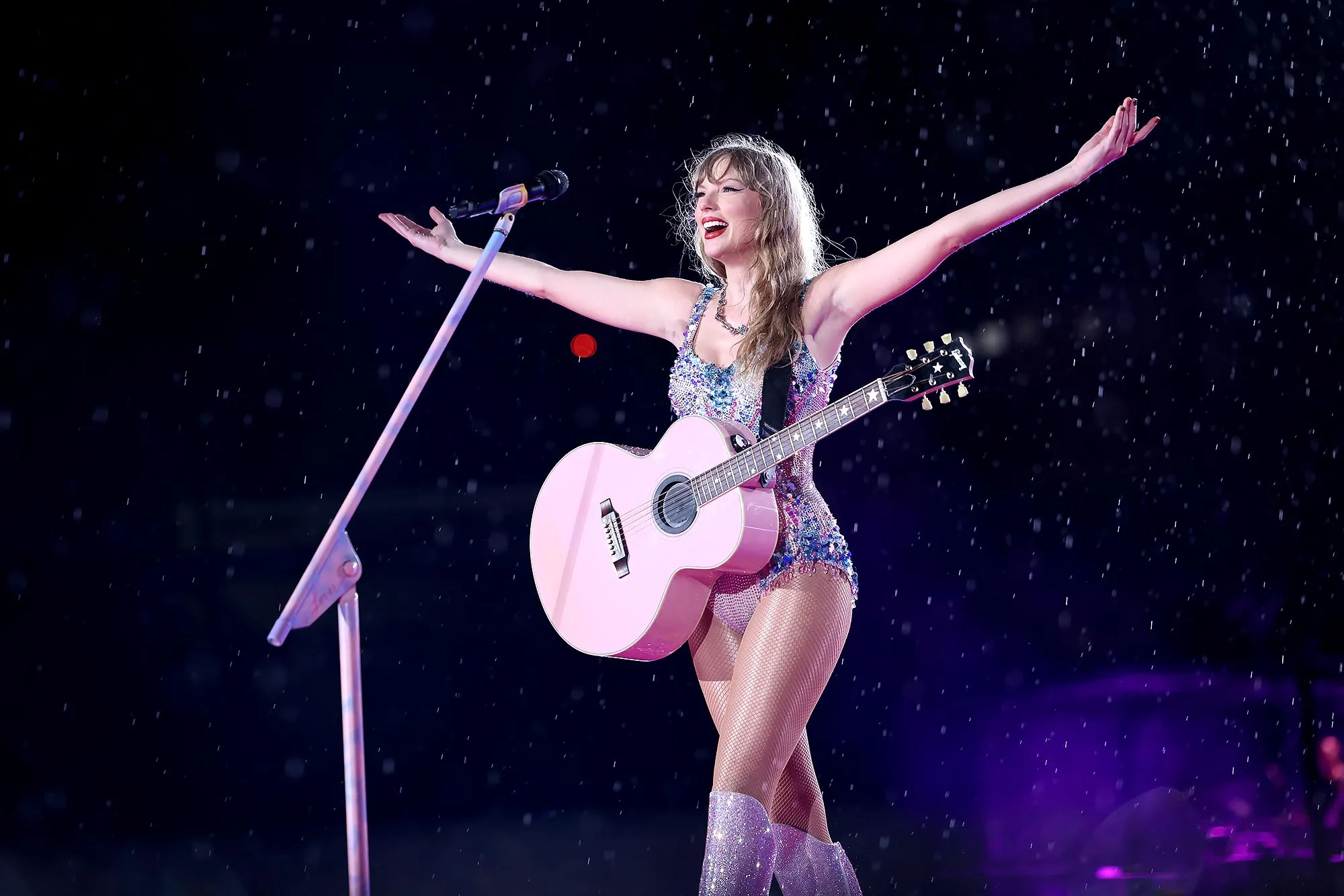
Taylor Swift is taking novel legal measures to safeguard her identity from the growing threat of artificial intelligence, Variety reports. Following a blueprint established by actor Matthew McConaughey, Swift has recently filed a series of trademarks designed to protect her distinctive voice and visual persona.
On Friday April 24, the singer’s firm TAS Rights Management submitted three applications to the U.S. Patent and Trademark Office (USPTO). Intellectual property lawyer Josh Gerben identified the filings, which aim to legally ring-fence specific aspects of her brand:
- Voice Trademarks: Two separate audio marks cover the spoken phrases and .
- Visual Trademark: A highly detailed image description featuring Swift holding a pink guitar with a black strap while wearing a multicoloured iridescent bodysuit and silver boots. The protected scene also includes a pink stage, a multicoloured microphone and purple background lighting.
The battle against artificial intelligence
Gerben notes that these preemptive moves highlight widespread industry anxieties regarding the potential for AI to hijack an artist’s voice or likeness without authorisation.
Taylor Swift is intimately familiar with this digital threat. Her image has been exploited by unauthorised AI fabrications across the internet. These include Meta chatbot avatars, illicit adult content and politically motivated deepfakes shared by Donald Trump ahead of the 2024 U.S. presidential election.
A federal shield
Traditionally, trademarks are not meant to guard an individual’s general persona, voice or appearance. Instead, the legal team behind McConaughey’s recent filings developed a workaround theory: securing specific trademark protections offers a federal avenue to combat AI misappropriation that extends beyond standard right-of-publicity claims.
While states like New York and California possess right-of-publicity laws to stop the unauthorised commercial use of a person’s likeness, federal trademark infringement lawsuits carry nationwide weight. This provides a significantly stronger deterrent against bad actors.
McConaughey successfully tested these waters in 2025 when the USPTO granted him eight trademarks. These included audio of his famous «Alright, alright, alright!» catchphrase from the 1993 film Dazed and Confused alongside various other audio and video clips.
Testing new legal waters
In a recent blog post, Gerben explored how Taylor Swift might utilise this strategy to enforce her rights. He suggested that if an AI platform generated audio mimicking the singer, she could argue that the output violates her registered audio trademarks. The image-based filing operates similarly, giving her legal grounds to target AI-generated pictures that specifically evoke her signature stage presence.
While this «trademark yourself» strategy remains largely untested against AI in court, it theoretically empowers artists to issue rapid takedown notices in the same manner that film studios protect their intellectual property.
For instance, in December 2025, Disney compelled Google to swiftly remove content from its Gemini AI platform after alleging the system was illegally generating its trademarked characters.
Meanwhile, Taylor Swift is currently navigating an entirely separate intellectual property dispute. In March, Las Vegas entertainer Maren Wade launched a lawsuit claiming Swift’s 2025 album The Life of a Showgirl infringed upon her decade-old trademark for Confessions of a Showgirl.
The USPTO had already rejected Swift’s trademark application for the album title last year, citing a high likelihood of confusion with Wade’s pre-existing registration.