
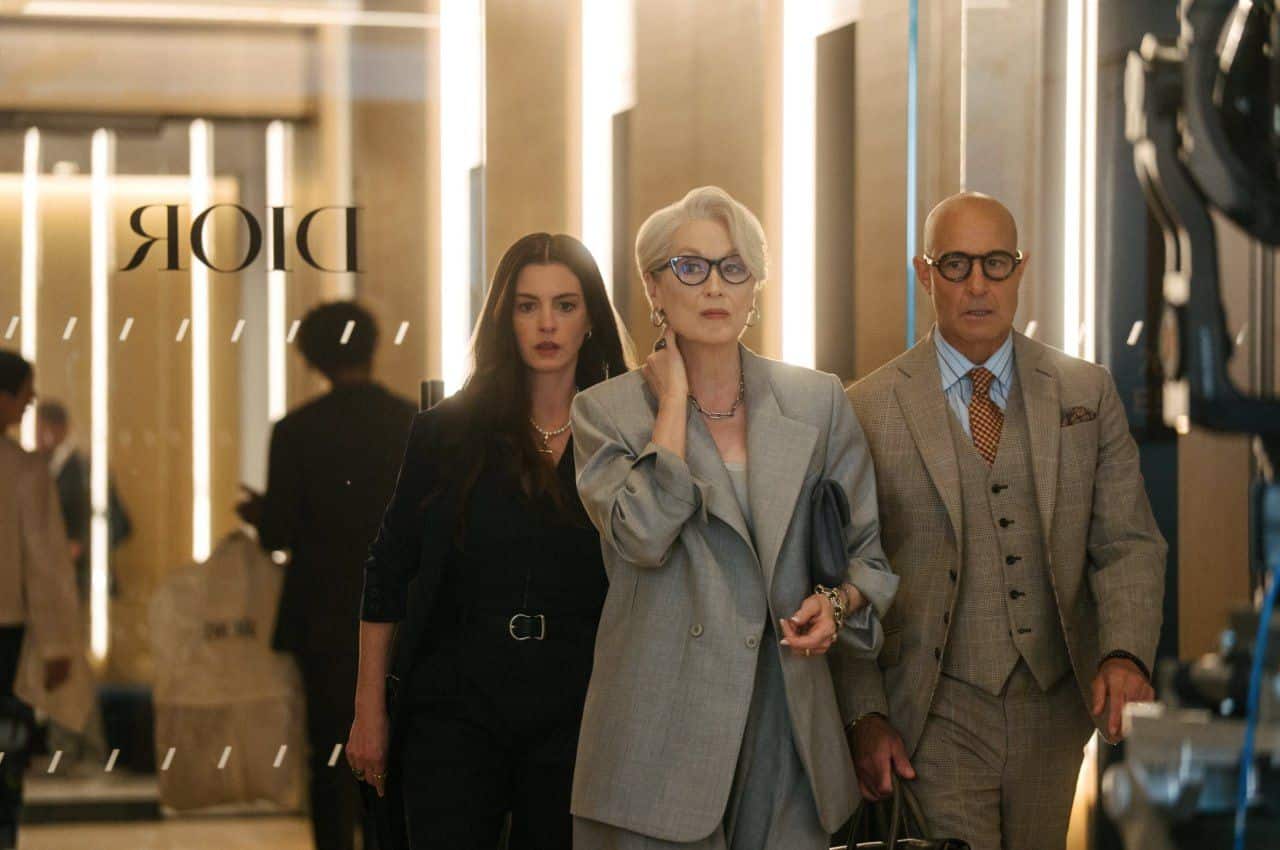
The sequel to the smash hit about the glossy magazine industry was a very long time in development, and then in production. Finally, after more than 19 years, the continuation of the satirical workplace drama about the backstage of Runway fashion magazine, the on-screen doppelganger of American Vogue, is triumphantly showing in cinemas worldwide. In its opening weekend alone, The Devil Wears Prada 2 grossed $233 mln at the international box office.
In 2026, Andrea «Andy» Sachs (Anne Hathaway) receives a prestigious reporting award for her articles on social issues, but right in the middle of the ceremony, she and all her colleagues at the serious publication receive text messages informing them they are being fired.
Just a stone’s throw away in Manhattan, Runway magazine, the bible of the bohemian bourgeoisie for decades, is dying a slow death. The new era forces them to churn out «multimedia content» that becomes obsolete the very same day. The great and terrible Miranda Priestly (Meryl Streep) finds herself under fire from all sides after her magazine’s website foolishly publishes a glowing review of a brand that uses Asian sweatshops.
The elderly head of the media conglomerate that owns the legendary magazine hires Andy to save the day with her characteristic social conscience. The editorial office still suffers from the same toxic atmosphere, the same maxims like «a million girls would kill for this job» are still bandied about, and the magazine’s art direction is still overseen by the wistfully ironic gay art director Nigel (Stanley Tucci), the last knight of Haute Couture. However, a few things have changed. For instance, Miranda is now strictly forbidden by HR from flinging her Prada coats at her assistant’s face.
As for the former assistant Emily, Andy’s predecessor (Emily Blunt), she has enjoyed a dizzying career rise and now heads the Dior fashion house in New York. Her new boyfriend is a gormless tech billionaire (Justin Theroux), who at some point decides he wants to buy the media empire of which Miranda Priestly has been the face for so many years.
The intrigue surrounding this business deal serves, in essence, as the sole means of enlivening the plot. The entire charm of the second film rests on nostalgia for 2006. The majority of the funny and touching scenes are calculated acts of fan service. And, naturally, the lion’s share of this nostalgic appeal lies in the gags, quips, and grimaces of Meryl Streep’s character, modelled on former Vogue editor-in-chief Anna Wintour.
Streep masterfully transforms the image of the cold, terrifying glamour icon in the sequel, revealing the bewilderment of a queen behind her icy mask; one who realises there is no longer a place for her in the madcap world of fast-paced digital capitalism. Even during a shoot in Milan, she allows herself a brief moment of vulnerability and sentimentality, something that has never happened to her before.
The acting performances of both Meryl Streep and the other central characters do, however, elevate The Devil Wears Prada 2 beyond basic fan service. Which, incidentally, the filmmakers decided to tone down slightly at the last minute. Out of the numerous celebrity cameos, only a brief minute with Donatella Versace and a fabulous number by Lady Gaga singing on the runway at Milan Fashion Week survived the edit.
Director David Frankel and screenwriter Aline Brosh McKenna inject a touch of melancholic satire into the scenes featuring one of the world’s richest men, Benji Barnes. He thinks only of profit and vulgar ostentation, and knows absolutely nothing about art or fashion. He is an obvious hybrid caricature of Jeff Bezos and Elon Musk. In his vacant eyes, Miranda clearly foresees the ultimate demise of everything she holds dear. The only saving grace is the happy ending featuring a genuine dea ex machina.
Perhaps the most fascinating aspect of the film’s production history, however, is how it echoes current affairs. The storyline of the dim-witted billionaire appeared in the script long before Amazon owner Jeff Bezos attempted to purchase Vogue magazine as a gift for his new wife, Lauren Sanchez.
Furthermore, the stylishly presented protest against soulless corporations destroying everything historic and legendary is particularly intriguing when one remembers the controversial buyout of the oldest Hollywood studio, 20th Century Fox, where both films about Miranda Priestly were shot, by the mega-conglomerate Disney.