
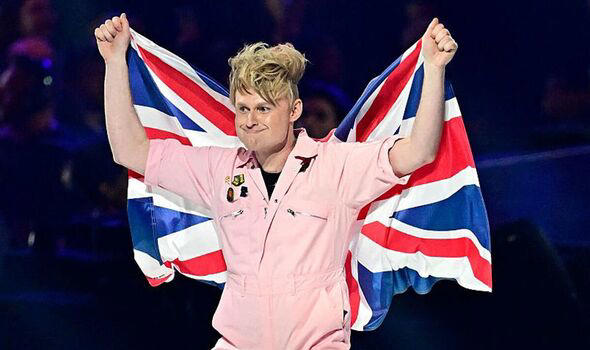
The United Kingdom’s latest Eurovision disappointment has reignited debate over why the country continues to struggle at the contest, despite sending increasingly diverse performers and staging ambitious performances.
The UK finished last at Eurovision 2026 with just one jury point and no points from the public vote for «Eins, Zwei, Drei» by inventor and musician Sam Battle, known as Look Mum No Computer. The result came despite praise from some fans for the act’s originality and energy.
Commentators and Eurovision observers argue the problem goes beyond individual performers. Critics point to inconsistent song selection strategies, weak public support for the competition in Britain and difficulties attracting established artists to represent the country. Discussions among Eurovision fans also highlighted concerns that the BBC’s approach to selecting entries has lacked a long-term strategy compared with successful Eurovision nations such as Sweden and Italy.
The UK has not won Eurovision since 1997 and has recorded several last-place finishes in recent decades. While Sam Ryder’s second-place finish in 2022 showed that strong results are possible, analysts say sustained success will require a clearer vision, stronger songs and greater investment in the competition.
Despite the latest setback, many fans insist the performers are not to blame, arguing that broader structural issues within the UK’s Eurovision strategy must be addressed if the country hopes to return to the top of the scoreboard.