Mirziyoyev Heads to Russia as Uzbekistan Launches Landmark Nuclear Power Project

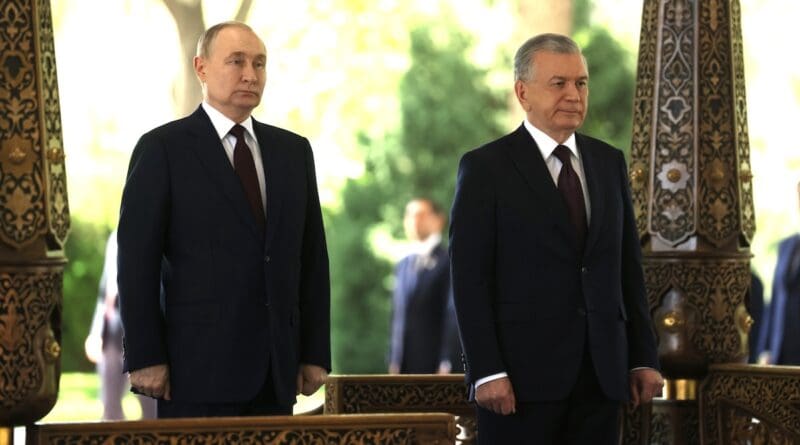
Uzbek President Shavkat Mirziyoyev will pay a working visit to St. Petersburg on June 4–5 at the invitation of Russian President Vladimir Putin, with the launch of Uzbekistan’s first integrated nuclear power plant expected to be a centerpiece of the trip.
According to the presidential press service, Mirziyoyev will participate in the plenary session of the 29th St. Petersburg International Economic Forum (SPIEF), where he is expected to discuss global economic trends, Uzbekistan’s development priorities and prospects for expanding economic cooperation with Russia.
The visit will also include bilateral talks with Putin and a ceremony marking the start of construction of the nuclear facility in Uzbekistan’s Jizzakh region. Developed jointly by Uzbekistan’s Uzatom agency and Russia’s Rosatom, the project will combine two VVER-1000 reactors with a capacity of one gigawatt each and two RITM-200N small modular reactors with a capacity of 55 megawatts each. Officials describe it as the world’s first integrated nuclear power plant combining large-scale and small modular reactor technologies.
Preparatory work at the site is already underway, including excavation and infrastructure development. During the visit, the two presidents are expected to participate via videoconference in a ceremony launching construction of the project’s first power unit. Representatives of Rosatom, Uzatom and the International Atomic Energy Agency are also expected to attend.
The nuclear project reflects deepening economic ties between the two countries. Russia remains Uzbekistan’s second-largest trading partner after China, with bilateral trade reaching $4.52 bn in the first four months of 2026. Both governments have set a target of increasing annual trade turnover to $30 bn by 2030.
Investment cooperation has also expanded, with more than 415 joint projects worth $55.6 billion currently under implementation and over 3,000 enterprises involving Russian capital operating in Uzbekistan. The leaders are also expected to discuss labour migration, as Russia continues to host around 1.3 mln Uzbek migrant workers despite Tashkent’s efforts to diversify employment opportunities abroad.