Unprecedented 49,000 migrants cross into Spain’s Ceuta enclave

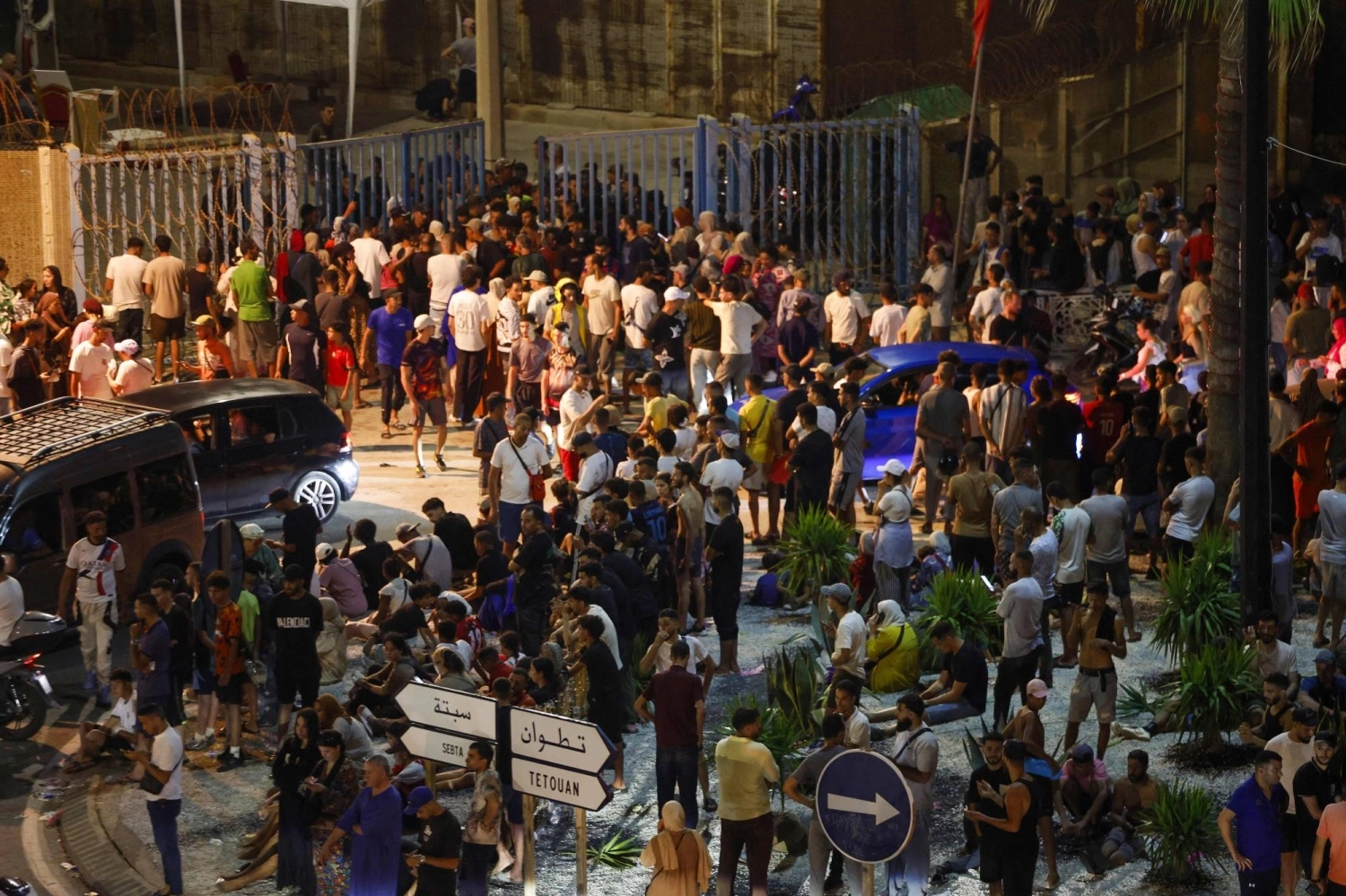
Spain has deployed the military to its North African territory of Ceuta after an estimated 49,000 migrants breached the border from Morocco within a 24-hour period. The sudden influx represents more than half of the enclave’s total population and has completely overwhelmed local authorities.
Images and video footage revealed thousands of individuals swimming around the breakwater to reach Spanish beaches on Thursday. The crossing has carried a deadly toll, with officials confirming at least 18 fatalities in recent days. The massive surge follows a recent ruling by Spain’s Supreme Court preventing the summary return of migrants intercepted at sea while attempting to reach Ceuta or Melilla.
A complete border collapse in Ceuta
Typically, those attempting to enter the territory must swim several kilometres from further along the Moroccan coast. This time, however, groups easily approached the border fence on foot. Many walked directly across the rocks while others swam short distances to the beaches. The whereabouts of Moroccan border guards during the initial surge remains unclear, as authorities made no apparent attempt to stop the crowds.
The demographics of the arrivals span across age groups. While the majority are young Moroccan men, officials estimate that thousands of minors made the illegal crossing alongside women and infants.
Melilla, Spain’s other North African exclave, also reported between 300 and 400 attempted crossings overnight. Both territories have belonged to Spain since the 15th century and represent the European Union’s only land borders with Africa.
Diplomatic tensions reignited
The border crisis coincides with renewed diplomatic friction between Madrid and Rabat. Morocco has long coveted both Ceuta and Melilla, frequently using migration as leverage during geopolitical disputes. A similar but smaller surge occurred in 2021 when thousands of people crossed after a disagreement over the sovereignty of Western Sahara.
Tensions have flared again following Prime Minister Pedro Sánchez‘s recent visit to Algeria, a nation that actively backs independence for the disputed Saharan region. Spain’s interior ministry stated it is collaborating with Moroccan authorities to facilitate the swift return of the migrants, while Sánchez is scheduled to visit Ceuta on Friday.
Fear and chaos on the streets of the enclave
The unprecedented arrivals have brought Ceuta to a standstill. Residents report a climate of fear, with empty streets and overwhelmed public services.
«Nobody is going out on the street,» one local told the Spanish newspaper ABC.
A hospital security guard described the situation as far more aggressive than previous incidents, claiming that the arrivals were seeking to abuse the system rather than fleeing poverty.
For the migrants themselves, the reality on the ground is grim. Those who successfully crossed are now stranded in the enclave, unable to reach the Spanish mainland. One returning migrant pleaded with others not to attempt the journey, noting the mounting death toll. Yet for many, returning is not an option. Yassine, a 24-year-old arrival, said he had nothing left in his home country, describing Morocco as «death».
European leaders clash over Schengen
The crisis has reverberated across Europe, triggering a bitter diplomatic row between Spain and Italy. Italian Prime Minister Giorgia Meloni called the images from Ceuta shocking and labelled the uncontrolled immigration a direct security threat to the continent.
Le immagini che arrivano da Ceuta sono impressionanti e dimostrano, ancora una volta, che l’immigrazione clandestina fuori controllo rappresenta una minaccia concreta per la sicurezza dei confini europei.
— Giorgia Meloni (@GiorgiaMeloni) July 30, 2026
Mi sono confrontata con il Ministro dell’Interno Matteo Piantedosi.…
Meloni suggested suspending the Schengen Area agreement on free movement at the Italy-Spain border. Her stance was quickly backed by Italy’s foreign minister Antonio Tajani and Finland’s interior minister Mari Rantanen, who accused Madrid of failing to protect Europe’s external frontiers.
The rhetoric prompted a furious response from José Manuel Albares, Spain’s foreign minister. He accused Rome of weaponising immigration for political gain and summoned the Italian ambassador in Madrid. Albares dismissed the Italian comments as partisan demagoguery, stating they were entirely improper for a partner country from which Spain expects solidarity.
Este mensaje es impropio del Ministro de Exteriores de un país socio y amigo del que esperamos solidaridad europea y no demagogia partidista. Los hechos de hoy tienen relación con una sentencia, nada que ver con lo que dice el tuit. He convocado mañana al Embajador de Italia. https://t.co/8ZDSZ1Il5c
— José Manuel Albares (@jmalbares) July 30, 2026