China’s maglev train model hits 800 km/h in 5.3 seconds

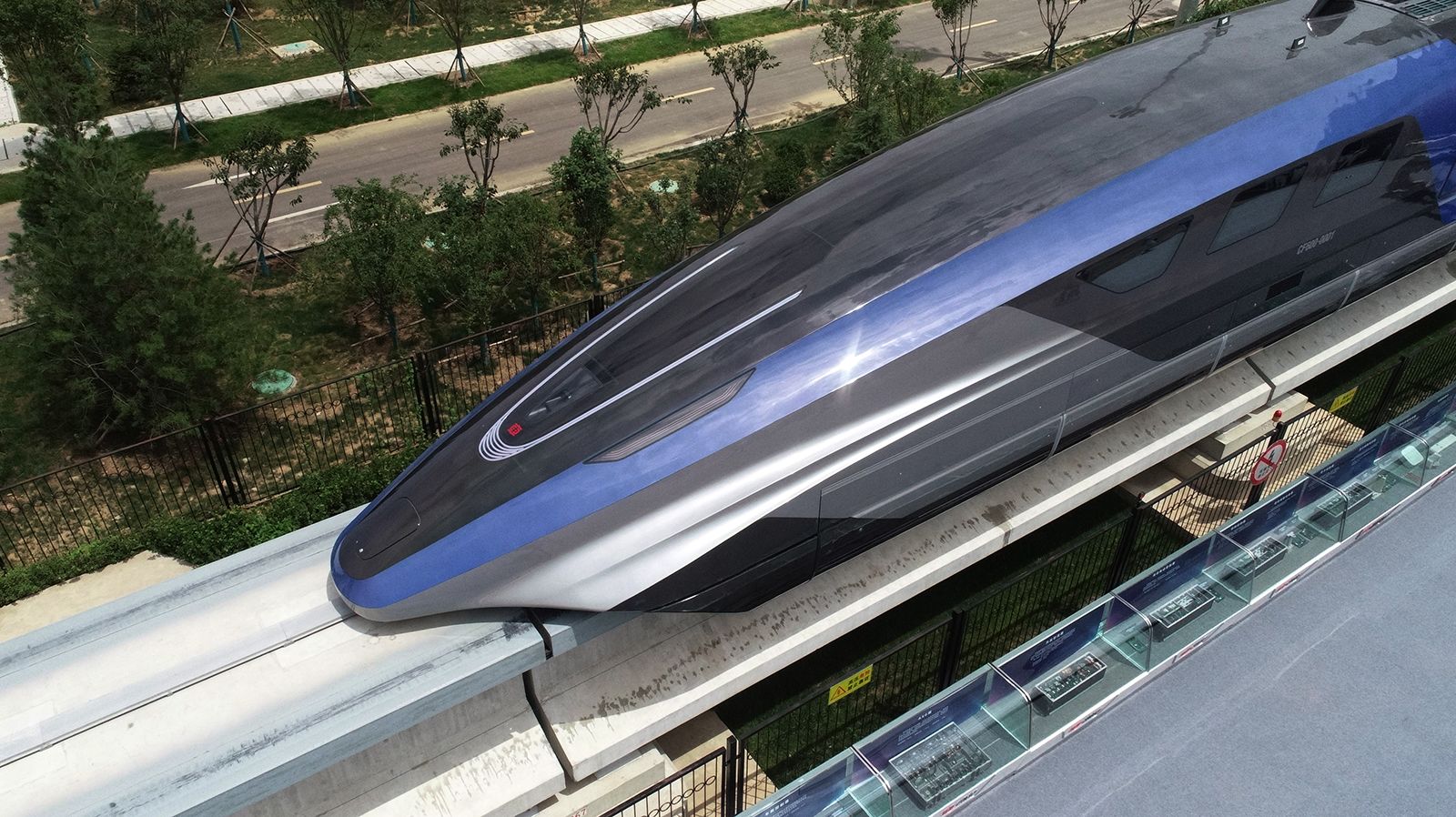
A Chinese magnetic levitation train model (maglev) achieved a significant technical breakthrough on a 1-kilometre high-speed test track at the Donghu Laboratory in Hubei.
The 1,110-kilogram test vehicle accelerated from a standstill to 800 km/h (approximately 500 mph) in just 5.3 seconds. This speed rivals the cruising velocity of some commercial airliners. The vehicle also demonstrated the ability to brake safely within a short distance.
According to a CCTV Finance report, this marks the third time in six months that the platform has broken the world record for maglev acceleration in its class.
The testing system simultaneously manages acceleration, levitation, positioning and emergency braking. It achieves millimetre-level positioning accuracy at high speeds. After reaching its maximum velocity, the test vehicle requires just over 200 metres to come to a smooth stop.
Breaking records and future applications
The test track conducted its first public trial in June 2025, reaching 650 km/h in 7.1 seconds to claim its first world record. By July of the same year, the team increased the speed to 700 km/h. The critical test achieving 800 km/h in 5.3 seconds took place in November, continuously rewriting global short-distance maglev acceleration records.
The system relies on electromagnetic propulsion, generating thrust through alternating magnetic fields in coils. The vehicle remains levitated throughout its operation, eliminating wheel-rail friction.
Industry experts say these three consecutive record-breaking runs validate China’s foundational technologies in high-power electromagnetic propulsion, transient power supply and high-speed levitation control. This provides crucial experimental data for future ultra-high-speed vacuum tube transport systems.
The propulsion technology has broad applications beyond transit. It could be adapted for aerospace electromagnetic launches, maglev elevators and industrial levitation transport equipment.
However, developers note this was a laboratory model test rather than a passenger-ready vehicle. Significant engineering hurdles remain before commercial passenger routes become viable. Engineers must still address energy consumption, vehicle scaling and high construction costs.
Kursiv also reports that Tashkent Metro eyes Chinese-made cars for fleet expansion.