NASA invites India to collaborate on South pole Moon Base project

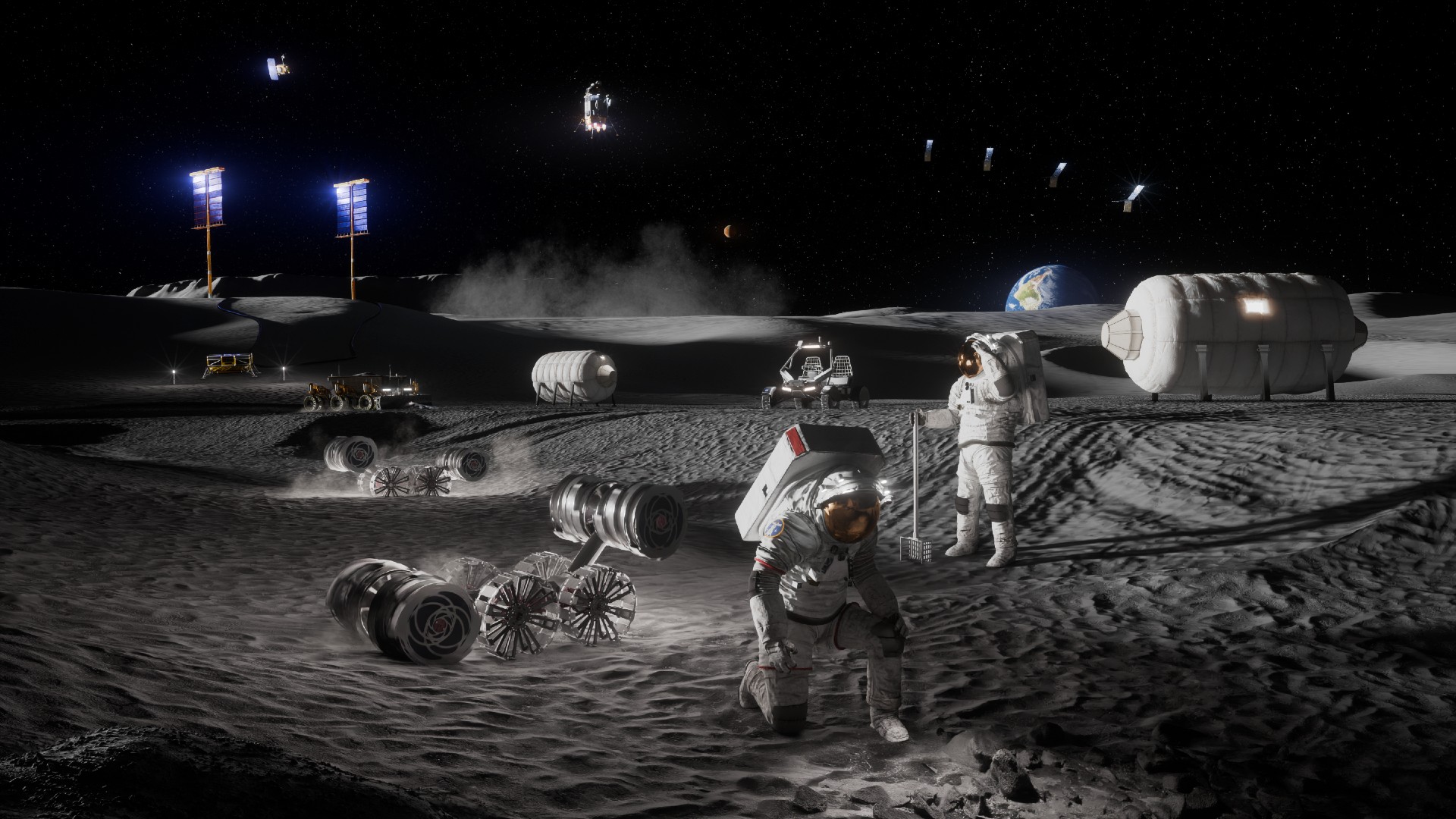
NASA has proposed a major expansion of its extraterrestrial partnership with New Delhi, inviting the Indian Space Research Organisation to participate in its upcoming Moon Base programme.
The offer emerged during the ninth India-US Civil Space Joint Working Group meeting held at ISRO headquarters on August 5-6. According to the US Embassy in India, discussions spanned human spaceflight technology, commercial sector collaboration and open scientific data sharing under the Artemis Accords framework.
Commercial partnershps fuel lunar expansion
If accepted, the partnership would integrate India into a multinational consortium developing infrastructure for a sustained human presence on the Moon. NASA is targeting the lunar South Pole for the facility.
The agency intends to construct the outpost incrementally through robotic missions, technology demonstrations and eventual crewed operations. This lunar architecture is explicitly designed to serve as a foundational proving ground for future expeditions to Mars.
Mankind's next giant leap is underway! @NASA is building a Moon Base: humanity's first outpost on the Moon. The base will drive lunar scientific breakthroughs and prepare for crewed missions to Mars. Check out the trailer and stay tuned as a big announcement drops soon.
— U.S. Embassy India (@USAndIndia) August 11, 2026
🎥… pic.twitter.com/E6A5emmVBS
The American space agency is already expanding the commercial elements of its programme. In June, NASA awarded contracts totalling nearly $600mn to Astrobotic, Firefly Aerospace and Intuitive Machines. These commercial entities will execute four lunar payload deliveries by late 2028 to support the outpost’s initial development and run scientific investigations.
Building on established momentum
India has steadily aligned itself with Washington’s extraterrestrial objectives. New Delhi became the 27th signatory to the Artemis Accords in June 2023, committing to a framework that establishes principles for civil exploration and the peaceful use of space. During the August working group sessions, officials agreed to continue discussions regarding scientific data sharing under this specific agreement.
The Moon Base invitation arrives shortly after the successful launch of the NASA-ISRO Synthetic Aperture Radar mission in July 2025. The NISAR project, designed to study changes on Earth using radar observations, set a strong precedent for high-level technical integration between the two agencies.
Diplomats used the latest meetings to explore extending this cooperation beyond Earth observation directly into space science and human spaceflight.
Independent ambitions align with joint goals
Independent ambitions align with joint goals
India brings formidable standalone credentials to the proposed alliance. ISRO cemented its status as a top-tier space power in 2023 when Chandrayaan-3 executed a soft landing near the lunar South Pole, making India only the fourth nation to achieve the feat.
Beyond cooperative ventures, India is aggressively pursuing its independent Space Vision 2047 mandate. The ambitious roadmap outlines an Indian crewed lunar mission by 2040. ISRO is also developing the Bharatiya Antariksh Station. The domestic orbital outpost’s first module is slated for deployment in 2028, with the full station targeted for completion in 2035.
Strategic framework for sustained missions
Collaborating on the NASA lunar outpost could provide a vital platform for both nations. Shared scientific expertise, emerging technologies and operational experience generated by a joint Moon Base effort would prove invaluable as global space exploration transitions from isolated landings to sustained missions.
The recent bilateral talks in Bengaluru were conducted under the broader Transforming the Relationship Utilizing Strategic Technology initiative. The TRUST framework stems from a joint leaders’ statement issued by Indian Prime Minister Narendra Modi and US President Donald Trump in February 2025.