Chinese ex-PM and economic reformer Zhu Rongji dies at 98

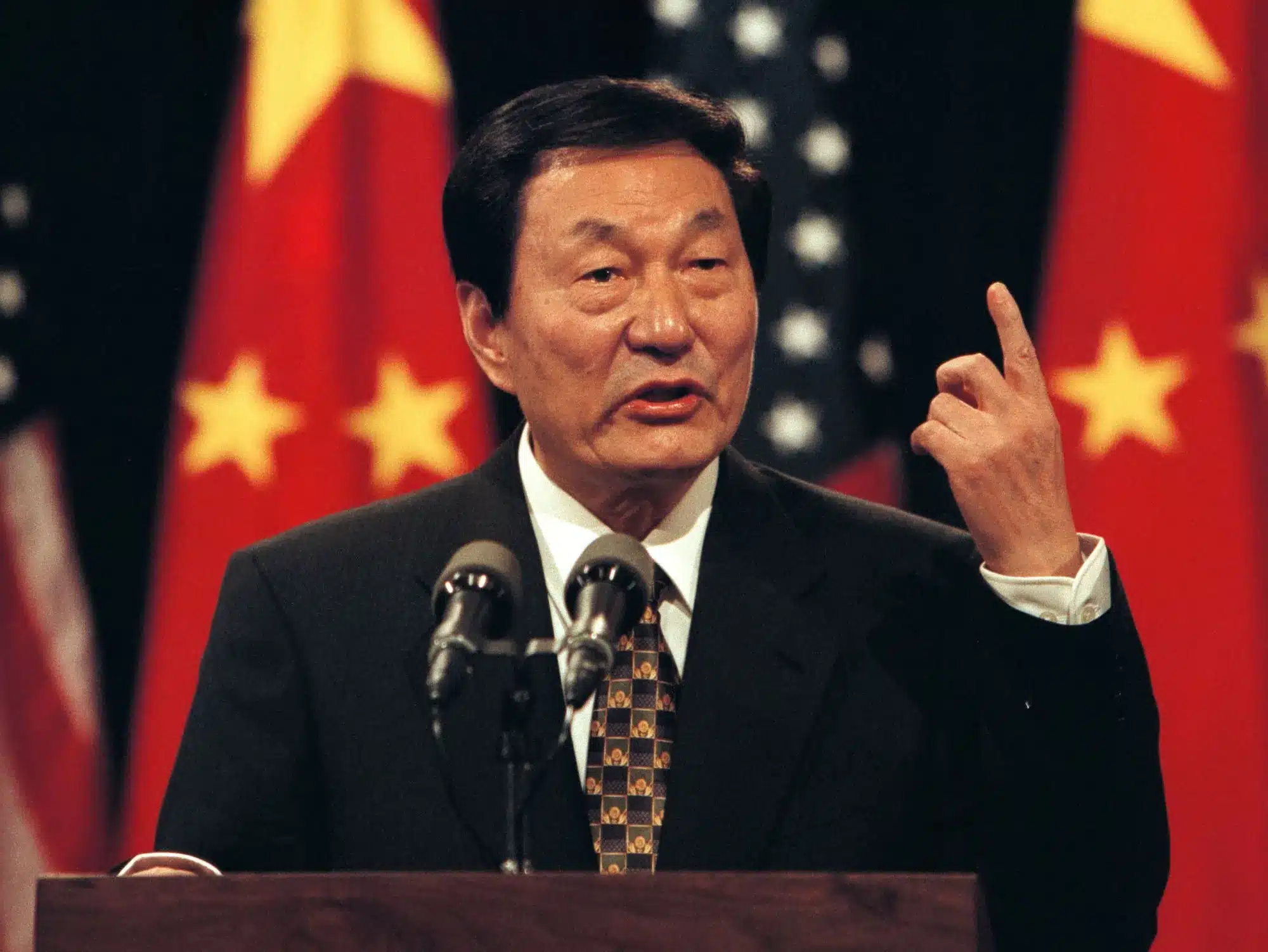
Former Chinese PM Zhu Rongji, a blunt reformer who drove China’s explosive economic growth in the 1990s and engineered its entry into the World Trade Organisation, died in Beijing on Wednesday.
State news agency Xinhua reported that Zhu died of an unspecified illness at 11:06 a.m.
As premier from 1998 to 2003 under President Jiang Zemin, Zhu served as the country’s economic tsar. He tackled systemic corruption, shook up the centrally planned economy and overhauled state-owned enterprises. His policies unleashed new market dynamics that set the stage for over a decade of rapid national growth.
Revitalising a state-controlled economy
Born into a wealthy landowning family in Hunan province, Zhu graduated with an electrical engineering degree from Tsinghua University. He joined the Communist Party in 1949 just before Mao Zedong established the People’s Republic. Like many intellectuals, he suffered political exile during the Cultural Revolution before eventually returning to government service. Following the 1989 Tiananmen Square crackdown, paramount leader Deng Xiaoping elevated him to vice premier to help stabilise the government and restart stalled economic reforms.
His crowning achievement came in 2001 when he successfully negotiated China’s accession to the WTO, fully integrating the country into the international trading system. After retiring in 2003, he largely stayed out of public view but remained a highly influential figure among reformist officials who viewed his tenure as a blueprint for modernising the nation.
Forging ties with Uzbekistan and the SCO
Zhu Rongji was also directly involved in the early development of cooperation between China and Uzbekistan through the Shanghai Cooperation Organisation. At the SCO’s first meeting of heads of government in Almaty in September 2001, China’s then-premier Zhu met with then-Uzbek Prime Minister Utkir Sultanov and other leaders from the organisation’s member states. The meeting focused on expanding cooperation within the newly established grouping and building its institutional framework.
Zhu advocated for accelerating work on the SCO Charter and strengthening the organisation’s security mechanisms, including the establishment of an anti-terrorism centre. These priorities became important elements of the SCO’s subsequent development, with Uzbekistan later becoming home to the organisation’s Regional Anti-Terrorist Structure in Tashkent.
