Fresh cup of street art: “Uzbek Banksy” Inkuzart paints tea mural in Turkey

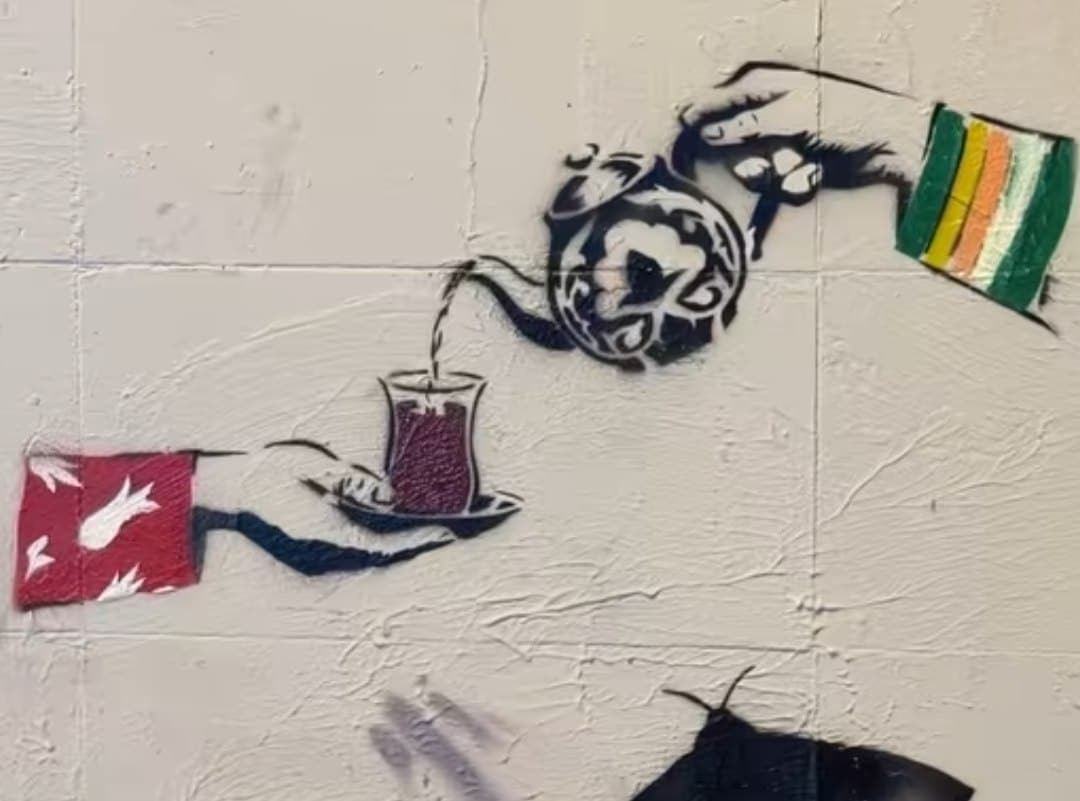
Known as the «Uzbek Banksy», the anonymous street artist Inkuzart has taken his distinct visual commentary across borders with his first mural in Turkey.
The artwork depicts a symbolic cultural exchange centred around a shared regional love for tea, painted on a white wall in a pedestrian underpass at Karaköy subway station. The piece features two disembodied hands reaching towards each other.
One hand holds a traditional tulip-shaped Turkish tea glass, while the other pours a brew from a classic Uzbek teapot. A small moth, Inkuzart’s signature motif, rests quietly in the corner of the composition.
A tale of two tea cultures
By bringing the two vessels together, the artist highlights a deep cultural connection between the Turkic nations. In Turkey, black tea is deeply woven into the fabric of daily life. The country boasts one of the highest per capita consumption rates globally, with leaves primarily harvested in the Black Sea region of Rize.
The brew is traditionally prepared in a double teapot and served in curved glasses known as bardak, which are designed to showcase the liquid’s deep crimson colour while keeping it hot.
Conversely, tea in Uzbekistan acts as the bedrock of local hospitality. The Uzbek tea ceremony involves a specific ritual called qaytar, where the host pours the tea into a piala and returns it to the pot three times before serving the guest. This process mixes the brew perfectly and demonstrates respect.
The vessel depicted in the mural is just as culturally significant. Uzbek tea is typically poured from distinct ceramic teapots adorned with the paxta (cotton) motif. This blue and white geometric pattern features stylised cotton bolls, reflecting the republic’s massive agricultural output. The design dates back to the Soviet era and remains a ubiquitous fixture in Central Asian households.
The elusive street artist
The Turkish mural represents a rare international excursion for Inkuzart. The elusive graffiti artist originally gained prominence on the streets of Tashkent by creating striking stencils that tackle local politics, economic struggles and cultural identity.
Much like his British counterpart, his true identity remains a closely guarded secret. His portfolio in the Uzbek capital includes poignant commentary on soaring inflation, domestic automotive monopolies and public health crises.
While municipal workers frequently paint over his local murals shortly after they appear, the artworks live on through widespread social media circulation.