Property laws in Uzbekistan: How to buy and rent as a foreigner

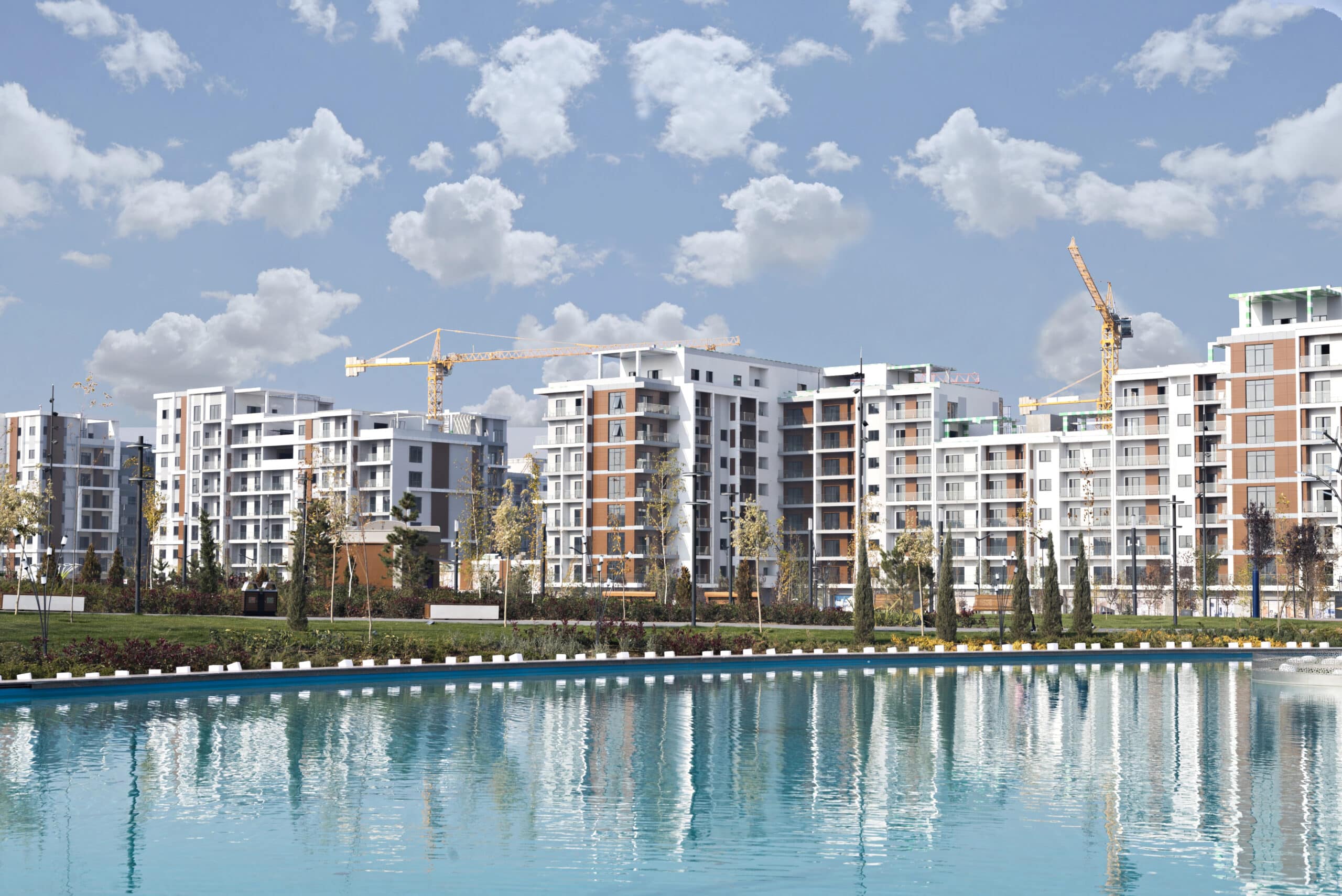
Foreigners can buy apartments and houses in Uzbekistan, but the rules vary by nationality, residence status and property value. Kursiv Uzbekistan explains who can buy, how renting works and what buyers and tenants should check before signing paperwork.
Disclaimer: Kursiv Uzbekistan verified the legislation and procedures as of August 2026. This article provides general information and is not a substitute for legal, tax or immigration advice on an individual transaction.
Can foreigners buy property in Uzbekistan?
How to buy property in Uzbekistan without a residence permit
Can a foreigner buy resale property in Uzbekistan?
How to rent a flat in Tashkent as a foreigner
Purchasing property in Tashkent can be relatively straightforward once the correct route is clear. The difficulty is not a blanket ban but a legal framework spread across presidential decrees, two nationality lists and detailed notarial rules.
That distinction matters in a fast-moving market. In 2025, Uzbekistan recorded 319,500 real estate purchase-and-sale transactions, up 15.8% year on year, according to the Central Bank. In the first quarter of 2026, the total was 110,051 transactions, up 48.4% from the same period in 2025.
Tashkent accounted for 32,790 of those transactions, a 64% year-on-year increase, according to the Central Bank’s Q1 report. That surge should not be read as demand alone: the bank says March activity was affected by buyers and sellers completing contracts before a new escrow settlement procedure took effect on 1 April 2026.
Finding the right flat is therefore only half the job for a foreign buyer. The first question is whether that buyer is entitled to purchase that particular property.
Can a foreigner buy property in Uzbekistan?
The short answer is yes.
Foreigners may buy apartments, houses and some commercial real estate. What route they can take depends on whether the buyer has an Uzbek residence permit, has a passport from one of the countries the government has approved, or falls under a special status like an IT Visa or the Vatandosh card, which is issued to ethnic Uzbeks residing abroad.
The main routes for Tashkent are as follows:
| Buyer’s position | Key property rules for Tashkent city and Tashkent region | Immigration effect |
| A citizen of one of Cabinet Resolution No. 384’s 108 countries without a residence permit | Qualifying new-build property worth at least $150,000 while under construction or $180,000 after commissioning | None |
| A citizen of one of the 111 countries listed in Annex 6 of Presidential Decree No. UP-5611 | Real estate worth at least $300,000 | Provides a property-linked residence permit, but immigration remains separate. |
| Uzbek residence permit or ID card holder | The buyer’s permanent-registration category and three-year or qualifying public-post condition may allow resale. Another qualifying residential new-build route starts at 3,300 base calculations (BRV). | No additional immigration status. |
| IT Visa holder, qualifying IT Park applicant or covered family member | If the buyer can prove IT status or recommendation, the minimum price and residence permit are waived. | No additional status created by the property purchase. |
| Vatandosh card holder | Exempt from the specified minimum-price and residence-permit requirements. | No additional status created by the property purchase. |
| Other foreign national | Needs Uzbek residence permit, ID card, or other special status and local notarial rules. | None |
These routes should not be combined. The 108-country new-build route and the 111-country property-linked residence route are, in particular, from different legislation and have different effects.
The exemption for the IT route can include the spouse, parents and children of an IT Visa holder. The recommendation to open an IT Park is equivalent to an IT Visa for certain foreign investors in IT, IT specialists and founders or participants of companies resident in IT Park coming from visa-free countries. The purchaser should verify that the recommendation is for the specific individual named in the contract of sale.
Read more: Uzbekistan’s real estate prices see 4% annual growth in Q2 2026
How to buy property in Uzbekistan without a residence permit
The 108-country list in Government Decree No. 384 includes Kazakhstan, Kyrgyzstan, Russia, the United Kingdom and the United States, among others. Eligibility is based on citizenship, not on where the buyer happens to live.
The purchase thresholds come from Presidential Decree No. UP-101. It allows eligible foreign citizens to buy newly built real estate, excluding land, without first obtaining an Uzbek residence permit.
The minimum property value in Tashkent, the Tashkent region, and Samarkand is as follows:
- $150,000 when the contract is concluded during construction;
- $180,000 after the property has been commissioned.
In all other regions, the thresholds are:
- $70,000 during construction;
- $85,000 after commissioning.
Decree No. 384 defines completed property as ‘newly built’ if the developer has commissioned it and established ownership rights within three years. Instead of trusting the developer’s marketing description, the buyer should ask the notary to verify the commissioning date and title history.
Read more: Uzbekistan’s construction sector secures $12bn over 10 years
Can a foreigner buy resale property in Uzbekistan?
A non-resident relying on the $150,000 or $180,000 Tashkent route is limited to qualifying new property. That exemption does not cover an ordinary flat on the secondary market.
The position changes for citizens of the 111 countries in Annex 6 to Presidential Decree No. UP-5611. They may use a qualifying real estate purchase to obtain a residence permit without already holding one. The minimum values are:
- $300,000 in Tashkent city and Tashkent region;
- $200,000 in Samarkand, Bukhara, Namangan, Andijan, Fergana and Khorezm regions;
- $100,000 in the autonomous republic of Karakalpakstan and all other regions.
Unlike the UP-101 route, this provision allows the purchase of both new builds and resale properties, and the term ‘real estate’ is broad. A June 2026 memo from law firm Azizov & Partners interpreted it as including residential and commercial property in both the primary and secondary markets.
Resale property may be available to foreigners with Uzbek residence permits or ID cards. government decree No. 726 adds permanent registration and status requirements for Tashkent and its region.
Decree No. 726 allows holders of residence permits or ID cards to buy qualifying newly built residential property in Tashkent city or region worth at least 3,300 base calculation units (BRV).
Read more: The real estate market ended 2025 with a 15.8% increase — Central Bank of Uzbekistan
This route defines ‘newly built’ as flats in multi-storey residential buildings and qualifying standard-design individual homes under construction but excludes privately built individual houses that have been owned for less than three years.
As of August 2026, the BRV was UZS 412,000, making the threshold UZS 1,359,600,000. Presidential Decree No. UP-115 raises the BCA to UZS 440,000 from 1 September 2026 and the threshold to UZS 1,452,000,000. The legal test is 3,300 BCA, not a fixed US-dollar amount, so the figure must be recalculated at the current transaction date.
How to rent a flat in Tashkent as a foreigner
Renting in Tashkent as a foreigner is simpler than buying, and the same national lease rules apply elsewhere in Uzbekistan. There is no minimum property value, and a foreign tenant does not need a passport from either approved buyer list.
A residential lease must be in writing and, when made between individuals, registered with the tax authorities under Article 603 of the Civil Code. Notarisation is generally not required for the lease. The landlord must normally complete tax registration through the electronic rental-contract service within three days of conclusion; official government guidance states that registration is free.
In a private rental, the owner or host and tenant should complete the applicable migration procedure together. A foreign permanent resident who changes their address generally has ten working days to register at the new place.
The tax-registered lease should therefore be obtained promptly, but neither party should assume that it automatically completes the tenant’s migration registration.
Articles 610–612 and 615 of the Civil Code set the following baseline rules for residential leases:
- no more than five years;
- If no term is stated, the lease is five years;
- The tenant usually has a preferential right to renew, but this does not apply to a one-year lease unless the contract says otherwise;
- The parties agree on rent, and unilateral changes are prohibited unless allowed by law or contract;
- A court order and statutory ground are needed for landlord-requested early termination;
- Unless the contract changes, the tenant pays for current repairs and the landlord for capital ones.
Unless the contract specifies a longer period, landlords can terminate short-term leases after six months or two missed payment deadlines. Damage, unlawful use, non-housing use, and warning disruption are other grounds.