
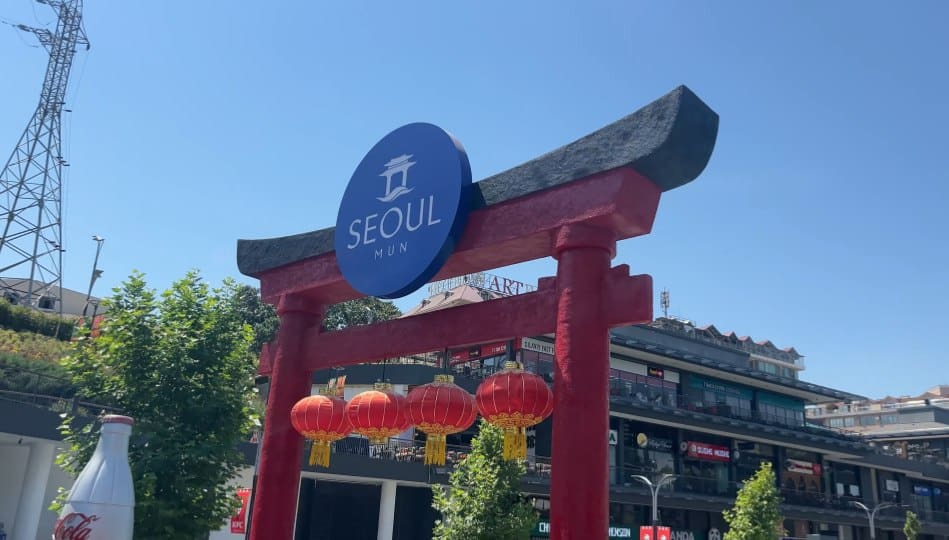
A Japanese torii gate, Chinese lanterns and «Seoul Mun» found themselves together at a Korea-themed district in Uzbekistan’s capital city of Tashkent, Ajupress reports. The installation didn’t go down well with a Korean expert.
Seoul Mun, a sprawling complex built along a canal in Tashkent, features architectural elements inspired by traditional Korean palace gates, tiled roofs and taegeuk motifs.
However, the site recently drew scrutiny for installing a large red structure reminiscent of a Japanese torii, traditionally used to mark the entrance of a Shinto shrine. The gate is additionally decorated with Chinese-style red lanterns.
Korean wave or cultural obscurity?

Seo Kyoung-duk, a professor at Sungshin Women’s University who campaigns to promote Korean heritage overseas, raised concerns on Tuesday about the installation. He argued the architectural choice misrepresents Korean identity and urged its immediate replacement.
«I believe it is a serious mistake to have installed a large structure resembling a Japanese torii at Seoul Mun,» Seo said. He added that the inclusion of Chinese lanterns further obscures the cultural messaging at a site meant to celebrate the Korean Wave.
The district has emerged as a major attraction for Tashkent residents and international tourists, representing the growing cultural ties between South Korea and Uzbekistan.
Seo warned that many visitors mistakenly view the torii-like gate as a symbol of the landmark itself, frequently filming and photographing the structure under the assumption it reflects Korean traditions.
However, there’s one notable aspect of Seoul Mun that needs consideration before criticism. The district hosts all sorts of Asian-style cuisines and shops. For locals, the context of antipathy between these cultures is foreign; only a select few know about it. The installation is therefore likely a result of simple ignorance, rather than a mockery of cultures.