Apple iOS 27 vs Samsung One UI 9: Which feels faster and looks better

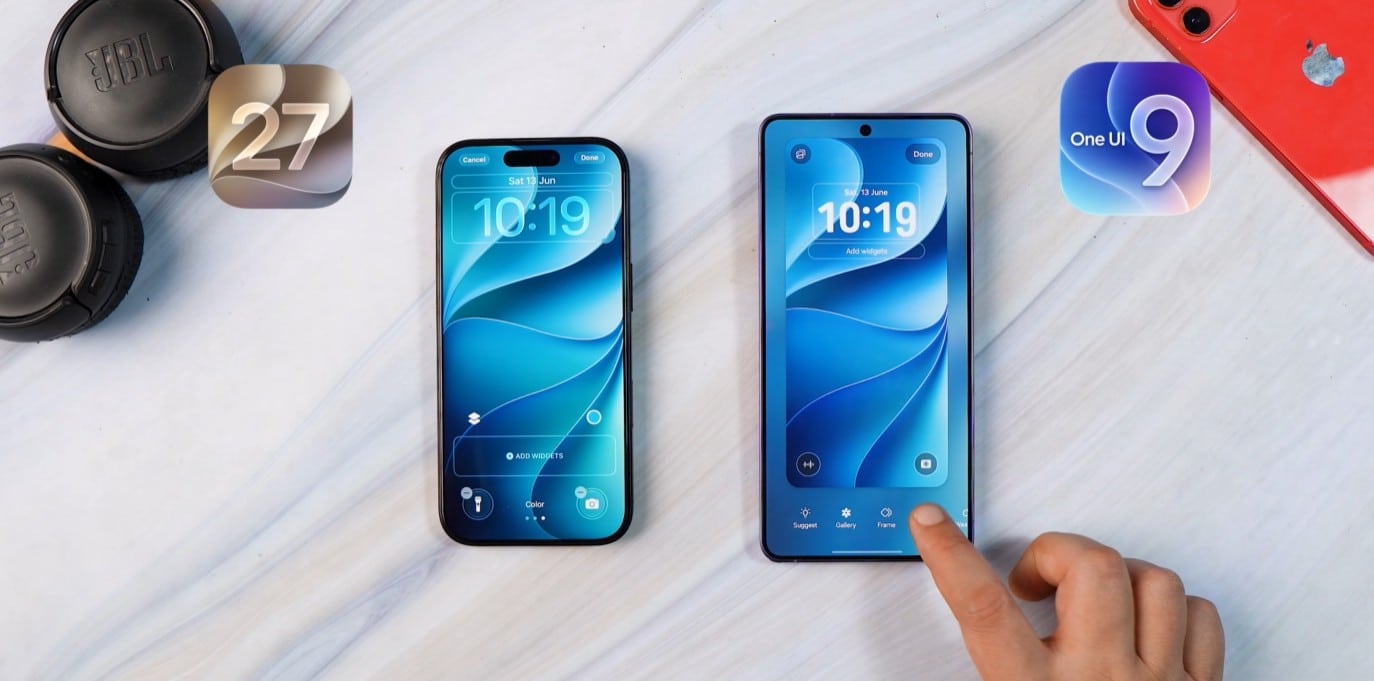
Apple’s iOS 27, released for 33 compatible devices on 14 September, gives iPhone owners a clearer upgrade timetable, while Samsung’s One UI 9 offers more ways to organise apps and use a folding screen.
Apple’s update arrived on 14 September on the back of the much-hyped device presentation last week. Samsung’s official One UI page describes a gradual expansion from its latest foldables to other Galaxy devices, directing owners to Samsung Members for release information.
For someone keeping an existing phone, that distinction can matter more than a new animation: an upgrade only becomes useful once their device receives it.
Is iOS 27 faster or smoother?
Apple claims that app launches are now up to 30% faster, new photos load up to 70% faster in the library and AirDrop transfers are up to 80% faster.
Those are Apple’s improvement figures, not measurements against One UI 9. They cannot support a headline declaring the iPhone 30% faster than Samsung.
Apple has also upgraded Liquid Glass with a better contrast and a slider to control how transparent it is. Samsung says navigation is smoother, and continuity improves when moving between screens or running apps together.
Find out more: OS 27 timings: when Apple’s update releases in Asia
App opening speed is one thing, but scrolling consistency and animation duration are another. A shorter animation can make a phone feel faster, but it won’t make a demanding task finish faster.
Where Samsung has the stronger case
One UI 9’s clearest advantage is flexibility, particularly on supported foldables.
Samsung lists two- and three-way split-screen layouts, additional window-snapping options in DeX and more controls for customising the Quick Panel. On the Galaxy Z Flip8, users can edit widgets and access more functions from the cover screen.
These are practical differences for people who work across several apps. However, foldable-specific features should not be presented as benefits available on every Galaxy phone.
Dig deeper: iPhone 18 Pro Max vs Galaxy S26 Ultra: which is worth the price tag?
iOS 27’s Siri comes with an asterisk
Apple’s redesigned Siri can search personal information, hold conversations and take actions in supported apps. Its initial English-language rollout makes language compatibility an essential check for international buyers.
Samsung’s additions include contextual suggestions through Now Nudge, spoken photo-editing instructions and My FanCam, which reframes a recording around a selected person. Availability varies by model, language and region.
The useful verdict is therefore narrower than «Apple wins» or «Samsung wins»:
| Priority | Stronger case |
| A clear major-update launch date | Apple |
| Multi-window work and interface customisation | Samsung, on supported hardware |
| AI assistance | Depends on the specific task, language and device |
| Faster apps and smoother scrolling | No overall winner established by the evidence reviewed |
Read more: iPhone Duo hands-on: perks, flaws and $1,999 trade-offs
