Global Cities Index: Moscow and Astana rank behind Tashkent in economy

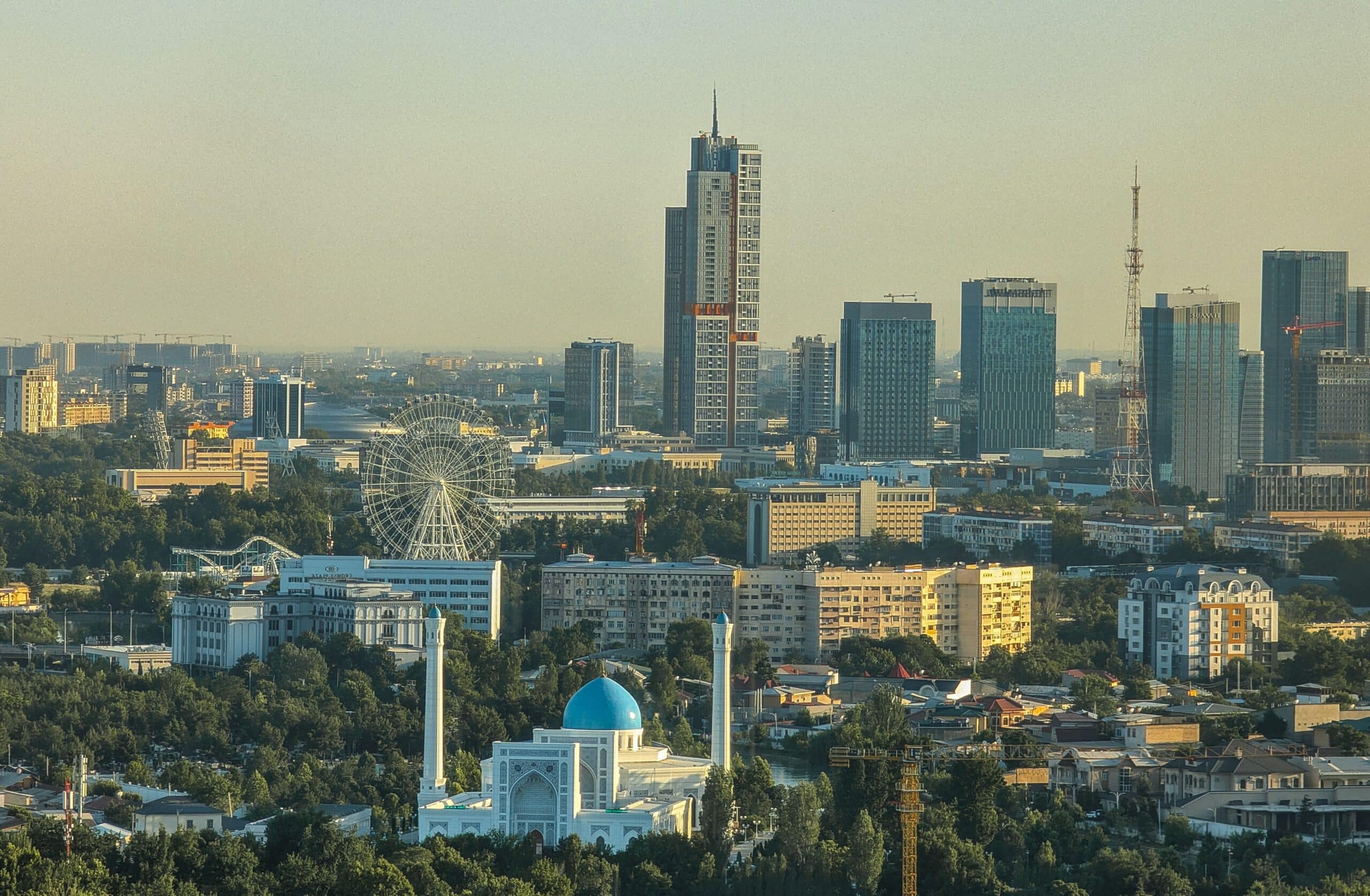
Tashkent has surged 128 places in Oxford Economics’ global city ranking, with its construction, technology and financial sectors accelerating. The consultancy expects the Uzbek capital’s economy to grow by more than 7% a year on average between 2026 and 2030 — the fastest pace across Central Asia and Eastern Europe.
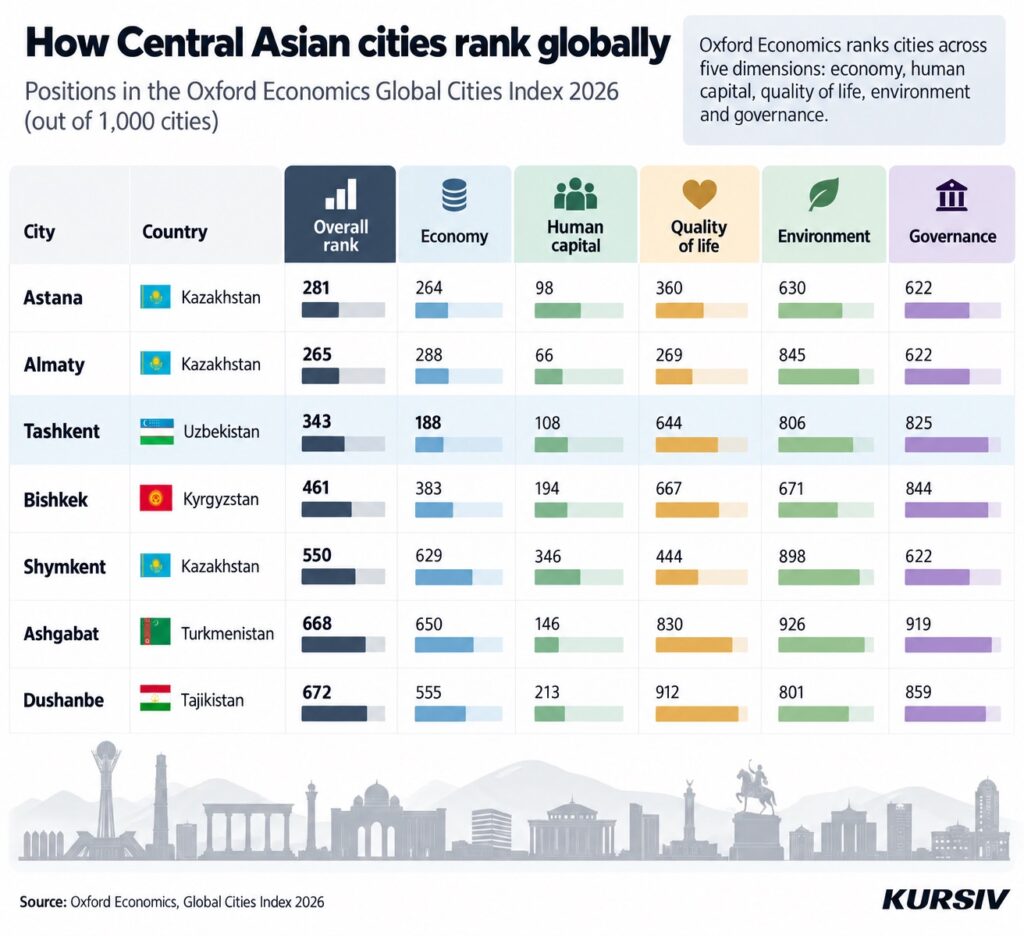
The capital now ranks 343rd among 1,000 cities in the 2026 Global Cities Index, up from 471st last year. Its biggest leap came in economics, where Tashkent moved from 558th to 188th and now ranks ahead of both Almaty and Astana.
Kazakhstan’s two biggest cities still lead Central Asia in the overall table: Almaty is 265th and Astana 281st. Bishkek ranks 461st, Shymkent 550th and Dushanbe 672nd.
Oxford Economics has also made Tashkent the only Central Asian entry in its new «Cities to Watch» selection, which identifies urban economies it expects to climb further in coming years.
Read more: Saida Mirziyoyeva to lead Tashkent International Financial Centre
What sectors pushed Tashkent upwards
Oxford points to a combination of investment-led construction, expanding business services and a growing technology sector.
One of the most visible parts of that shift is the IT Park of Tashkent. It also includes a planned data centre and other tech infrastructure. Uzbekistan is also developing an international financial centre under a special legal regime to attract foreign banks, funds and fintech companies.
The physical change is also speeding up. A new international airport in the Tashkent region is proposed to be able to handle up to 20mn passengers and 300,000 tonnes of cargo a year when it opens around 2030.
Another side to the story: Tashkent’s new $2.5bn airport to relocate Muslim, Korean and Russian cemeteries
Oxford also notes Tashkent’s location on trade routes from east to west. Uzbekistan has been developing transport links to connect China and Central Asia with Europe, the Caucasus and the Middle East, boosting the capital’s relevance as a base for companies operating across the region.
Tashkent’s weakest scores well down the table
The rapid economic climb has not pulled every part of the city up with it.
Tashkent ranks 108th globally for human capital but only 644th for quality of life, 806th for environment and 825th for governance. Oxford identifies water pressure and the risk of skilled workers leaving for wealthier economies among the constraints that could complicate its growth trajectory.
The scale of Tashkent’s movement is nevertheless unusual: within a year its overall ranking has gone from 471st to 343rd, while its economic ranking has jumped 370 places to 188th.
Read more: EDB: Uzbekistan emerging as key Eurasian transport hub
Oxford Economics’ index covers 1,000 cities and combines economics, human capital, quality of life, environment and governance into a single score, using both current indicators and the consultancy’s own forecasts.