“Openness is not weakness”: What Saida Mirziyoyeva told UN General Assembly
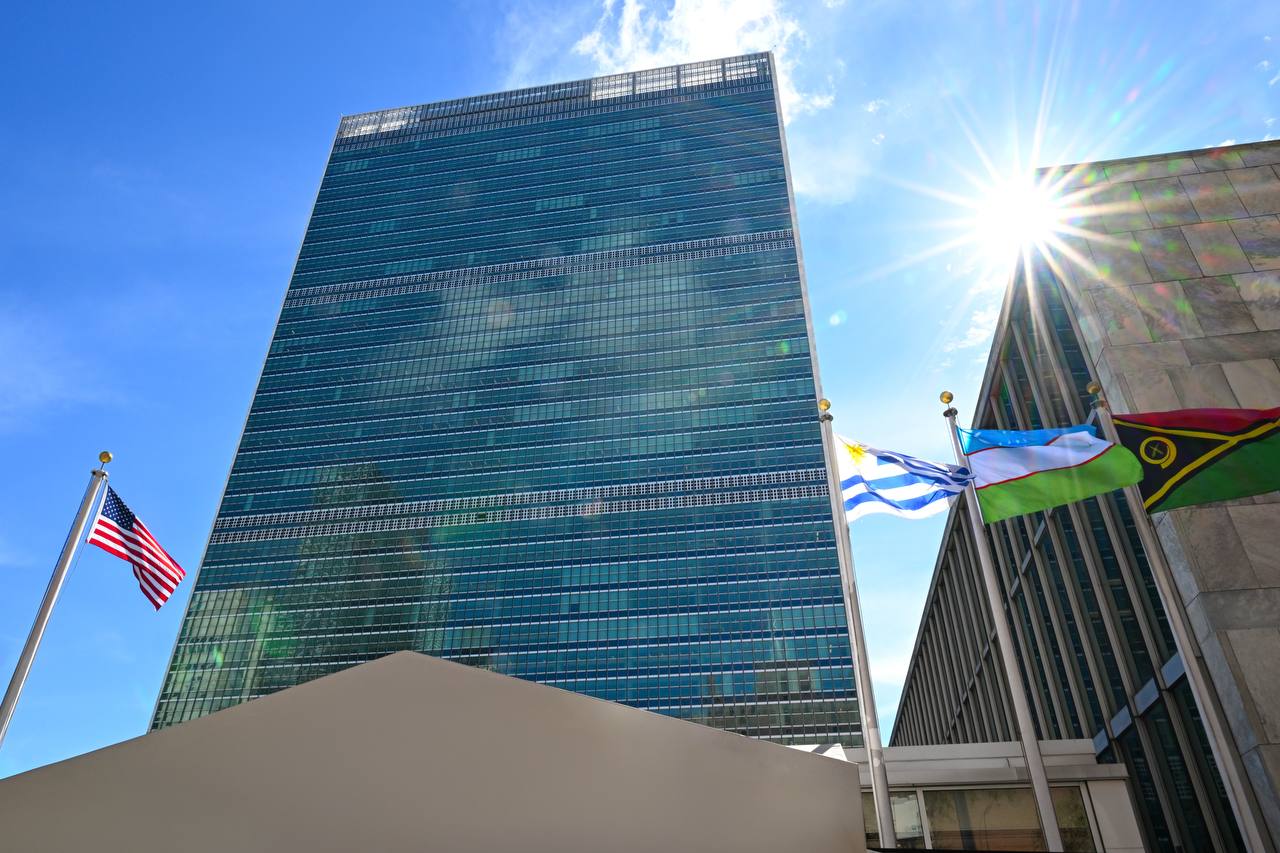
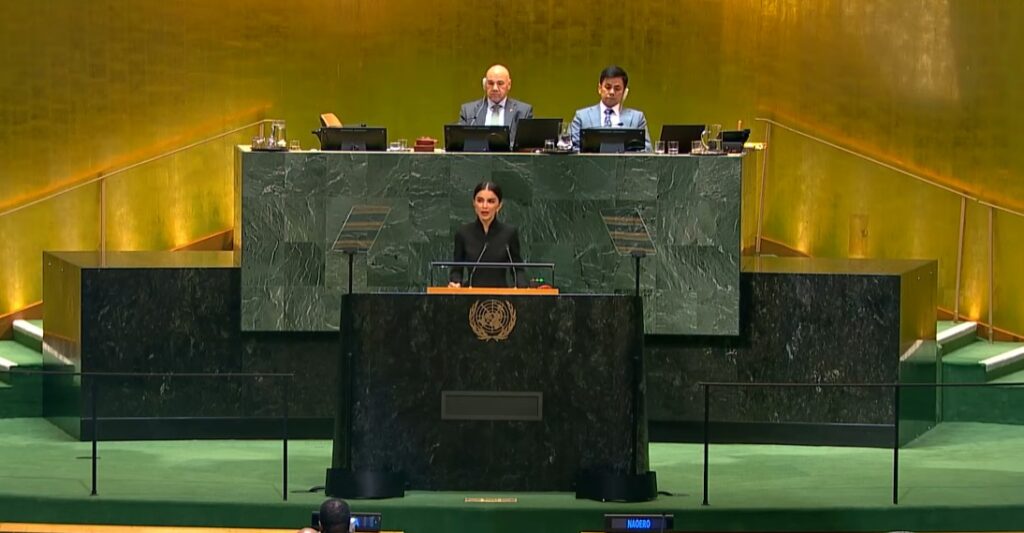
Uzbekistan chose human dignity, openness, and dialogue as the organising principles for its message to the UN General Assembly‘s 81st session, with the Uzbek president’s chief of staff Saida Mirziyoyeva arguing that seeking peace should not be interpreted as weakness.
Speaking on behalf of Uzbekistan at the 81st UN General Assembly in New York, Mirziyoyeva called for a UN capable of implementing decisions, backed an expansion of the Security Council and reiterated Tashkent’s bid for a non-permanent seat in 2035–2036.
The speech also put domestic reforms into numbers: Mirziyoyeva said Uzbekistan’s economy had grown from $50bn to $147bn over the past decade, poverty had fallen to 4% and almost 10mn people had been lifted out of poverty. She paired those figures with pledges on renewable energy, AI governance, the rule of law and human capital.
Here is Mirziyoyeva’s UN General Assembly speech in a nutshell.
- Peace and human dignity
- UN Security Council reform
- Central Asia and Afghanistan
- Economy and poverty
- Education, health and child care
- Climate change and the Aral Sea
- AI
- Rule of law and women’s rights
- Culture and tolerance
Peace and human dignity
Mirziyoyeva framed openness as a deliberate foreign-policy choice:
«Openness doesn’t translate into weakness. On the contrary, striving for peace means taking responsibility for the future.»
UN Security Council reform
She called for a stronger UN with greater representation: «We need the United Nations capable of implementing decisions, not just making them.»
Uzbekistan also backed Security Council enlargement and confirmed its own ambitions:
«Uzbekistan has offered its candidacy for the non-permanent membership in the security council for 2035 and 2036.»
Central Asia and Afghanistan
On Central Asia’s changing relations, Mirziyoyeva said, «We began to view each other as partners, not as a source of threat.»
She rejected treating Afghanistan exclusively as a security problem, saying its people «must be given hope and confidence to achieve a peaceful life.»
Read more: Saida Mirziyoyeva to deliver first-ever UN speech for Uzbekistan
Economy and poverty
Mirziyoyeva highlighted a decade of economic expansion: «Our economy grew from 50 billion to 147 billion dollars. More than $150 billion in foreign investment has been attracted.»
On living standards, she said:
«The poverty rate dropped to 4% and nearly 10 million people were lifted out of poverty.»
Education, health and child care
She pointed to wider access to education and longer lives: «Preschool education coverage increased from 27% to 78%. Higher education coverage grew from 9% to nearly 45%.»
Mirziyoyeva also put children at the centre of the social agenda, saying: «A child is the state’s greatest responsibility.»
Climate change and the Aral Sea
Using the Aral Sea as Uzbekistan’s central environmental example, she said: «It didn’t dry up due to a natural disaster. This is a consequence of decades of wrong decisions and unjust treatment of nature.»
Uzbekistan «aims[s] to increase the share of renewable energy to 54% by 2030,» she added.
AI
Mirziyoyeva called for a human-centred approach to emerging technology: «Artificial intelligence must be inseparable from human rights, security, equal opportunity, and accountability.»
Her broader principle was equally direct: «Technological progress should not force people to change but rather serve to improve human life.»
Rule of law and women’s rights
On justice, Mirziyoyeva insisted that «the power is not above the law.»
She also cited reforms on forced labour, domestic violence and women’s economic participation, adding: «Today, women make up 39% of our parliament.»
The side story: Independent courts and English common law: What Uzbekistan must do to win investors’ trust
Culture and tolerance
Mirziyoyeva presented Tashkent’s Islamic Civilisation Centre as more than a historical institution: «We see it not only as a place that showcases the past, but also as a house of knowledge, thought and enlightenment.»
Uzbekistan would continue cooperation aimed at «strengthening dialogue between cultures and religions, enlightenment and tolerance.»
Mirziyoyeva returned to the central theme of the address in her final remarks: «The future, however, will judge us not by the opportunities before us, but the ways we use them.»
She closed by saying Uzbekistan was ready to help build «a world where peace, trust, and human dignity prevail.»
