What’s in store for Tashkent bus fares? Franklin Templeton responds

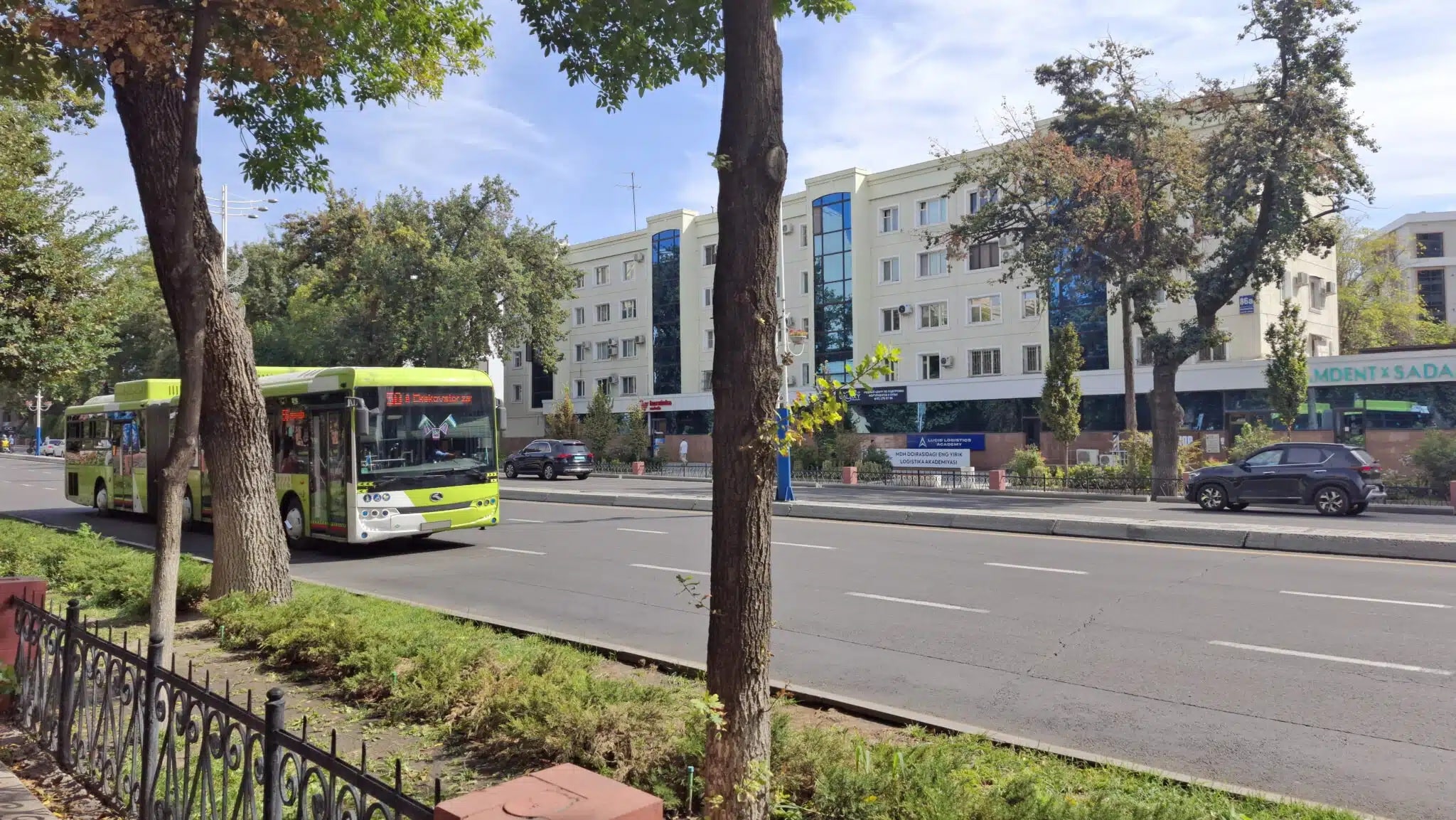
From 1 October, the cost of a single journey on Tashkent public transport, when paid electronically, rose from UZS 1,700 to UZS 2,500. Kursiv Uzbekistan approached UzNIF, a shareholder in Toshshahartransxizmat JSC, to ask about the operator’s financial position and the future of bus services in the capital. Franklin Templeton, which manages the UzNIF fund, provided the responses.
Franklin Templeton said the fare increase itself would not automatically raise the company’s revenue. Its financial performance depends primarily on the number of services it operates and the technical availability of its buses. Improving the condition of the fleet and its maintenance system is among the immediate priorities.
As a shareholder, how does UzNIF assess Toshshahartransxizmat’s current financial position and the existing fare model? To what extent did the UZS 1,700 fare cover the company’s operating expenses?
Franklin Templeton, as the manager of UzNIF, notes that Toshshahartransxizmat’s financial performance has been improving in 2026 following the significant losses recorded in 2025. However, further progress is needed to strengthen the company’s financial position and enable it to improve the quality of transport services for passengers.
Toshshahartransxizmat’s revenue is not directly determined by the amount collected from passengers in fares. Instead, the company receives payments from the state budget based on the volume and quality of transport services it provides. These payments take into account indicators such as the number of services operated and kilometres travelled, as well as service regularity and adherence to timetables.
The UZS 1,700 fare should therefore not be viewed as direct revenue for Toshshahartransxizmat. Even if all passenger fares had gone directly to the company, they would still have covered less than half of its costs.
The fund manager takes a positive view of the gross-cost model because it links the operator’s remuneration to the volume and quality of services provided. Together with the significant renewal of the bus fleet, the broader reform of public transport has substantially improved both fleet conditions and service quality compared with several years ago. Further refinements are nevertheless still required.
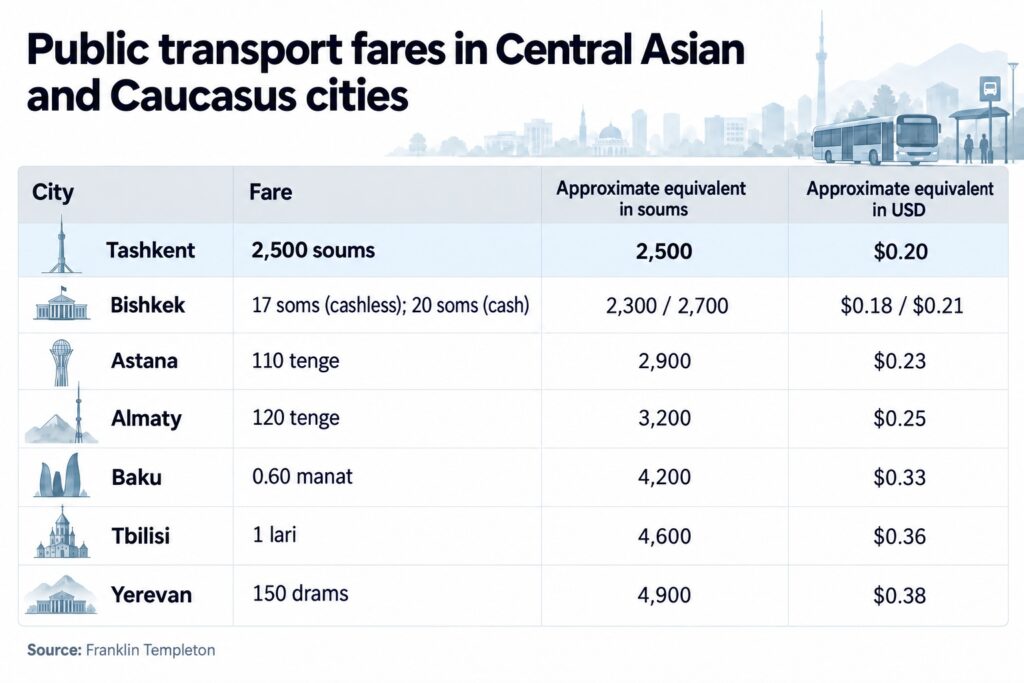
The current passenger fare also remains relatively low compared with those in other regional capitals. This is an important consideration when assessing public transport affordability, service quality and the system’s long-term sustainability.
Have UzNIF or Franklin Templeton assessed the potential impact of the fare increase to UZS 2,500 on the company’s financial performance? If so, how are revenue, operating results, cash flow and the need for budget subsidies expected to change?
The potential impact of the fare increase should be considered separately at the level of Toshshahartransxizmat itself and at the level of the public transport system as a whole.
As noted above, raising the fare from UZS 1,700 to UZS 2,500 will not automatically increase the company’s revenue, improve its operating performance or boost its cash flow because Toshshahartransxizmat does not directly receive the money collected from passengers.
It would therefore be misleading simply to apply the percentage increase in fares to the company’s revenue when assessing the impact of the change.
A higher fare may boost farebox revenue for the public transport system, enabling passenger payments to cover more costs and possibly decreasing reliance on budget funding.
The actual impact will depend on several factors, including passenger numbers, fare collection rates, concessions and how passengers respond to the higher price.
The fund manager believes that a significant fare increase should come with improvements that passengers can clearly see. These should include more buses being available, fewer missed or cancelled services, more reliable timetables and cleaner, safer and more comfortable vehicles.
For Toshshahartransxizmat itself, improvements in the company’s financial position should come primarily from more effective execution of its gross-cost contract and, consequently, higher payments for transport services actually delivered rather than from the fare increase itself.
What key performance indicators does UzNIF monitor for Toshshahartransxizmat, or what targets has it set for the company for 2026–2028? In particular, are there targets for cost recovery, operating efficiency, profitability, passenger numbers and dependence on subsidies? Does UzNIF expect the company to reach operating break-even or profitability in the long term?
Toshshahartransxizmat recorded a small profit in 2024. After the losses incurred in 2025, the company showed signs of an improving financial position in the first part of 2026, as reflected in its publicly available financial statements.
Franklin Templeton closely monitors the company’s operational and financial performance, including:
- completion of scheduled services and kilometres;
- bus fleet availability and technical readiness;
- the number of missed services and breakdowns;
- operating financial results and cash flow;
- the ability to service debt obligations;
- passenger numbers;
- safety indicators;
- overall service quality.
Specific quantitative targets for 2026–2028 are not intended for public disclosure.
One of the key factors affecting the company’s recent financial performance is its ability to meet its obligations under the gross-cost contract. This depends to a large extent on bus availability and technical condition.
If fewer buses are roadworthy, the company operates fewer scheduled services and covers fewer kilometres. This scenario, in turn, results in lower payments under the contract.
Improving the technical readiness of the bus fleet and strengthening the maintenance system are therefore among our immediate priorities. At the same time, we need to improve financial transparency, particularly around spending on repairs, spare parts and procurement.
The fund manager believes that by improving operational performance, strengthening maintenance practices and reinforcing financial discipline, Toshshahartransxizmat can eventually achieve sustainable profitability and become a more efficient public transport operator.
A well-functioning gross-cost model supports this objective by linking the company’s financial performance to improvements in the quality of services provided to passengers.
Did Toshshahartransxizmat pay dividends to UzNIF in 2025 or 2026, and how are the company’s financial performance and reliance on subsidies reflected in the valuation of this asset within the UzNIF portfolio? If no dividends were paid, what were the main reasons?
Toshshahartransxizmat recorded a net profit of UZS 6.02 bn for the 2024 financial year. Of that amount, 50%, or around UZS 3.01 bn, was allocated to dividends. The Ministry of Economy and Finance received approximately UZS 2.26 bn, while UzNIF received a further UZS 752.4 mln. UzNIF received its 2024 dividend at the end of 2025.
Given the losses recorded by the company for 2025, no dividend payment is expected for that financial year.
Franklin Templeton, as the manager of UzNIF, assesses the value of Toshshahartransxizmat and its long-term prospects on more than current dividend payments alone. The assessment takes into account the company’s ability to fulfil its gross-cost contract, its potential to generate sustainable profits and cash flow, operating efficiency, the technical readiness of the bus fleet, debt levels, the quality of financial controls and opportunities to develop additional commercial sources of revenue.
Franklin Templeton believes that reliable public transport services, combined with stronger operating efficiency and greater transparency around spending on repairs, spare parts and other major cost items, could support the company’s financial performance.
Additional revenue, including from advertising and commercial partnerships, could also provide further growth potential. However, Toshshahartransxizmat’s core financial performance will continue to depend on how reliably and efficiently it provides public transport services.