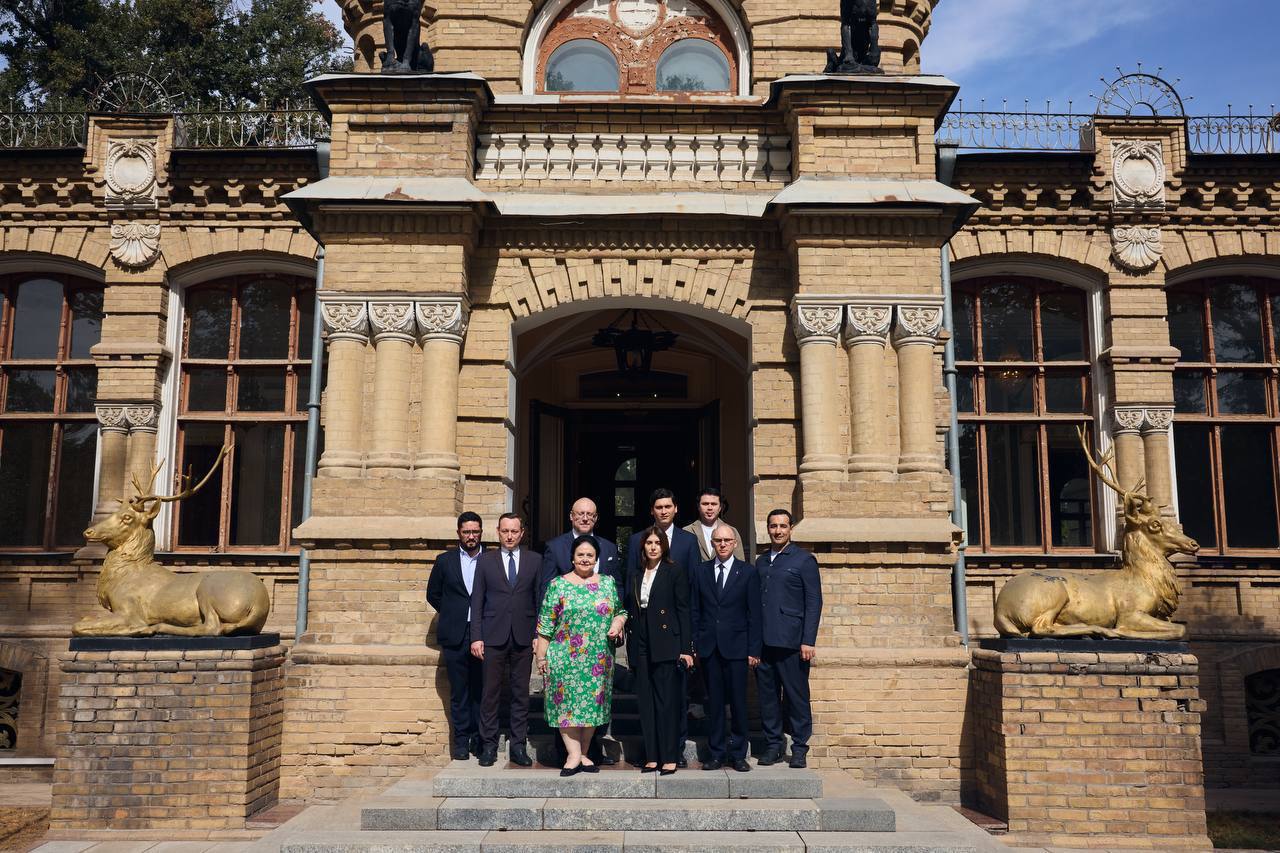
Grand Duchess Maria Vladimirovna, head of the Russian Imperial House and great-niece of the last Russian Emperor Nicholas II, visited the former palace of Grand Duke Nikolai Konstantinovich in Tashkent on October 3 to inspect ongoing restoration work.
Maria Vladimirovna is a claimant to the headship of the Imperial House of Russia, a position she has held since her father’s death in 1992. Born in 1953 in Madrid, she is the great-great-granddaughter of Emperor Alexander II.
Her claim to be the rightful head of the Romanov family stems from her father, Grand Duke Vladimir Kirillovich, who was the sole male-line descendant of his branch of the family. Although the 1917 revolution abolished the Russian monarchy, Maria Vladimirovna continues to use the title of Grand Duchess. Today she remains highly active in royal circles, directing various cultural, charitable and historical initiatives related to Russian heritage worldwide.
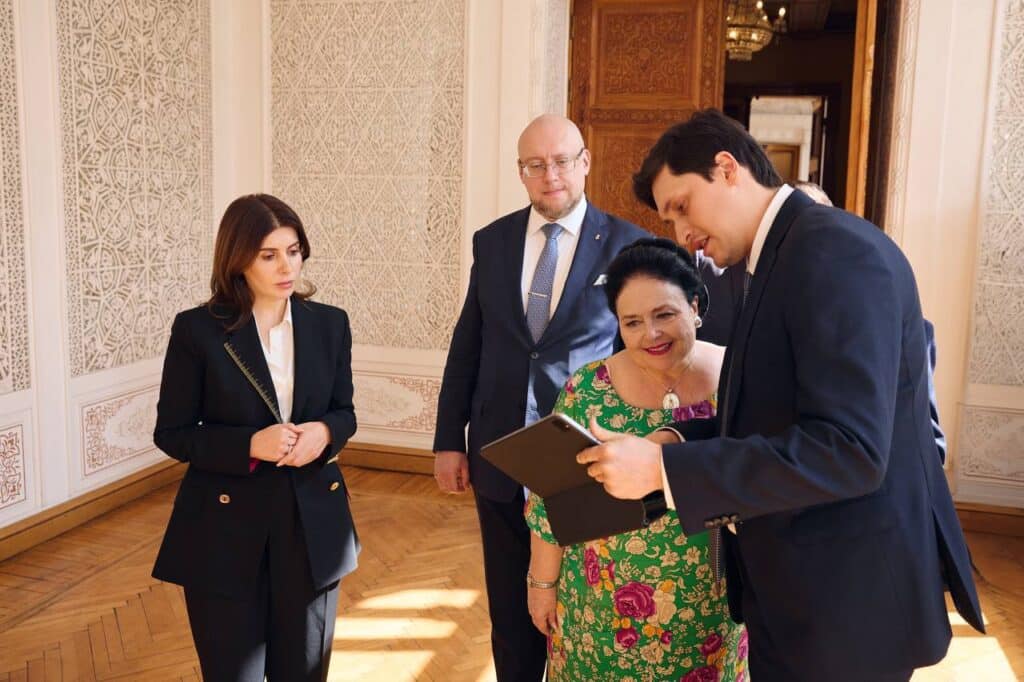
During her visit to the residence, she met with Gayane Umerova, chair of the Art and Culture Development Foundation of Uzbekistan. The foundation, a state body responsible for fostering international cultural ties and overseeing major renovations, is leading the transformation of the 19th-century building into a dedicated museum.
Preserving an exiled duke’s legacy
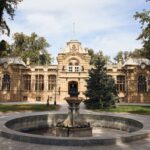
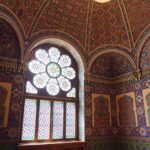
The new institution will eventually display the extensive private art collection of Grand Duke Nikolai Konstantinovich. A grandson of Emperor Nicholas I, the grand duke was exiled to Central Asia in 1881. Despite his permanent banishment, he became a highly influential local figure.
He funded regional irrigation networks, established local enterprises and amassed a vast collection of European and Russian art that later served as the foundation for Uzbekistan’s State Museum of Arts.
Saidaziz Ishankhodzhaev, deputy chair of the foundation, led the grand duchess on a comprehensive tour of the site to review the architectural conservation efforts.
Architecture and design of the palace
Architects Wilgelm Geintselman and Alexey Benua constructed the single-storey brick building in 1891, designing it in a highly decorative Art Nouveau style. It is renowned for its intricately carved oak doors, grand arched windows, wrought-iron grilles and the bronze deer statues that flank the entrance.
The palace was surrounded by extensive landscaped gardens designed by a renowned botanist, creating a European-style oasis that contrasted sharply with traditional Central Asian architecture.
Following the revolution and throughout the Soviet era the building served various public functions, including as a Palace of Pioneers and later as a museum of antiques and jewellery.
After Uzbekistan gained independence, it was used as an official reception house for the Ministry of Foreign Affairs and was largely closed to the public. The building is now undergoing comprehensive restoration so it can finally reopen as a dedicated public museum housing the grand duke’s original art collection.