Uzbekistan and US reach $12bn in deals at Samarkand business forum

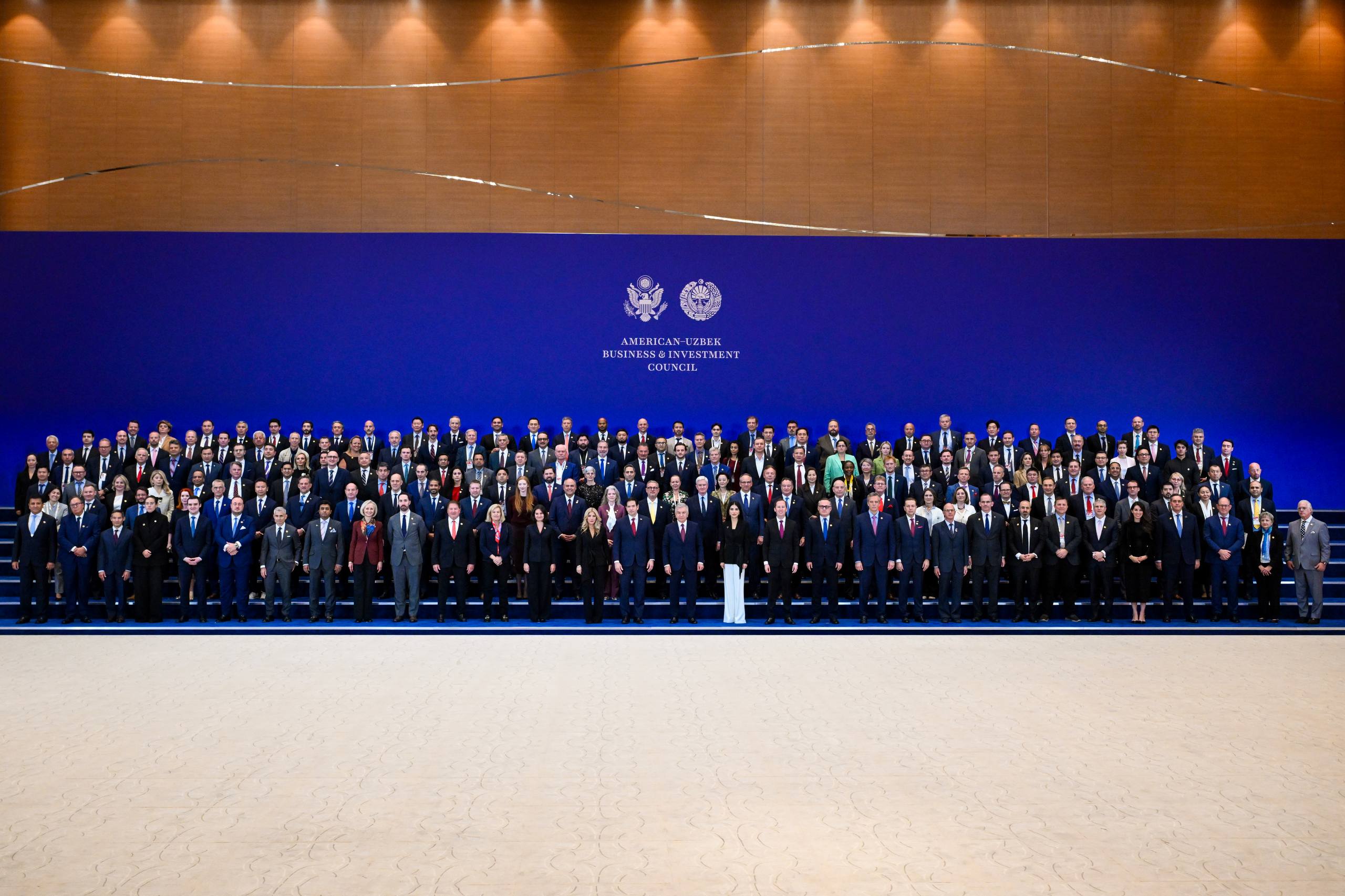
American and Uzbek officials have finalised a $12bn package comprising 54 investment agreements following bilateral negotiations.
President Shavkat Mirziyoyev unveiled the prospective deals on October 19 during the second session of the US-Uzbekistan Business and Investment Council.
The summit gathered leading American corporate executives and financial institutions, alongside a US delegation led by Secretary of State Marco Rubio and Special Envoy Sergio Gor.
Officials confirmed the agreements span artificial intelligence, digital infrastructure, energy grids, transport networks, education and critical minerals extraction.
The summit also expanded Washington and Tashkent’s broader strategic alignment. Mirziyoyev announced that bilateral trade had jumped by 35% since early 2026.
Furthermore, the two governments advanced discussions on regional security, counterterrorism strategies and migration protocols under their Enhanced Strategic Partnership Dialogue.
Capping the political achievements, Uzbekistan formally joined the Artemis Accords, becoming the 77th nation to align with the US-led framework governing peaceful space exploration.
During the ceremonies, Mirziyoyev awarded Rubio the Buyuk Xizmatlari Uchun Order (Order of Outstanding Merit) for reinforcing diplomatic ties and presented Gor with the Dustlik (Friendship) Order for advancing commercial investments.
Streamlining foreign entry and 2035 economic vision
To facilitate the massive influx of American capital, Mirziyoyev championed an overhaul of domestic business regulations. He proposed a streamlined «plug-and-play» operational model designed explicitly for US enterprises entering the Central Asian market.
Under this framework, foreign firms would receive pre-approved project sites equipped with connected infrastructure and all necessary permits, effectively eliminating the nation’s notoriously lengthy administrative hurdles.
The president also detailed a new direct investment fund that permits domestic businesses to act as partners and absorb shared risks alongside international investors.
Looking ahead, Mirziyoyev urged the council to draft a comprehensive trade, technology and investment cooperation programme that extends through 2035, prioritising industrial modernisation and American expertise transfers.
Advancing corporate partnerships and infrastructure
The Samarkand summit facilitated targeted negotiations between Mirziyoyev and three major American corporate leaders to modernise Uzbekistan’s state-owned assets and industrial capabilities.
During talks with Franklin Templeton CEO Jenny Johnson, Mirziyoyev outlined future public share offerings following the successful listing of the National Investment Fund of Uzbekistan.
That initial offering on the London and Tashkent exchanges recently generated nearly $700mn, drawing overwhelming investor demand. Their dialogue also explored the asset manager’s potential participation in the Tashkent International Financial Centre.
Meanwhile, Wabtec Chairman and CEO Rafael Santana discussed modernising the national railway system. The two sides evaluated plans for importing locomotives backed by American financial institutions, building local component manufacturing facilities and launching servicing centres for mining equipment.
Traxys CEO Mark Kristoff focused on advancing the processing of critical minerals. Having recently established a regional headquarters in Tashkent, the trading firm is pivoting toward manufacturing high-value industrial products using American technology rather than exporting raw Uzbek minerals.
