Transformation of Communications: How to Rebuild a PR Department in the Age of AI Without Losing Humanity

Why the Old Ways No Longer Work
In 2026, PR exists in a reality where trust has become scarce.
Content is created faster than it can be verified. Feeds are overflowing with texts, images, and videos that are impossible to distinguish from those created by humans. The paradox is that the more information there is around us, the lower its value becomes.
Classic crisis communication skills no longer guarantee stability. Responding quickly is no longer enough. Today it is necessary to manage the environment in which any content is by default perceived with doubt and distrust.
PR is no longer only a reactive function. It becomes a system for managing trust in the age of algorithms.
Strategic Shift: From Efficiency to Intelligence
The first mistake when implementing AI is using it only to speed up processes.
Yes, AI can write press releases faster, monitor media in real time, and prepare reports within minutes. But speed itself does not create value. It only frees up time.
Real transformation begins when AI is used as a tool of strategic intelligence.
What does this mean?
Influence mapping.
Identifying non-obvious stakeholders and points of reputational pressure.
Risk modeling.
Predicting audience reactions even before a campaign or communication is launched.
Scenario testing.
Testing a narrative on virtual models of public opinion before entering the public space.
In this case, AI becomes not a «copywriter,» but an analytical partner.
The New Architecture of the PR Department
AI will not replace a communications specialist. But a specialist who does not know how to work with AI will lose out, in speed, in analytical and monitoring capabilities, and beyond.
Teams are gradually transforming. New roles are emerging:
— AI trainer – teaches models the corporate voice, values, and communication principles.
— Prompt architect – helps build complex chains of prompts for different audiences and markets.
— Generative designer – manages the visual component through algorithms.
— I/O manager – responsible for quality, accuracy, and ethics: AI creates the draft, but the decision remains with the human.
— Digital personality designer – shapes the character of the brand in chatbots and automated communications.
Thus, the PR department evolves from a «content factory» into a hybrid system of «human + algorithm.»
The Empathy Equation
AI can analyze audience behavior. But it does not feel.
It understands what a person does. But it does not understand why.
Humanity in communications today is not emotionality but a strategic resource, a kind of must-have for building trust and loyalty. Automation should take over routine tasks, while humans work with motivation, fears, expectations, and tone. Humor, intonation, pause, empathy, these are not algorithms. They are experience.
If AI takes on scale, the human remains responsible for meaning.
Transformation Roadmap
Practice shows that restructuring the PR function happens in three stages.
1. Implementation
Training the team in basic AI use and automating repetitive tasks: monitoring, primary analytics, draft texts.
2. Optimisation
Creating specialised agents: meeting analysis, preparation of media summaries, scenario testing of campaigns.
3. Rethinking
AI begins to influence not only processes but also the product itself, customer experience, and the format of communications.
At this stage, PR becomes part of the strategic transformation of the business.
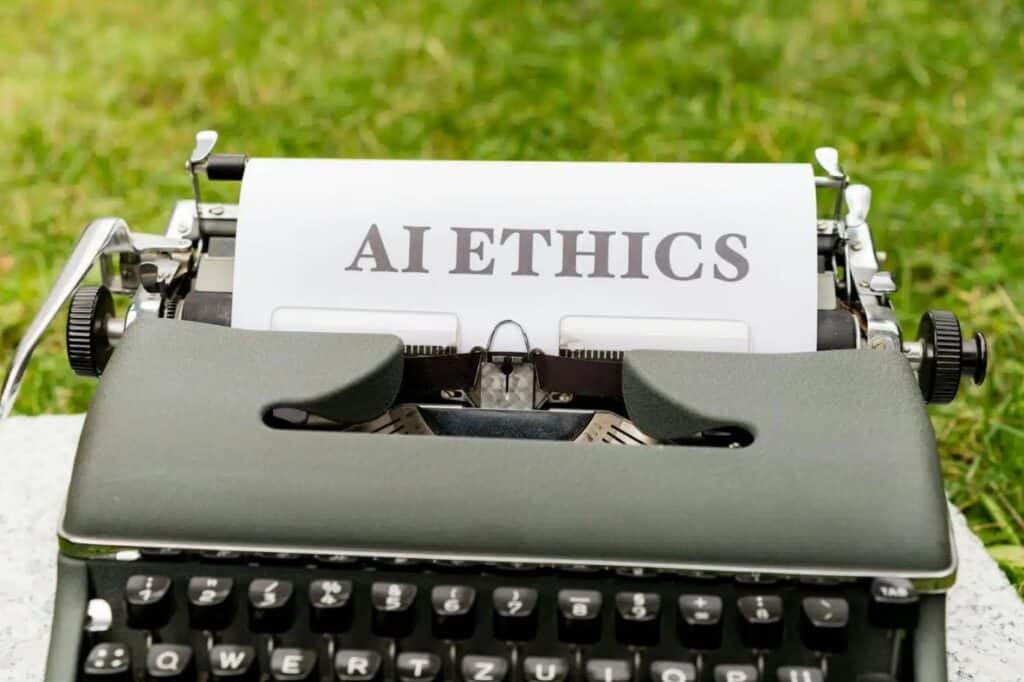
Ethics as a Mandatory Condition
Technology does not eliminate responsibility. The human-in-the-loop principle remains fundamental: the final decision is always made by a person.
When implementing AI in work, it is very important to remember the following principles:
— control data sources;
— respect copyright;
— disclose the use of AI where it affects trust;
— avoid manipulative scenarios.
AI strengthens communications, but precisely for this reason it requires stricter standards.
New Metrics of Success
Traditional KPIs are gradually losing significance, reach is no longer a sufficient indicator of effectiveness. In the age of algorithms, other indicators come to the forefront.
Early risk detection
Can you see a crisis before it becomes public?
Forecast accuracy
How accurately do you predict the spread of a narrative?
Visibility in AI ecosystems
Is your brand reflected in the answers of ChatGPT, Gemini, and other systems?
PR is becoming a function of predictive analytics.
What Remains in the End?
A PR specialist in 2026 is not just a master of words. It is a strategist who knows how to combine the scale of algorithms with the depth of human understanding. AI takes on logistics and volume. The human remains responsible for meaning, values and trust.
The question is no longer whether to implement AI, but how to do it in a way that technologies amplify the human voice rather than replace it.
This is what the real transformation of communications is about.