China Executes Former Senior Banker in Expanding Anti-Corruption Crackdown

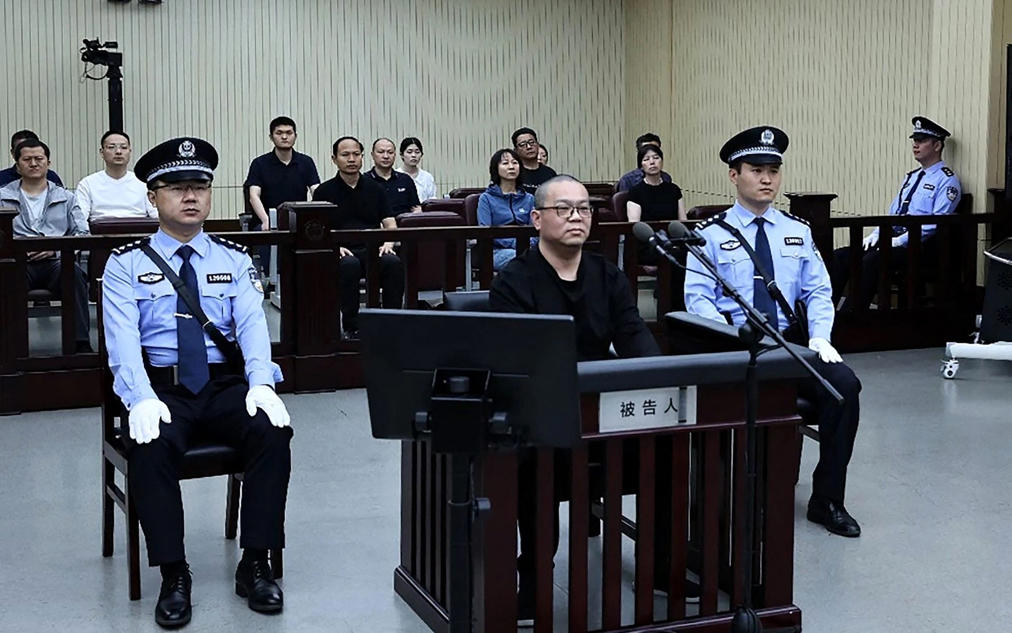
China has executed Bai Tianhui, a former top executive at China Huarong International Holdings, after he was convicted of accepting 1.1 bn yuan (£116 mln) in bribes, one of the largest corruption cases seen under President Xi Jinping’s sweeping anti-graft campaign.
Bai, who served as general manager of the state-owned offshore investment arm between 2014 and 2018, was executed on Tuesday in Tianjin, officials confirmed. Prosecutors said he exploited his position to take an «extremely large» amount of bribes, with the court ruling that the scale and severity of his crimes had caused «particularly serious» social harm.
The Tianjin High People’s Court upheld the death sentence in February after rejecting Bai’s appeal, and the Supreme People’s Court later approved the execution, calling the evidence «conclusive and sufficient». Authorities said Bai was permitted to meet close relatives before his death but did not disclose the method of execution.
China Huarong, originally created in 1999 to absorb bad loans from state banks, expanded aggressively into investments and property before a government bailout in 2021. Bai is the second senior Huarong executive to be executed: former chairman Lai Xiaomin was put to death in 2021 after being found guilty of taking 1.8 billion yuan in bribes, embezzlement and bigamy.
China’s anti-corruption watchdog, the Central Commission for Discipline Inspection, has intensified scrutiny of the financial sector. In the first nine months of this year, at least 54 regulators, bankers and senior financial executives were detained, following 97 high-level purges in 2024.
Kursiv Uzbekistan also reports that Uzbekistan has taken a major step toward becoming Central Asia’s fintech hub after President Shavkat Mirziyoyev signed a sweeping decree on 28 November approving a regulatory sandbox for stablecoin payments, set to launch on 1 January 2026.