Looming El Nino and Climate Change Threaten Global Weather Extremes

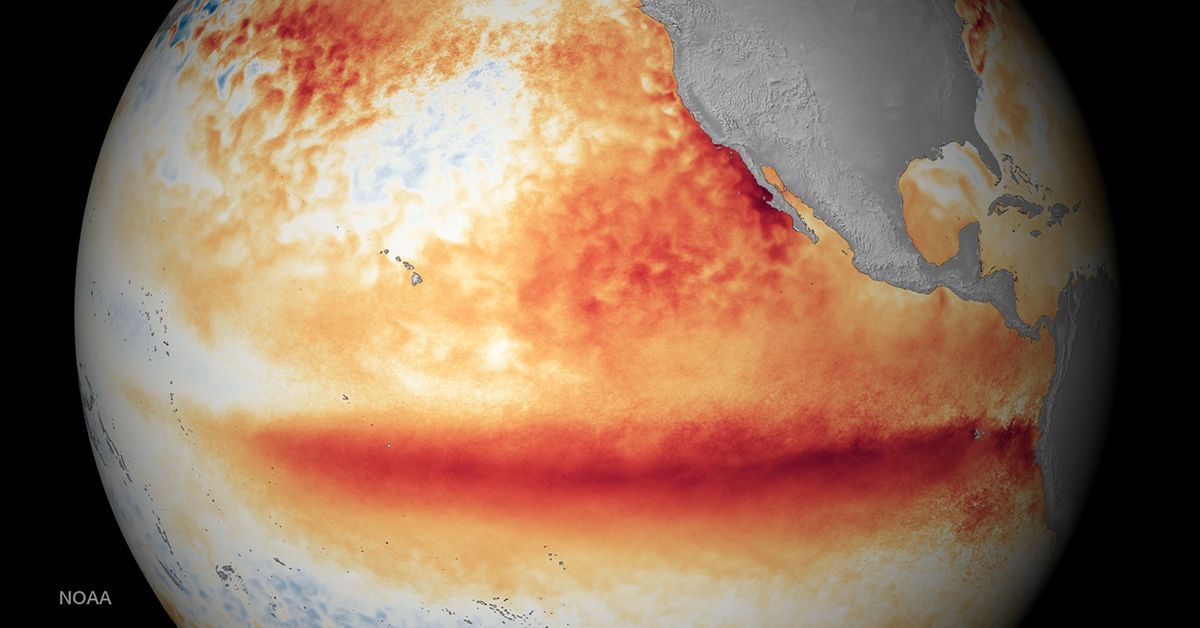
A potent combination of human-induced climate change and a developing El Nino weather pattern is poised to trigger severe environmental chaos across the globe.
The World Meteorological Organization (WMO) has published a dire forecast warning that the collision of these two forces will likely result in devastating meteorological extremes.
High probability of disruption
According to the latest WMO data, there is an 80% likelihood that El Nino will firmly establish itself between June and August. Forecasters also calculate a 90% chance that the climatic anomaly will endure until at least November.
El Nino is a natural phenomenon that emerges in cycles of two to seven years. It is primarily driven by the weakening of Pacific trade winds which allows ocean waters in the eastern Pacific to heat up significantly.
This fundamental shift routinely wreaks havoc on global weather systems by altering hurricane trajectories, scrambling traditional rainfall distributions and elevating global temperatures.
Scientists are particularly anxious about the current forecast due to two alarming factors.
Firstly, numerous projection models indicate that the impending event could be exceptionally fierce. A «strong» El Nino is officially categorised by surface temperatures in the eastern Pacific surging a minimum of 1.5°C above the historical average.
Secondly, this cyclical event is unfolding on a planet already steadily baking due to rampant greenhouse gas emissions. The Earth’s baseline temperature has climbed by roughly 1.3°C since the pre-industrial era.
Piers Forster, Professor of Physical Climate Change at the University of Leeds, highlighted that this warmer baseline effectively supercharges the cyclical weather pattern, Reuters reports. The result is fiercer heatwaves, deeper droughts and more catastrophic flooding.
Driven by this dangerous interplay, the WMO anticipates that 2027 could shatter records to become the hottest year in human history, eclipsing the benchmark recently set during the severe El Nino of 2024.
Regional fallout
The specific geographical impacts of El Nino are notoriously varied. While territories like Australia and Central America typically suffer through intense dry spells, regions spanning Central Asia and southern South America frequently face massive, unseasonal downpours.
The socioeconomic and human costs of these shifts are massive. During the spring of 2024, the Brazilian state of Rio Grande do Sul experienced apocalyptic floods that claimed over 180 lives and displaced 600,000 residents.
Francisco Aquino, who heads the climate centre at the University of Rio Grande do Sul, warned Reuters that the enormous risks brought by a warming world make a repeat of this tragedy highly possible.
Elsewhere, the threat endangers critical infrastructure and food security. In southern Africa, the weather anomaly is known to suppress crucial wet-season rains. Izidine Pinto of the Netherlands Meteorological Institute noted that the overarching climate crisis will stretch these droughts further to devastate rain-dependent agriculture and cripple hydroelectric power outputs.
Coastal regions must also prepare for more ferocious storms. Antonio Navarra from Italy’s Euro-Mediterranean Center on Climate Change cautioned that the vast thermal energy injected into the Pacific by El Nino creates an ideal incubator for highly destructive tropical cyclones.
Glimpse of new normal
Perhaps the most sobering aspect of the WMO’s warning is that the chaos anticipated later this year may soon become standard.
Climate researchers, including Theodore Keeping from Imperial College London, suggest that while El Nino carries unique atmospheric traits, the upcoming extremes will offer a highly accurate preview of the baseline weather humanity will endure in roughly five years.
As Professor Forster starkly observed, surviving this supercharged El Nino will provide the world with a harrowing window into our climate future.