Uzbekistan’s first nuclear plant set to become global blueprint – Rosatom chief

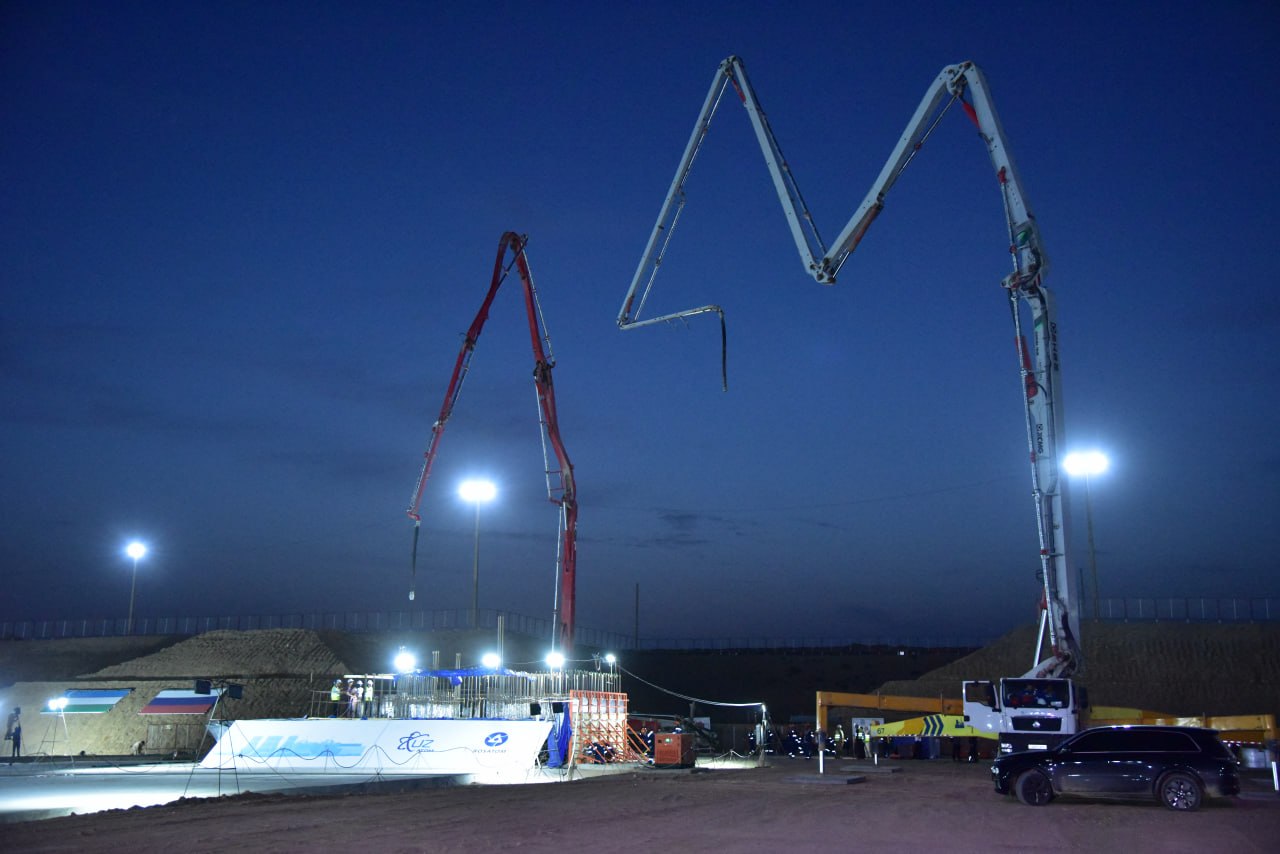
The head of Russia’s state nuclear corporation has stated that Uzbekistan’s innovative approach to constructing its new nuclear power plant (NPP) will serve as a template for other nations. Speaking to the TASS news agency, Rosatom general director Alexey Likhachev highlighted the groundbreaking nature of the Central Asian energy project.
«The project is truly unique, as we will be building both large and small capacity units simultaneously on a single site,» Likhachev explained.
He expressed absolute confidence that this dual-reactor strategy will eventually be adopted worldwide.
Construction under way
The official online ceremony marking the start of construction took place on the night of 5 June during the St. Petersburg International Economic Forum. However, physical preparatory work has been ongoing for months. In March, workers successfully poured 900 cubic metres of foundational concrete at the designated site in the Jizzakh region.
Once completed, the cutting-edge facility will feature four distinct power units:
- Two massive reactors each boasting a capacity of 1,000 MW
- Two smaller reactors each with a capacity of 55 MW
Upon reaching full operational capacity, the station is expected to generate approximately 15.4 bn kWh of electricity annually. This immense energy output will satisfy more than 15% of Uzbekistan’s total electricity requirements.
Powering Regional and Economic Growth
The ambitious energy hub is specifically designed to provide a reliable power supply to three major regions across the republic: Jizzakh, Samarkand and Navoi.
Beyond simply keeping the lights on, the nuclear plant is expected to significantly accelerate industrial and agricultural development. Crucially, the facility will help reduce the nation’s heavy reliance on natural gas and provide a stable energy baseload to offset the unpredictable nature of solar and wind power generation.
To ensure the new plant is operated by highly qualified professionals, Tashkent and Moscow have also committed to a joint educational initiative. Future nuclear energy specialists will be trained through collaborative programmes involving the Tashkent branch of MEPhI and the Kurchatov Institute, which specialises in advanced nuclear technologies.