How Product Labelling Is Bringing Uzbekistan’s Economy Out of the Shadows

At the recent InnoProm. Central Asia industrial exhibition in Tashkent, Uzbekistan presented its product labelling initiatives. This year, the joint exhibition of Asl Belgisi (Uzbekistan’s labelling system) and Chestny Znak (Russia’s labelling system) focused on the development and capabilities of the national platform. Russian and Uzbek solutions were showcased to Uzbekistan’s Deputy Prime Minister Jamshid Khodjaev and Russia’s First Deputy Prime Minister Denis Manturov.

Speaking to Kursiv, Andrey Kirillov, Chairman of the Supervisory Board of CRPT Turon, discussed the role of product labelling in improving market transparency and reducing the shadow economy.
Delayed Growth
— Andrey Alekseevich, 2026 marks five years since Uzbekistan launched its product labelling project. What key effects has the digital labelling system already demonstrated in terms of market transparency and reducing illegal trade? Which product categories have seen the strongest impact?
— The rollout of labelling for bottled water and beverages took the longest in Uzbekistan, but it also delivered some of the most visible results. During the very first year, even before aggregation mechanisms were introduced, legal production volumes increased by tens of percentage points. The overall tax effect amounted to around 6 billion soums, which is a significant figure.
However, the most important result is something else. The government, businesses and consumers have gained visibility into actual production volumes. In terms of creating a closed-loop control system, Uzbekistan is now ahead of several countries that introduced labelling earlier.
The use of electronic invoices and validation mechanisms has effectively eliminated the possibility of selling illegal products. Moreover, selling goods without a label is no longer viewed as an error but as a deliberate violation of the law.

A Product Passport
— What practical value does a labelling code provide for consumers and businesses? What guarantees, control mechanisms and opportunities does it offer at every stage, from production to purchase?
— In essence, a DataMatrix code serves as a product’s digital passport. Any consumer can scan it using a free mobile application and see the entire journey of the product, from manufacturing or import to the point of sale. With the introduction of authorised cash register systems, selling illegal products has become virtually impossible.
Using the Asl Belgisi app, consumers can verify expiry dates, identify where a product was manufactured and determine its country of origin within seconds. If a product turns out to be illegal, users can file a complaint directly through the application.
This makes verification simple and convenient, while gamification features encourage broader participation and help build a culture of informed consumption.
As the list of labelled product categories expands, particularly in sensitive areas such as baby food, consumer engagement is expected to increase further. Young parents, for example, will be able to influence the market by checking products and driving demand towards legal goods.
For the government and businesses, the system serves as a tool for formalising the economy and bringing order to the market. In 2025, authorities uncovered serious violations in the pharmaceutical sector, including inflated prices in 765 pharmacies amounting to nearly 8 billion soums, seizures of illegal products worth more than 3.5 billion soums, individual cases of illegal trade exceeding 1 billion soums, and more than 57,000 counterfeit medicines. These figures illustrate the scale of the problems that the labelling system can identify and systematically reduce.
— What about concerns that product labelling increases prices?
— Research shows that in countries where labelling systems have been introduced, price increases do not exceed 1%. Against the backdrop of inflation, logistics costs and fluctuations in raw material prices, this increase is virtually unnoticeable for consumers. At the same time, compliant manufacturers benefit from stronger brand protection and gain market share as illegal competitors are pushed out.
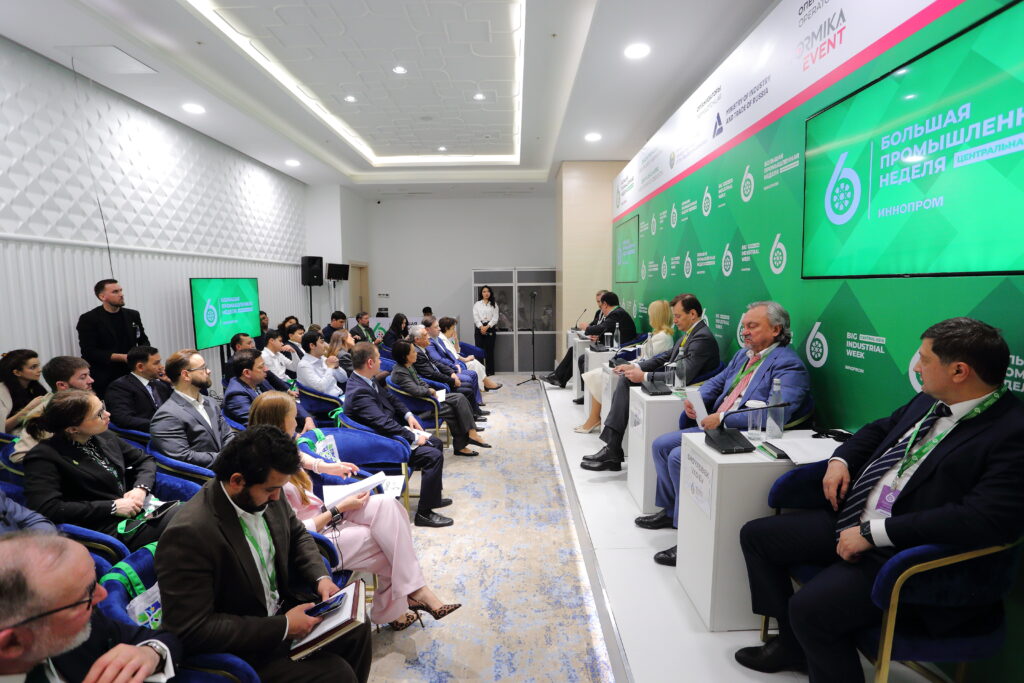
Photo: Nikita Shirokov
Big Data at Your Fingertips
— What technological solutions, including the mobile app, analytics tools and online trade monitoring, make Uzbekistan’s labelling system unique today? How will these capabilities evolve in the coming years?
— Today, the labelling system creates a digital twin of an entire industry. It generates a big data ecosystem that enables real-time tracking of every individual product, whether it is bottled water, tobacco products or pharmaceuticals.
For major retailers, these data represent a highly valuable source of information. They enable the use of advanced logistics technologies, including automated ordering systems based on labelling data. The system also supports market research based on actual consumption patterns.
Interestingly, consumer behaviour can vary significantly even within the same city. Certain products are popular in some districts and stores, while entirely different products dominate elsewhere. By accessing this information, manufacturers can plan deliveries more accurately, optimise product assortments, adjust pricing strategies and launch targeted promotions without incurring additional research costs.
As a result, digital labelling in Uzbekistan is moving beyond its original control function and becoming a comprehensive data-driven market management tool.