
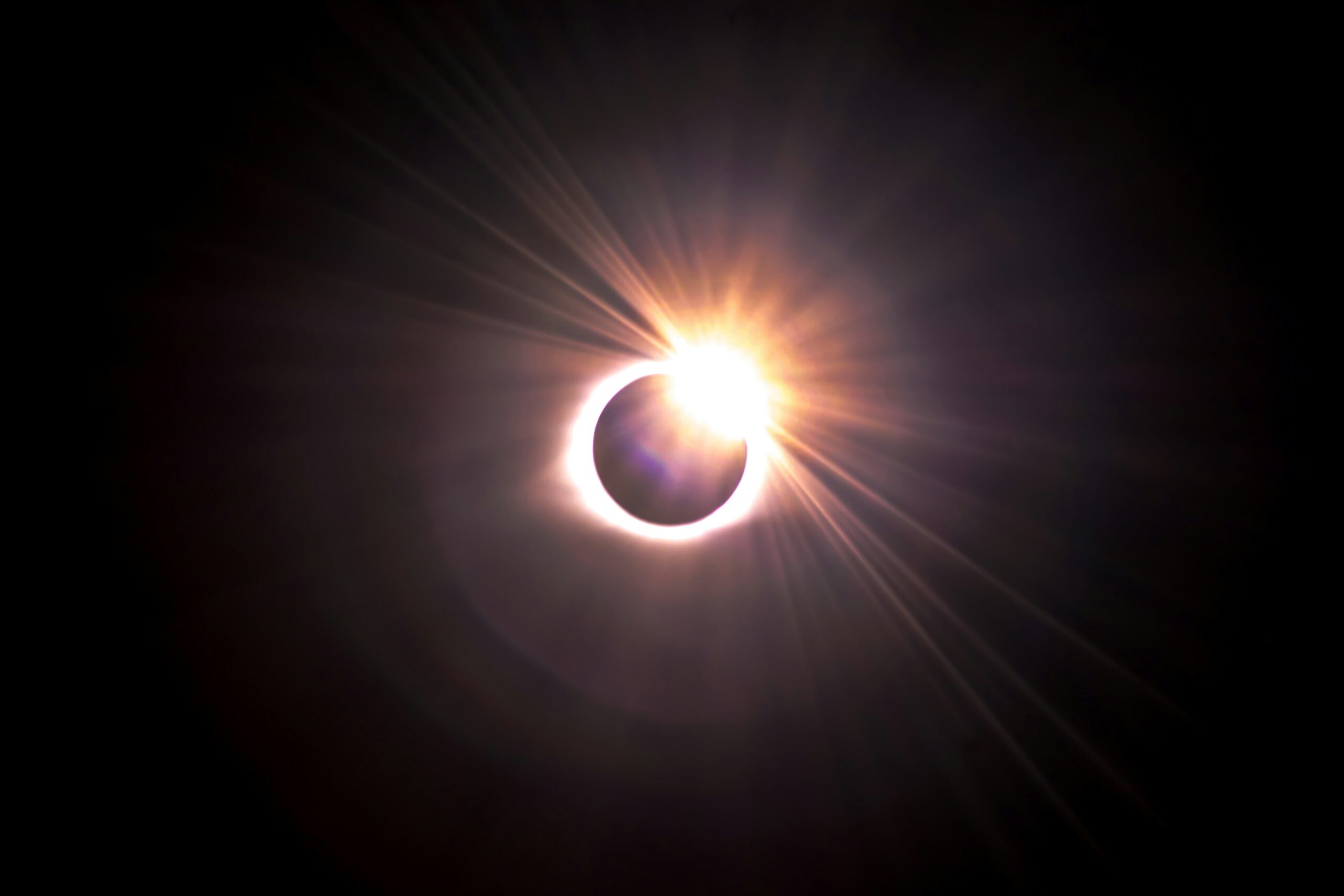
A total solar eclipse will cross parts of the Northern Hemisphere on 12 August, giving skywatchers in Greenland, Iceland, Spain, Russia and a small corner of Portugal a chance to see the Moon completely cover the Sun. Kursiv Uzbekistan has gathered viewing safety tips in the lead-up to the much-awaited event.
Only a small section of the eclipse’s path will experience totality; the most popular spots to see it include northern Spain and western Iceland. Unlike in Spain, where it will arrive toward sunset, totality in Iceland will happen in the late afternoon.
Less than two minutes will pass for the majority of individuals in the path of totality when the sun is entirely obscured. You can safely look directly at the Sun during that brief window of time during a total solar eclipse without the need for specialised eye protection.
Tips for a risk-free solar eclipse viewing in August 2026
The most basic rule is that you should always wear sunglasses or other protective eyewear when staring directly at the sun during partial phases. NASA says regular sunglasses aren’t safe to wear during an eclipse; instead, you should use eclipse glasses or a portable solar viewer made for the purpose.
- View the eclipse with the correct eyewear or a solar viewer. They should meet the international standard ISO 12312-2. Make sure they are in excellent condition before using them, and discard any that are damaged.
- Put on the shield before you turn your face to the sun. Prior to gazing upwards, don your eclipse glasses or a portable viewer, and then turn your head to the side before taking them off.
- Only remove your glasses during totality. Those in the path of totality can only gaze directly at the sun after the moon has completely covered its bright face.
- Once the sun is visible again, you should put your eclipse glasses back on immediately. It is risky to look directly at the bright sun, even a tiny speck, without protection.
- When using binoculars, telescopes, or cameras, do not use eclipse glasses. To concentrate the sun’s rays, these optics need solar filters that are custom-made and fastened to the front.
- Use skin protection as well. Apply sunscreen, wear a hat, and wear protective clothing if you plan on spending a few hours outdoors, according to NASA.
If a solar filter is not available, what then?
Avoid using sunglasses as a makeshift eclipse viewer unless you have certified eclipse glasses or a portable solar viewer. Use a pinhole projector or some other indirect viewing method instead. You can create a solar projection onto a nearby surface by positioning yourself with your back to the sun and looking through a tiny hole in a piece of card.
Another option is to use a colander, the spaces between leaves, or even just your fingers to create tiny projections of the partially eclipsed sun onto the ground. Keep your eyes shielded from the sun by not peering through the pinhole or any other makeshift aperture.
When viewing a solar eclipse, is it safe to wear a welding mask?
While it’s true that some welding filters offer sufficient protection, it’s important to note that not all welding shields are solar-friendly. According to the American Astronomical Society, welding filters with shade numbers 12 or higher let in just the right amount of sunlight, and shades 13 or 14 usually provide the best view.
Be advised against viewing the eclipse while wearing a welding helmet that is adjustable or has an auto-darkening feature. A significant threat to eyesight may arise from their inability to darken sufficiently or from their slowness to do so. The easiest and safest option is certified eclipse glasses or a portable solar viewer, which most people can use.