Protests sweep Europe as thousands rally over living costs and education

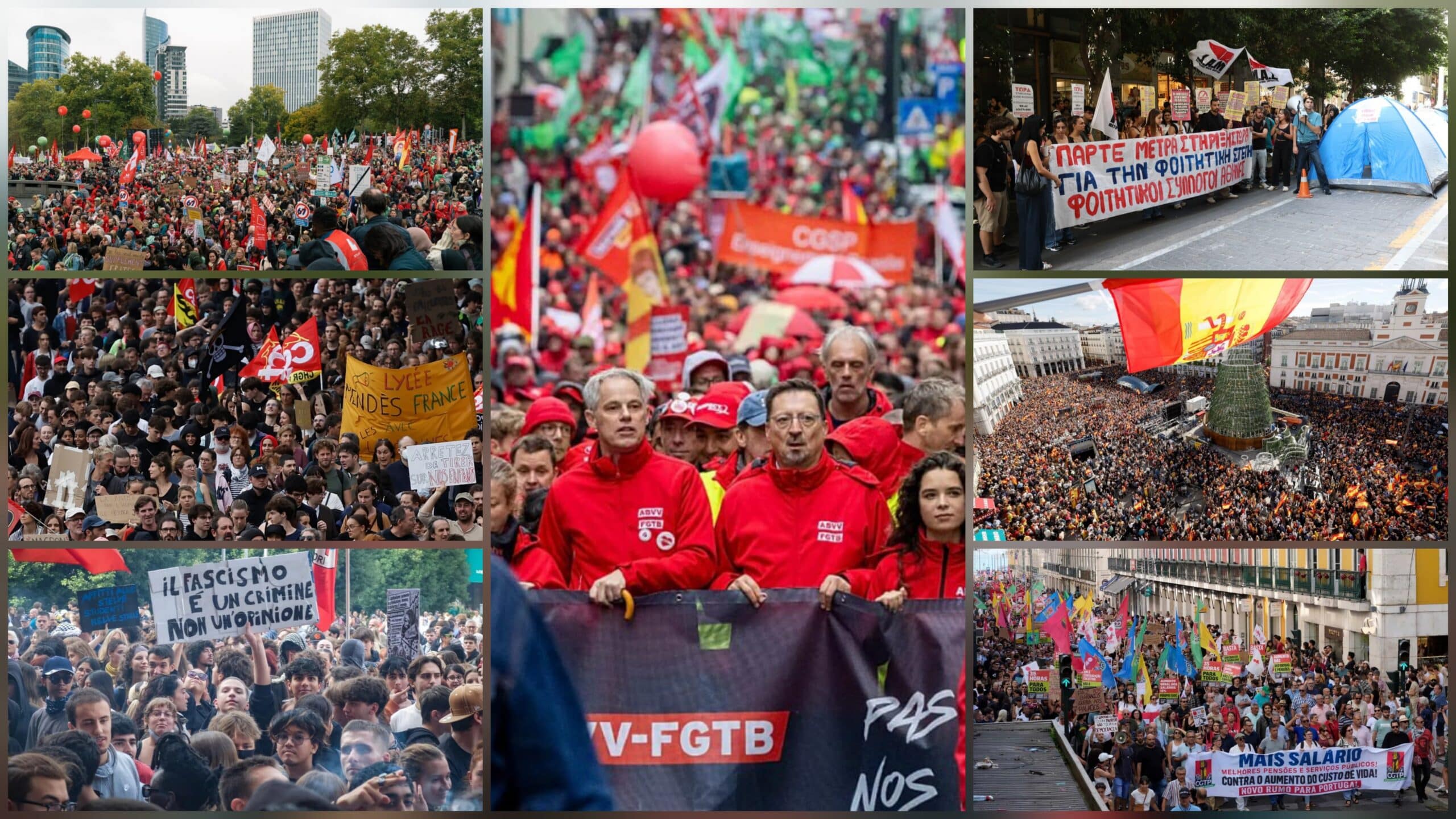
Hundreds of thousands of people have taken to the streets across Europe, with demonstrations in France, Belgium, Italy and Portugal escalating over the weekend of October 17–18 amid growing frustration over living costs, education funding and public services.
The protests have different causes, ranging from teacher shortages and university fees to unaffordable housing and low wages. Although some demonstrations have turned violent, most began as peaceful marches organised by students, trade unions and community groups.
France has witnessed the largest mobilisation, with between 550,000 and 800,000 people joining nationwide demonstrations on Saturday. Meanwhile, violent clashes with police have been reported in Belgium and Italy, while tens of thousands marched in Portugal.
France: Student protests grow into nationwide unrest
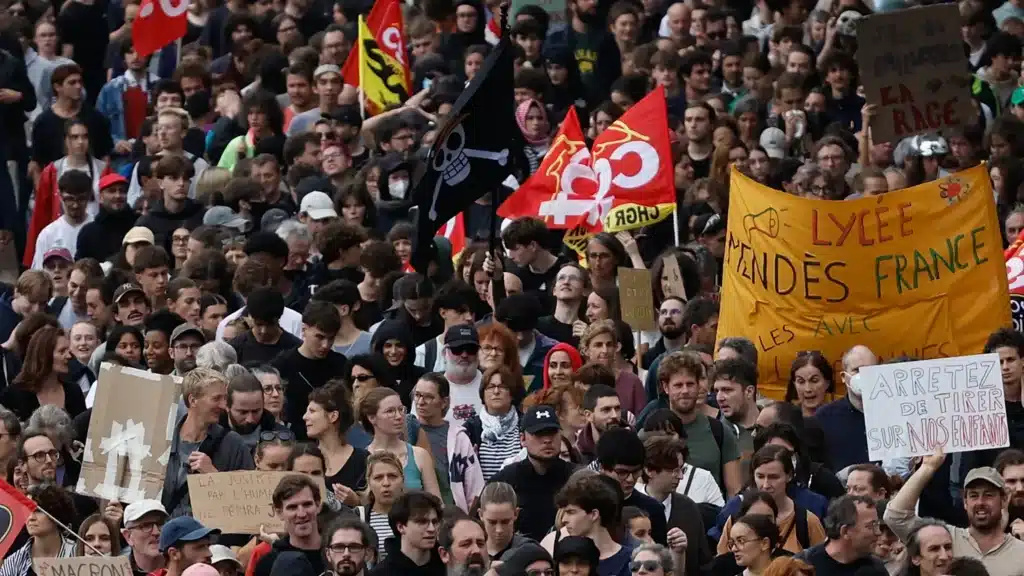
The French movement began on September 17 in Créteil, near Paris, when secondary school students protested against teacher shortages, overcrowded classrooms and deteriorating facilities.
The demonstrations spread nationwide before expanding into a broader campaign over living costs, wages, pensions and public services.
🇫🇷France erupts. Fuel prices, living costs, crumbling schools and a budget plan freezing benefits brought 550,000 onto the streets, by the government’s own count. From Paris to Dijon, the chant was "Macron DEMISSION." Then came 1,200 arrests, 150 police hurt and Limoges’ town hall in flames. The anger is real. So is the violence. Blur them and the looters get the HEADLINE.
— Rajat Jain (@RajatJain) October 18, 2026
On October 17, demonstrations took place in approximately 110 locations. While many remained peaceful, clashes erupted in Paris, Lyon, Marseille and other cities. Shops were looted, vehicles were set on fire and several public buildings were attacked.
Authorities reported around 1,200 arrests and at least 150 injured police officers. President Emmanuel Macron condemned the violence, while concerns about police tactics prompted investigations into injuries sustained by protesters.
Aucune place pour la violence dans notre République. Ceux qui ont cassé, attaqué les préfectures comme les commerces, pillé jusqu’à nos mairies, seront poursuivis et punis. Aux forces de l’ordre, garantes du droit à manifester, je dis le soutien de la Nation. Nous ferons tous bloc face aux semeurs de chaos, qui ne cherchent qu’à abattre nos institutions et empêchent ceux qui expriment pacifiquement leurs revendications de le faire.
— Emmanuel Macron (@EmmanuelMacron) October 17, 2026
Belgium: Students oppose education reforms and higher costs
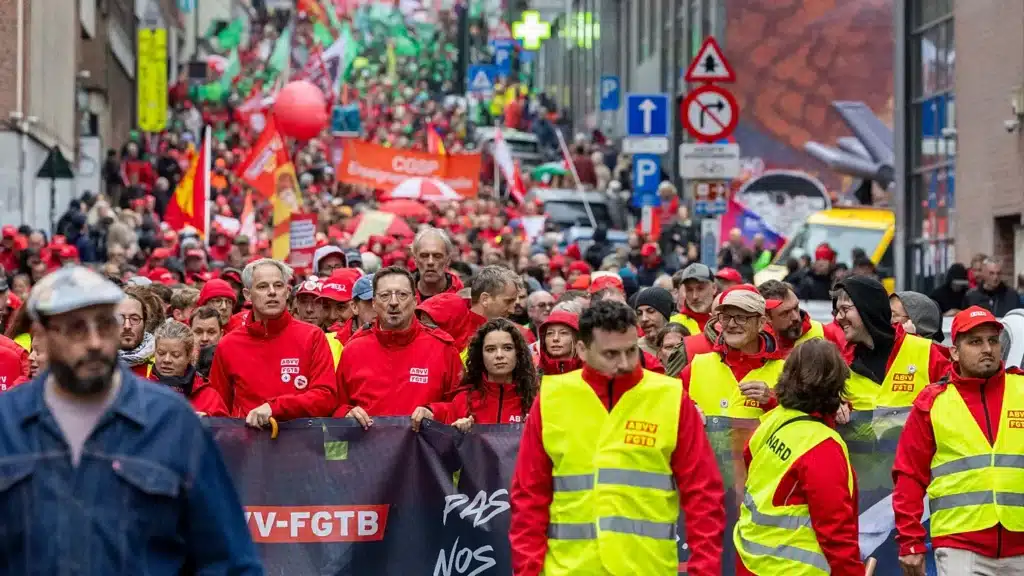
Students in French-speaking Belgium have protested reforms involving a planned €500 million reduction in education spending by 2029, higher university fees and changes to teachers’ working hours.
Demonstrations spread through Liège, Brussels and other cities during early October, with more than 100 people detained after clashes in Liège on October 7.
Belgian police fire tear gas to disperse hundreds of protesters taking to the streets of Brussels in spontaneous demonstration, in the wake of a day of protest organised in neighboring France. https://t.co/fyTRaJQTgY
— Al Arabiya English (@AlArabiya_Eng) October 17, 2026
Fresh unrest erupted on October 17, when police used tear gas and water cannon against groups throwing projectiles in central Brussels. Smaller clashes occurred in Liège.
Belgian Interior Minister Bernard Quintin condemned the violence, while student organisers maintained that their protests concerned access to affordable education and the impact of government reforms.
NON, ce qui se déroule à Bruxelles n’est plus de la simple contestation ! C’est de la violence pure et simple, organisée et répétée pour déstabiliser notre société. La police fédérale est en soutien de la police locale. Tous les moyens nécessaires seront utilisés pour rétablir l’ordre face aux émeutiers. https://t.co/zJXyu5xUO1
— Bernard Quintin (@BernardQuintin_) October 17, 2026
Italy: Students and workers protest spending priorities
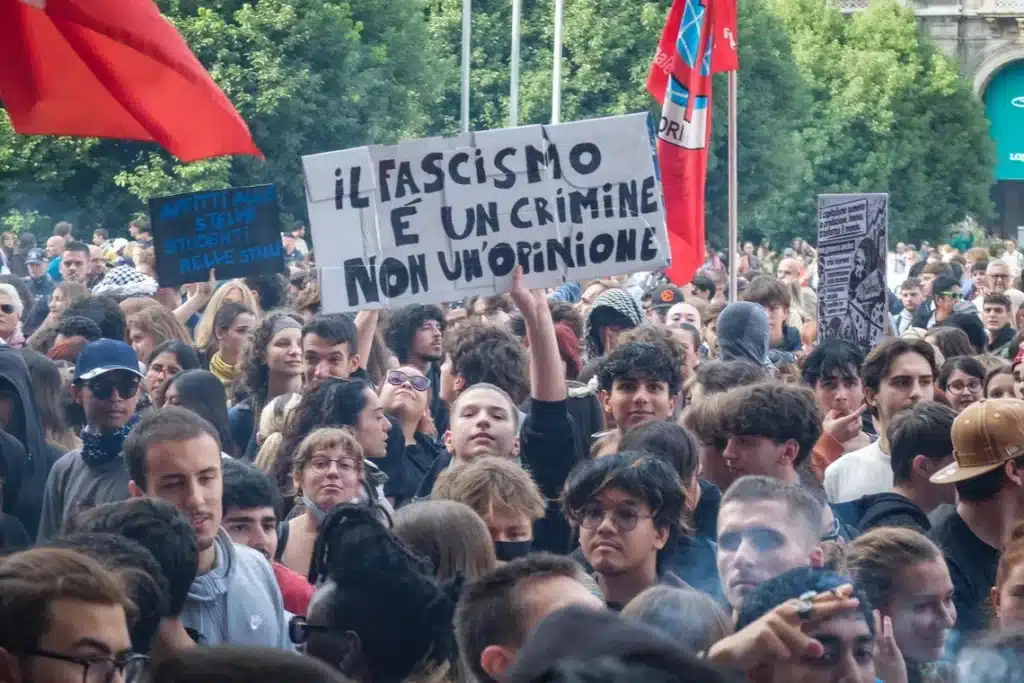
Italy has seen demonstrations over education spending, low wages, living costs and government policies.
Student protesters rallied in several cities during October, criticising what they view as insufficient investment in schools and universities. Some marches also opposed military spending and Italy’s involvement in international conflicts.
On October 17, a demonstration against war and rising living costs in Milan turned violent when masked protesters threw stones at police, looted shops and set barricades on fire.
Protesters clash with police in Milan, Italy, near the historic cathedral, against the high cost of living. https://t.co/FvCu2JLqe3
— Globe Eye News (@GlobeEyeNews) October 18, 2026
Police deployed tear gas and water cannon. At least two officers were injured and around 50 demonstrators were detained, according to Italian news agency LaPresse.
Prime Minister Giorgia Meloni condemned the violence, while Milan Mayor Giuseppe Sala acknowledged protesters’ grievances but rejected attacks on police and property.
Ho grande rispetto per le migliaia di persone che oggi hanno manifestato pacificamente, anche partecipando alla mobilitazione indetta dalla CGIL che ha visto anche la partecipazione dei leader della sinistra. Qualunque siano le idee per le quali si manifesta, la partecipazione è alla base di qualunque sana democrazia. Dall’altro lato, però, non possiamo ignorare quanto accaduto in altre piazze italiane. A Milano, come mostrano queste immagini, lanci di pietre contro le Forze dell’Ordine, agenti feriti, danneggiamenti e violenze che hanno costretto a interrompere il corteo. A Torino sono state fermate persone con sanpietrini e martelletti frangivetro. A Bologna i disordini hanno portato alla chiusura precauzionale della stazione ferroviaria. Teppisti che sfruttano le manifestazioni per seminare il caos, aggredire chi garantisce la sicurezza e tenere in ostaggio intere città. Manifestare è un diritto. Mettere a ferro e fuoco le nostre città non lo è. Rinnovo la mia richiesta alle opposizioni: non siano ambigue su questo. Condannino senza ambiguità queste violenze e lancino un appello chiaro affinché ogni mobilitazione sia pacifica. Di fronte a scene del genere, il rifiuto deve essere unanime. Ogni reticenza diventa giustificazione. Il silenzio non è accettabile.
— Giorgia Meloni (@GiorgiaMeloni) October 17, 2026
Portugal: Housing crisis brings thousands onto the streets
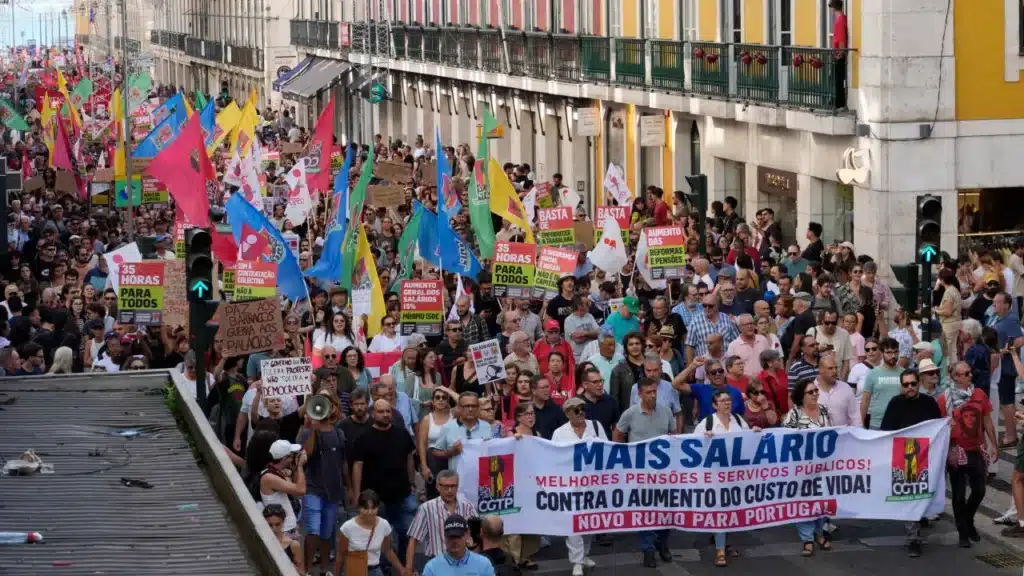
In Portugal, demonstrations have focused on soaring rents, rising property prices, low wages and deteriorating public services.
Tens of thousands marched through Lisbon on October 17 following a call from the CGTP trade union confederation. Demonstrators demanded higher wages, improved pensions and action to make housing affordable.
Housing prices have more than doubled in Portugal since 2017, while rents on new contracts have risen sharply, according to reporting by Reuters.
A Europa está em chamas: protestos contra a crise salarial e habitacional chegam a Portugal. Milhares de manifestantes reuniram-se nas ruas de Lisboa, convocados pela Confederação dos Trabalhadores Portugueses (CGTP); também houve protestos em Coimbra e Porto. #Portugual https://t.co/sIcQrELijo
— Hugo Borges (@hbj_r77032) October 17, 2026
Some protesters erected tents in Lisbon’s Rossio Square, where activists pledged to remain overnight. Similar housing demonstrations have taken place in Porto, including an encampment cleared by police earlier in the week.
Unlike the clashes reported in France, Belgium and Italy, the main Portuguese demonstrations were largely peaceful.
Spain: Housing protests intensify after eviction of pensioner
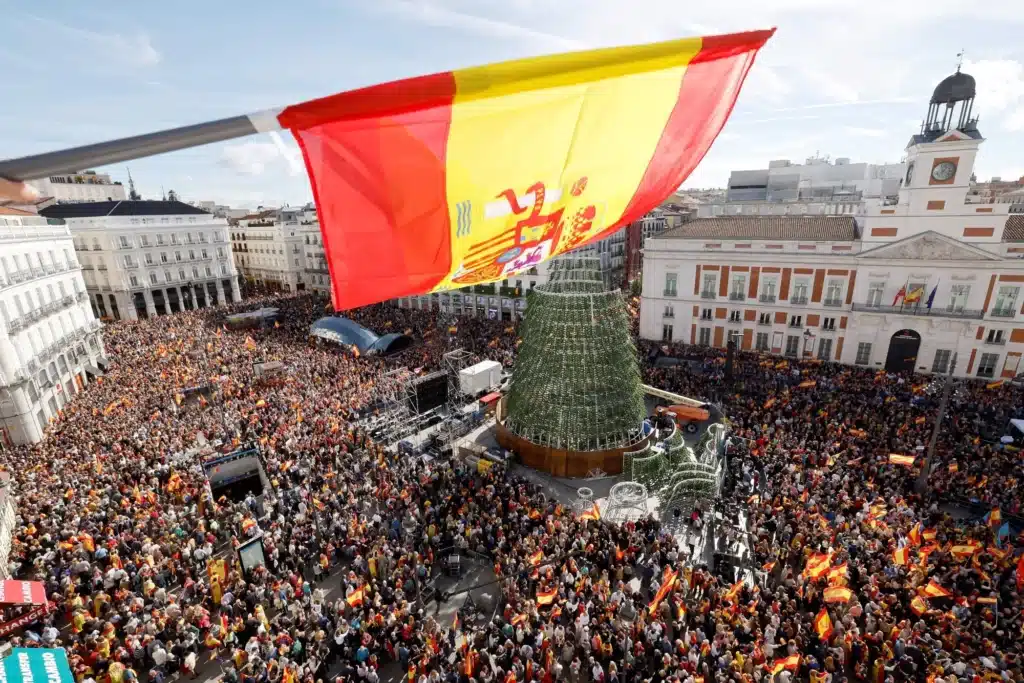
Spain has experienced weeks of demonstrations over rising housing costs and evictions, with protesters demanding stronger protections for tenants.
The movement gained momentum after 87-year-old pensioner Maricarmen Abascal was evicted from her Madrid home in September.
Protesters in Spain have set up 1,200 tents in Madrid’s Puerta del Sol to demand decent housing for all. Over the past decade, rents surged 80%, driven primarily by short-term rentals like Airbnb and real estate speculation. Housing is a human right! https://t.co/YRYFff1rbO
— Power to the People ☭🕊 (@ProudSocialist) October 14, 2026
On October 3, tens of thousands marched in Madrid and other cities after parliament rejected a government proposal that included automatic tenancy renewals and protections against evicting vulnerable residents.
The housing dispute has also increased pressure on Prime Minister Pedro Sánchez‘s government during a period of political instability.
Creímos que después de la crisis financiera, de los recortes, del sufrimiento, de la desigualdad y los desahucios, una derecha moderada habría aprendido del fracaso de las recetas neoliberales. Pero lo único que están proponiendo son sacrificios. Es decir, recortes a los pensionistas, a los trabajadores, a las mujeres. Y se olvidan de cualquier tipo de sacrificio para los de arriba, a los cuales ni mencionan.
— Pedro Sánchez (@sanchezcastejon) October 17, 2026
Greece: University students protest unaffordable living costs
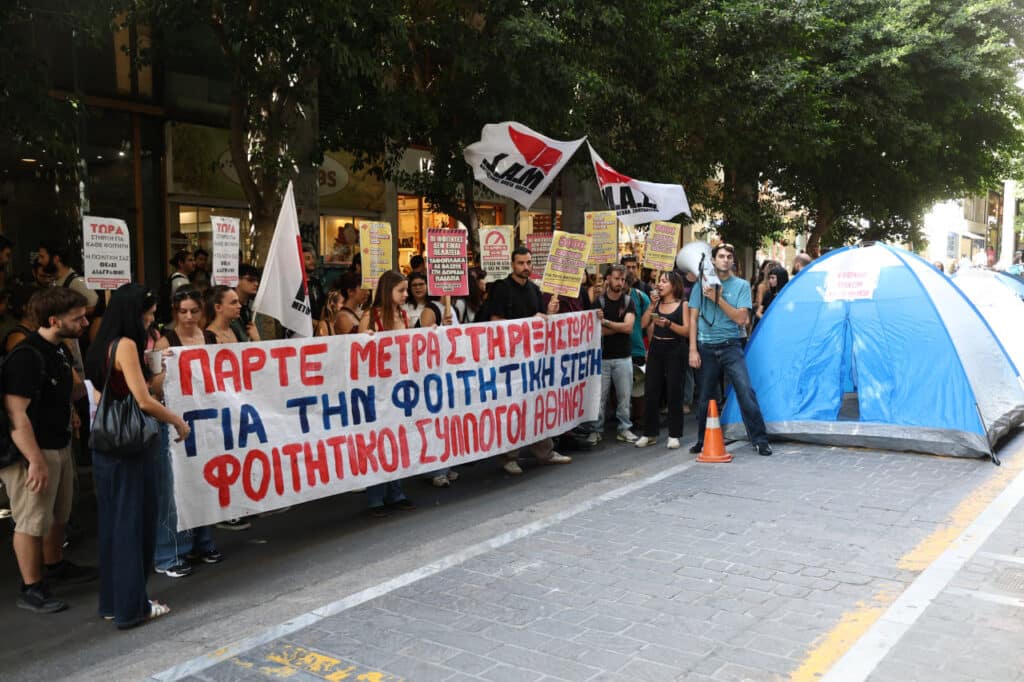
University students demonstrated in Athens on October 13, setting up tents near parliament to highlight the cost of accommodation, transport, food and educational supplies.
Protest organisers said many students had to work alongside their studies to cover basic expenses.
🚨 Ένταση σημειώθηκε στην πλατεία Συντάγματος μεταξύ φοιτητών και αστυνομικών, κατά τη διάρκεια κινητοποίησης για την ακρίβεια και τα υψηλά ενοίκια. 🏕️ Με σύνθημα «Αφού δεν μας ακούν, ας μας δουν», φοιτητές έστησαν σκηνές στο Σύνταγμα, πραγματοποιώντας συμβολική ολονύχτια κατασκήνωση. 🗣️ Η ένταση προκλήθηκε όταν επιχείρησαν να ανοίξουν πανό και αστυνομικοί τούς ζήτησαν να μετακινηθούν στο πεζοδρόμιο, προκαλώντας λεκτικές αντιπαραθέσεις. 🏠 Οι διαδηλωτές ζητούν πλαφόν στα ενοίκια, αύξηση του φοιτητικού στεγαστικού επιδόματος και περισσότερες δωρεάν εστίες, καταγγέλλοντας ότι το κόστος ζωής αναγκάζει συμφοιτητές τους να εγκαταλείπουν τις σπουδές τους. #StudentProtest #Syntagma #Athens #greece #tanea
— TA NEA (@ta_nea) October 13, 2026
Panagiotis Moschonas, president of the University of West Attica students’ union, said even a small 35-square-metre flat could cost €400–500 per month.
Eleftheria Giannoula, president of the Agricultural University of Athens students’ union, said Greek students were joining their voices with those protesting in France and Spain.
Albania: Students demand prime minister’s resignation
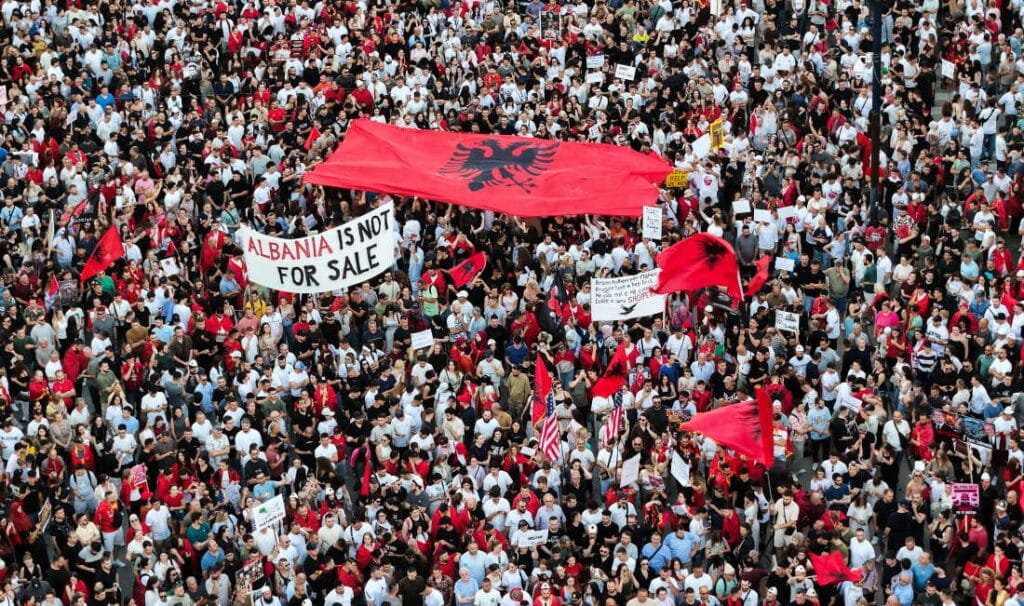
In Albania, student-led demonstrations have developed into a campaign demanding Prime Minister Edi Rama‘s resignation over corruption allegations, unemployment and dissatisfaction with government policies.
Protests in Albania have turned violent, with demonstrators clashing with police in Tirana. Students have rallied for four consecutive days, demanding the prime minister’s resignation. Al Jazeera’s Imogen Kimber reports. https://t.co/YrCdH1aQoc
— Al Jazeera English (@AJEnglish) October 16, 2026
The protests follow months of opposition to a proposed luxury coastal development backed by investors including Jared Kushner, US President Donald Trump‘s son-in-law.
The movement expanded in October, with thousands marching in Tirana and other cities. On October 17, protesters threw rocks at police, who responded with tear gas, stun grenades and water cannon.
Around 500 people had been detained during the unrest, with approximately 120 officers and 45 protesters injured.
Rama, who has governed since 2013, has rejected demands to resign and pledged to protect peaceful demonstrations while maintaining public order.
Alberto Alemanno, professor of EU law and policy at HEC Paris, told Al Jazeera that France had become the centre of a wider mobilisation, but stressed that the protests remained separate movements.
He also identified early signs of mobilisation in Germany and Austria, although large demonstrations comparable to those in France had not been confirmed there as of October 18.