Uzbekistan adopts revised Latin alphabet after years of debate

Uzbekistan has officially approved changes to its Latin-based alphabet after President Shavkat Mirziyoyev signed a law replacing four existing letter forms, according to Saida Mirziyoyeva, head of the Presidential Administration.
Mirziyoyeva announced the decision on October 21, which coincides with Uzbek Language Day, describing it as the correction of a longstanding historical mistake.
«At last, a historical mistake of many years has been corrected,» she wrote on her Telegram channel.
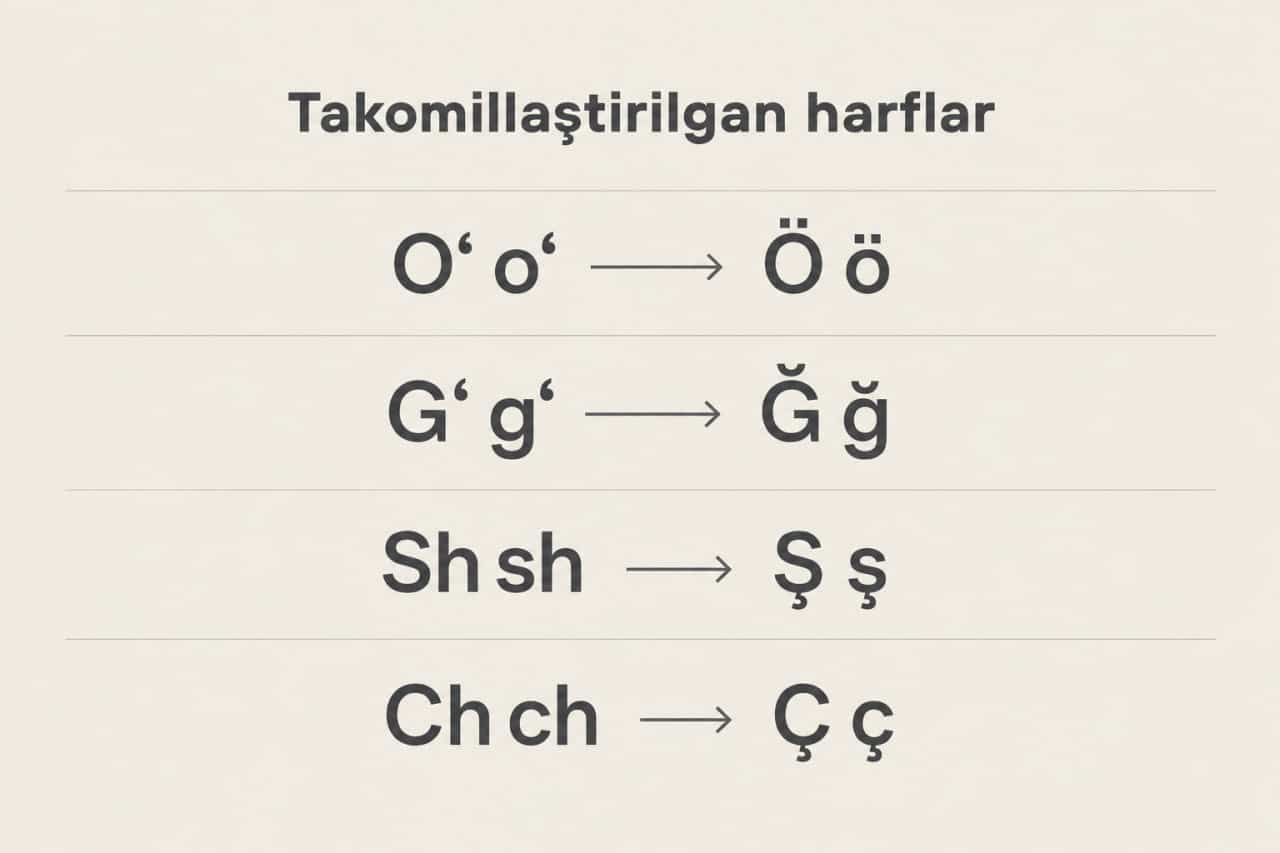
The revised alphabet replaces four letters and letter combinations with characters containing diacritical marks. The changes are intended to simplify Uzbek spelling, improve digital communication and eliminate longstanding difficulties with the existing system.
What letters are changing in the Uzbek alphabet?
Under the amendments, four existing forms will be replaced:
- O‘ o‘ → Ö ö
- G‘ g‘ → Ğ ğ
- Sh sh → Ş ş
- Ch ch → Ç ç
The letter combination Ng will no longer be classified as a separate letter, although the sound and its spelling will remain in use.
The revised alphabet will contain 28 letters and one apostrophe sign, replacing the previous structure of 26 letters and three letter combinations.
Uzbekistan’s Legislative Chamber approved the legislation on July 7, followed by the Senate on September 10.
Mirziyoyeva recalled that she first proposed revising the alphabet during a December 2023 conference dedicated to the Jadid reformist movement.
She acknowledged that the changes could raise concerns but argued that the existing writing system needed improvement to strengthen the Uzbek language’s position in the digital environment.
Will Uzbekistan residents need to replace their documents?
Citizens will not have to replace existing documents because of the alphabet reform.
According to Mirziyoyeva, passports and other valid documents, national currency and securities will remain legally valid.
Textbooks, signs and official displays will be updated gradually as they reach the end of their service life or scheduled replacement dates.
The phased transition is intended to minimise costs for individuals, businesses and government institutions.
Mirziyoyeva also highlighted the symbolic significance of signing the legislation on October 21, the anniversary of Uzbekistan’s 1989 law granting Uzbek the status of the state language.
She expressed hope that the revised alphabet would improve literacy among young people and strengthen the standing of Uzbek.
