Air quality in Tashkent: Pollution propels Uzbek capital into top-10

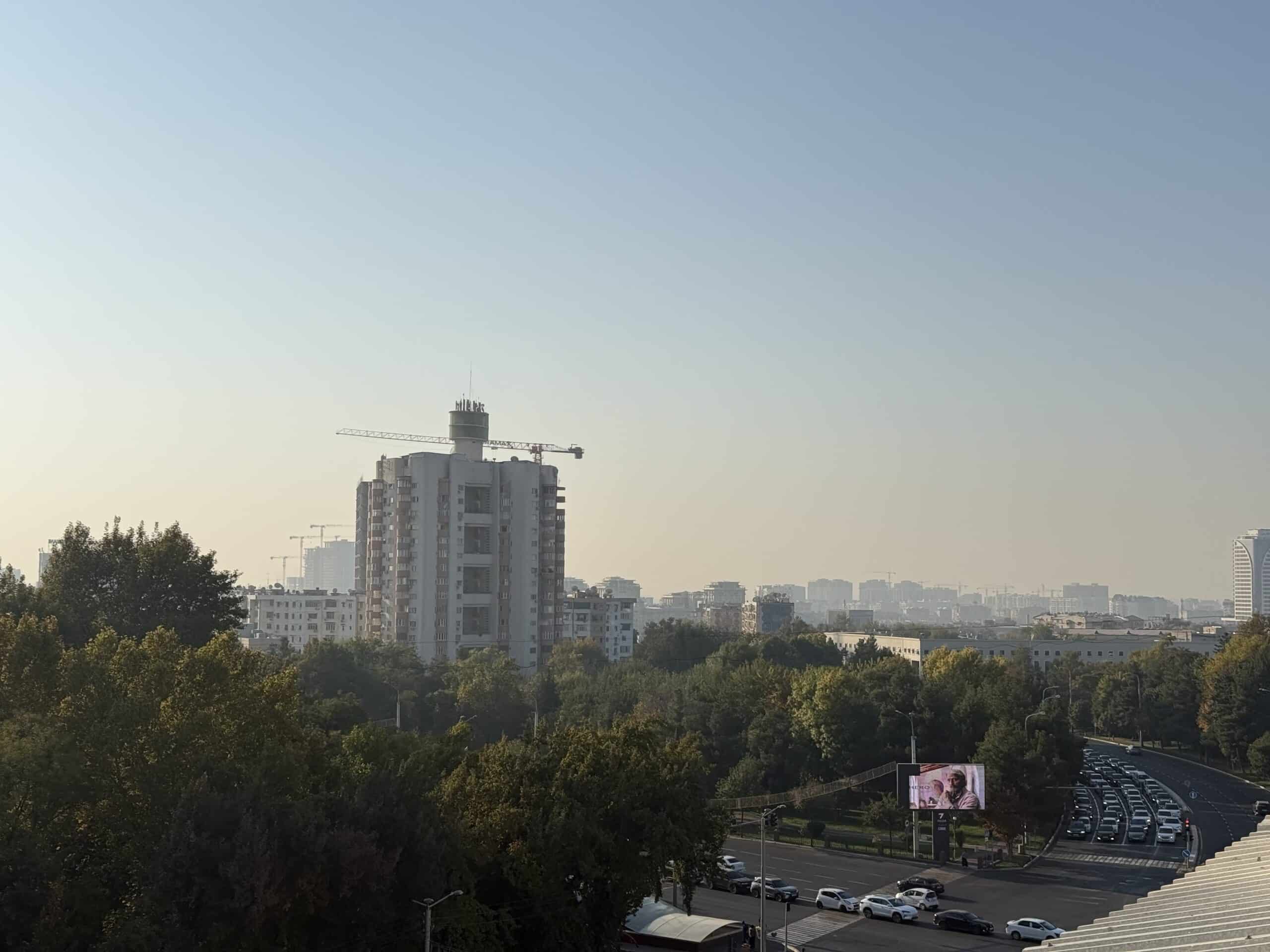
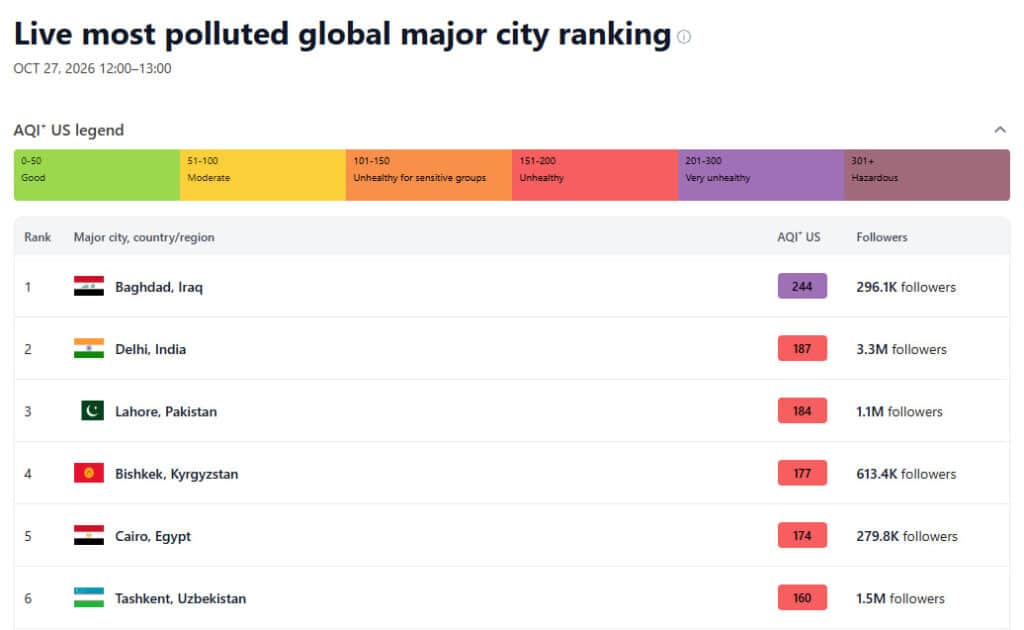
Tashkent is back on track again to rank high in pollution ratings as autumn brings back the conditions that made the Uzbek capital one of the world’s most polluted cities last year.
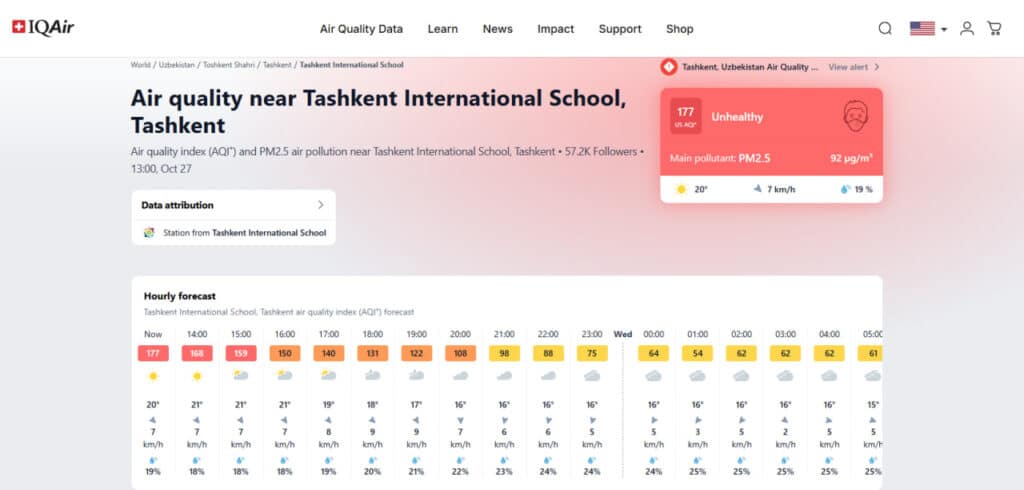
At 10 a.m. on Tuesday, 27 October, Swiss monitoring platform IQAir recorded an Air Quality Index (AQI) of 177, classified as unhealthy. The concentration of fine particulate matter, or PM2.5, reached 92 micrograms per cubic metre in some areas.
The situation recalls the air pollution crisis of November 2025, when conditions in the capital became considerably worse. On 17 November, PM2.5 concentrations surged to 202 micrograms per cubic metre, more than three times Uzbekistan’s daily limit.
PM10 levels reached 373 micrograms per cubic metre, while residents reported a strong burning smell and poor visibility.
Uzbekistan’s Hydrometeorological Service attributed that episode to a temperature inversion, which trapped polluted air close to the ground and prevented it from dispersing.
The crisis prompted President Shavkat Mirziyoyev to sign a decree on 24 November introducing stricter controls on construction dust, industrial emissions and vehicle pollution. The measures also included expanded air monitoring and new requirements for construction sites.
