Iran goes on defensive after claiming Marco Rubio toured ‘Persian’ sites in Samarkand

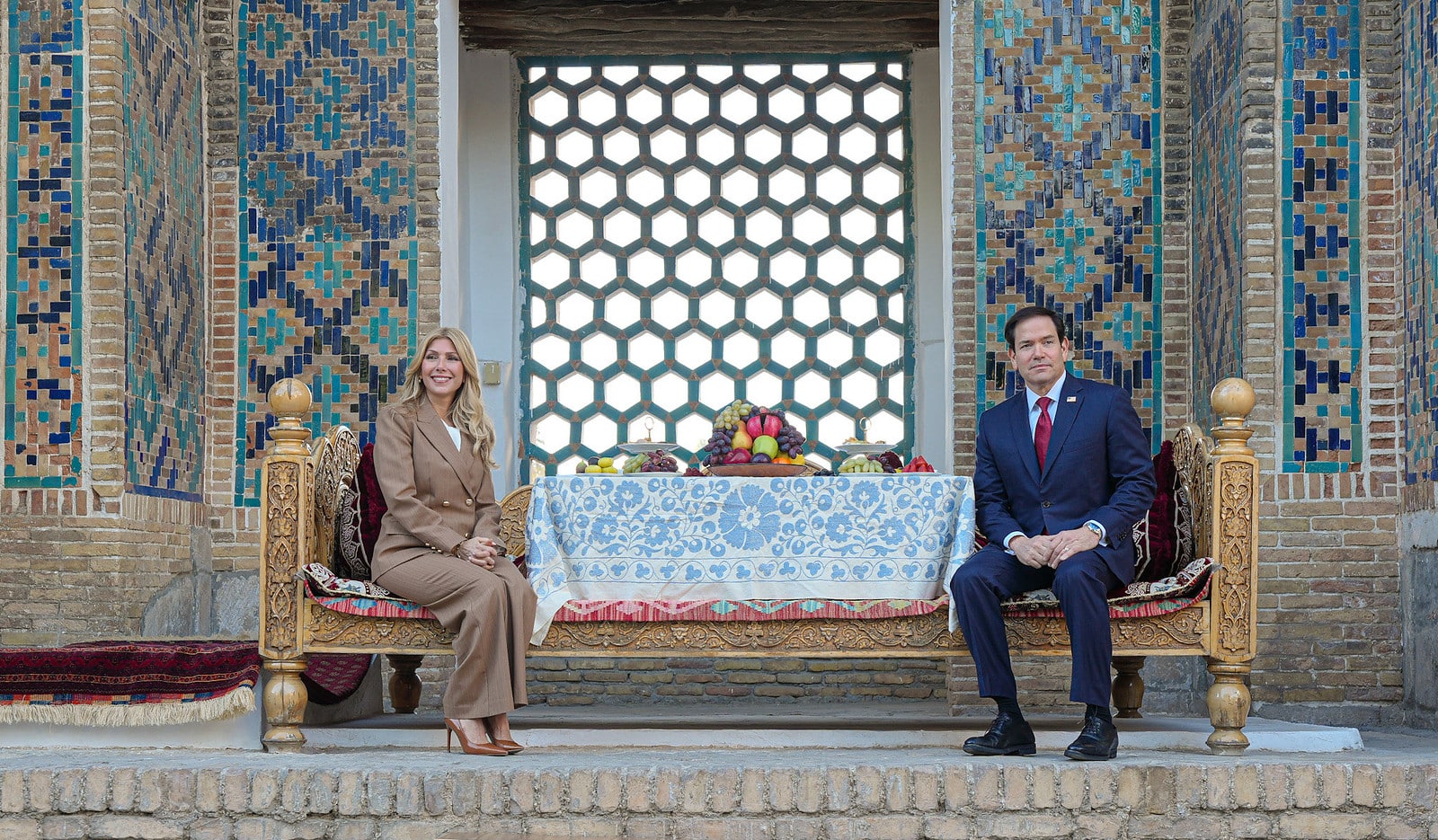
Iran has said that last week’s online swipe at the US Secretary of State Marco Rubio, which triggered a diplomatic pushback from Tashkent, was aimed at Washington alone and did not in any way contest Samarkand’s Uzbek heritage.
«Some of our colleagues at our embassies published their posts as messages addressed to the US side,» Iranian Foreign Ministry spokesman Esmaeil Baghaei said at a press conference earlier on Wednesday.
The diplomat stopped short of offering a public apology, reiterating instead that Tehran «valued our relations with Uzbekistan.»
«We are confident that our shared heritage, found in various parts of neighbouring countries and further afield, serves as a foundation for preserving and strengthening friendly relations between our peoples,» Baghaei insisted.
Spokesperson of the I.R. of Iran: The bond and friendship between Iran and Uzbekistan are eternal. We are confident that our shared heritage across the lands of neighboring countries serves as a basis for the continuation and strengthening of friendly relations between nations. https://t.co/FvME4oMnL4
— Iran Embassy_Tashkent (@iran_uzbekistan) October 27, 2026
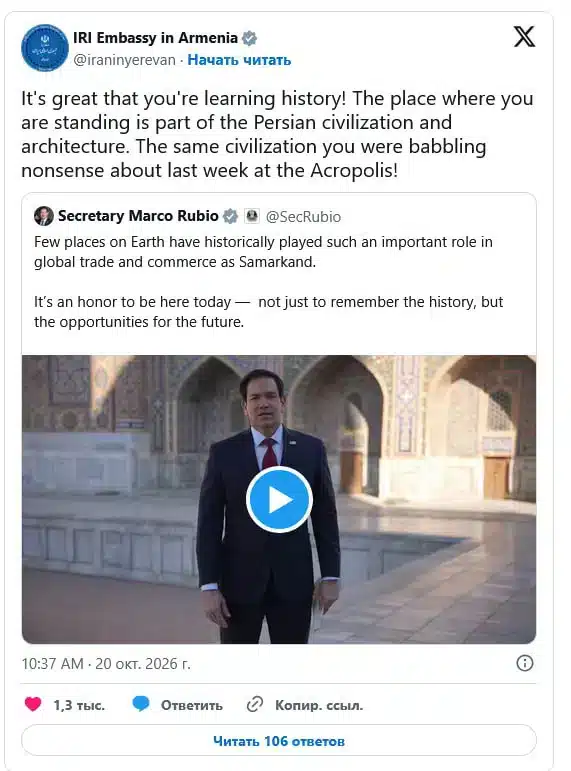
Last week, Tashkent summoned ambassador Mohammad Ali Eskandari to voice its unease over an X post from the Iranian embassy in Armenia.
The publication in question featured images of US Secretary of State Marco Rubio at Samarkand’s Registan Square, with a caption suggesting that the Uzbek city was part of «Persian civilisation and architecture.»
Read more: What Rubio said about Uzbekistan during his Samarkand visit
A message to Washington lands badly in Tashkent
The X post followed Rubio’s earlier remarks in Athens, Greece, where he invoked ancient Persian attacks on the Acropolis before criticising Iran’s present-day leadership, The Diplomat reported.
The social media attack on Rubio did not sit well with Uzbekistan, which hosted the C5+1 multilateral summit attended by the US and five Central Asian countries. The Uzbek diplomats took issue with the Iranian interlocutor, calling it a «one-sided, politicised interpretation» of the country’s history.
Uzbekistan said that while it valued the «mutual respect and trust» in its relationship with Iran, Samarkand, Bukhara and Khiva were an inherent part of the centuries-long legacy of Uzbek statehood.
Read more: Uzbekistan signs Artemis Accords with Rubio in Samarkand
Tashkent demanded that the posts be removed and similar incidents prevented, which Tehran has apparently done.
