Uzbek Engine for Turkic Satellite: Why Republic is no Longer Just a Buyer of Imagery

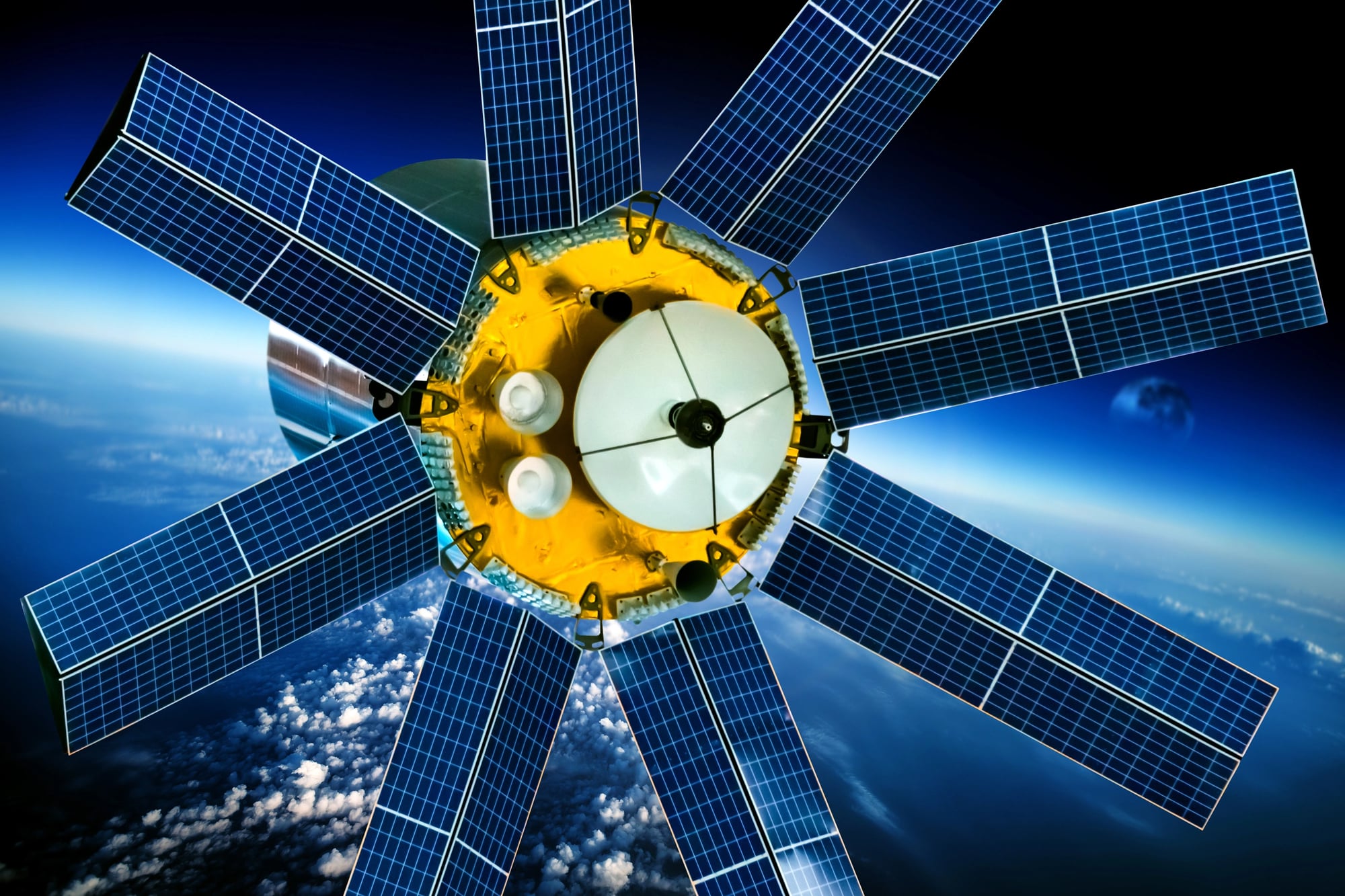
Why is Uzbekistan moving from buying images to creating its own orbital constellation, and why does the country need a design bureau amid tough competition with Elon Musk? This was discussed in an interview with Kursiv Uzbekistan by space technology expert of the «Uzbekcosmos» agency, Akhror Agzamov.
In 2020, Uzbekistan effectively began a «space reboot.» During this time, the «Uzbekcosmos» agency has gone from studying international experience to implementing specific cases in agriculture and water management. Today, the agenda includes launching its own satellites, creating a domestic engine for a satellite of the Organization of Turkic States (OTS) countries, and preparing the first cosmonaut of independent Uzbekistan.

«Soft landing» strategy: why we did not buy a satellite right away
— Akhror, «Uzbekcosmos» has announced plans to launch two Earth remote sensing satellites (ERS). What stage is the project at and what is the cost?
— Before naming figures, it is important to understand our strategy. The agency has been actively working since 2020, and we started by studying the experience of our neighbors. We realized: investing in the purchase of a satellite in the very first year is a path to losses. The lifespan of a spacecraft is 5–7 years. If there is no ready infrastructure for data processing and no established market of consumers, in the best case the satellite will operate idle for the first 2–3 years. You simply will not have time to start using it, and it will already have to leave orbit.
Therefore, we chose the path of partnership: we bought images from existing satellite constellations. It was cheaper. Over these years, we have established processes: today we have dozens of projects in agriculture, water and forestry, geology and cadastre. We fully cover monitoring of agricultural land and water volumes in reservoirs. Now that demand has been formed, owning our own spacecraft has become much more reasonable — and it is not only about economics. We now have tasks for which operators of existing satellite constellations may not be suitable: specific spectral ranges, revisit frequency, imaging priority are required. In addition, in recent years the issue of data sovereignty has become much more relevant — dependence on foreign operators in critically important monitoring carries its own risks.
— Is there interest from private business in the results of the work you are doing?
— We have made a huge step in terms of regulation. Previously, even medium-resolution images (a building could barely be seen) were considered restricted. Together with colleagues from other agencies, we achieved a reduction of this threshold first to 1.5 meters, and then to 50 cm per pixel. Now the legal framework allows the private sector to fully work with the data. Our geospatial monitoring center is open to business: farmers, developers, logistics companies and firms that would like to engage in image analytics.
— How commercially profitable is this center today?
— From the point of view of benefits for the state, this center, like the state space monitoring program, is a very effective tool. The main tasks are detection of cadastral violations, illegal land seizure or unauthorized construction in protected water zones. This brings enormous benefits to the state through management efficiency, early detection of illegal activities, environmental damage, as well as cases of tax evasion, digitalization of sectors, and reduction of the shadow economy. The benefits amount to millions of dollars per year.
The Turkic project
— Recently, a joint satellite of the Organisation of Turkic States (OTS) was announced. What exactly is Uzbekistan’s role?
— This is a 12U format satellite (CubeSat) weighing up to 16 kg. Initially, it was an initiative of Kazakhstan to test their own systems. But Uzbekistan proposed a critically important component — a propulsion system.
The mission is рассчитана на два года, and for the satellite not to burn up in the atmosphere prematurely due to loss of speed, it needs to maneuver. Our engine will correct the orbital altitude. A working model has now been created and is undergoing testing. In July this year we plan to integrate the engine with the spacecraft. The Kazakh side is aiming to launch the mission in mid-2027.
Queue to orbit: why we need a cosmonaut
— Is the flight of the first cosmonaut of independent Uzbekistan about image or science?
— It is a pure field of high technologies. There is a condition — primarily long-term weightlessness, which cannot be reproduced on Earth for more than 20 seconds. In space, the production of medicines and unique 3D printing of fragile biological structures, which simply collapse under gravity, is already being scaled.
A mission of 10–14 days is the optimal duration for the first domestic program. But there is also an indirect effect. Remember the surge of interest among young people in science and engineering in the USSR when the first cosmonaut flew, or in the US after the Apollo program, and now humanity is returning to the Moon — the Artemis 2 mission with a flyby of the Moon. This gives society the boldness to dream big. The same revolutionary onboard computer of the Apollo lunar spacecraft weighing 70 kg became the «grandfather» of all modern computers, smartphones and recorders. Space is the extreme point of task complexity, the solutions to which later feed the Earth’s economy for decades.
Space data centers and the future
— How can we ensure that our engineers do not leave for NASA, but develop local startups?
— The space economy is growing explosively: five years ago its volume was $300 bn, today it is already more than $600 bn. We are entering a decade of giant orbital infrastructures.
One example: leading companies are now working on moving data centers into space. Why? Solar energy there is 10 times greater than on Earth. But such centers will weigh thousands of tons. The question is whether Uzbekistan will be a participant in this emerging new world. The train has already started moving, and we must manage to jump onto it with our competencies.
We plan to create a satellite engineering design bureau. Our roadmap includes about 10 satellites over the next 10 years. The first team is currently studying at Kyushu University (Kyutech) in Japan. They are not just getting diplomas — they are assembling our first 6U format nanosatellite there. It has already been named «Mirzo Ulugbek». When they return in 2027, they will have full-cycle experience — from drawing to operating the spacecraft in orbit.
What is being done in Japan is a nanosatellite weighing up to 12 kg. Its main task is training in building spacecraft and practicing the imaging process. Now, when we buy images, we simply set an area of interest. But the very art of controlling the camera, orienting the spacecraft in space — this is a separate competence that we will master precisely on «Mirzo Ulugbek».
— How is cooperation with Kyutech built and why is it not just buying a ready-made solution?
— Training at Kyutech is not classical lectures, but «in the field» work. We sent seven young engineers there on a grant basis. They are trained as a full team: each has their own role — from onboard systems to communications.
It is important to understand: Kyutech has conducted such programs more than 15 times for different countries. It is a global leader in training personnel for small satellites. Our guys are not just studying — they are designing and assembling a 6U nanosatellite (about 10×20×30 cm) with their own hands. This is a practical project: when the team returns in 2027, we will already have a ready spacecraft and a cohesive team with experience in development from scratch. Conservatively, we plan the launch for 2028.
— What barriers hinder private investment in Uzbekistan’s space sector?
— We have a very location and the absence of the «shadow of the Cold War,» which hinders technology exports in large countries. We do not have such strict technology restrictions as in the U.S. or China, which simplifies the purchase of components.
In space, there is no concept of «warranty repair.» If a satellite does not make contact or explodes at launch, the supplier cannot fix it. We need to adapt our legislation so that the state can work with such risks. This is a matter of insurance and specific R&D contracts.