A new platform for educational and cultural exchange centred on the Korean language and the «Korean Wave» has launched in the heart of Central Asia.
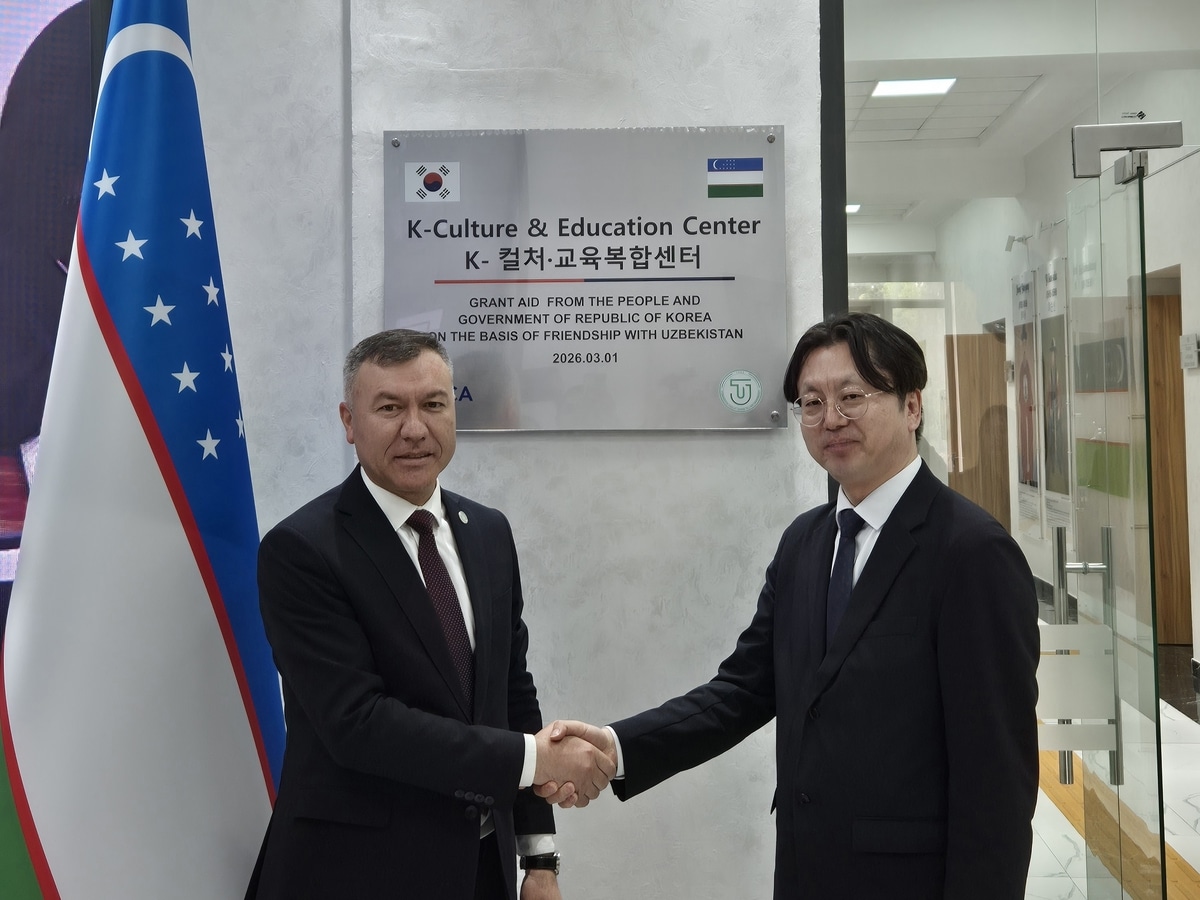
The Korea International Development Cooperation Center (KIDC) announced on Monday that it hosted an opening ceremony for the new K-Culture & Education Complex Centre on 21 April. The modernised facility is located within the Faculty of Oriental Languages at the Uzbekistan State University of World Languages in Tashkent.
Orchestrated by the Korea International Cooperation Agency (KOICA) in partnership with KIDC and Pyeongtaek University, the global programme dispatches young South Korean volunteers to nurture international talent and foster stronger ties with partner nations.
The initiative runs from September 2024 until March 2027 with a total operating budget of $1.12 mln. For the creation of the centre itself, KOICA invested $150,000 to transform existing university classrooms into a dynamic, multi-purpose hub.
What’s in the centre?
The newly renovated interior features dedicated Korean language classrooms, activity areas designed for K-pop and traditional dance practice as well as exhibition zones showcasing Korean aesthetics.
Standout additions include a collaborative co-working space and a real-time media wall. These features ensure the venue functions not merely as a place for knowledge transfer but as an active platform where local students can produce and share their own cultural content.
Speaking at the launch event, KOICA Uzbekistan Office Director Shin Myung-seop expressed his optimism for the facility’s future.
«We hope the centre will establish itself as a vital hub connecting local Korean language education with hands-on cultural experiences,» he said, adding that youth-driven exchange will serve as a crucial foundation for the long-term development of bilateral relations.
Tukhtasinov Ilhomjon, the rector of the host university, echoed these sentiments. He shared his delight at opening a space that seamlessly blends culture and education, noting that it will become a significant intellectual asset for the student body.
Over the project’s lifespan, KOICA plans to deploy 70 volunteers to manage language and cultural clubs, organise interactive programmes and lead community outreach initiatives. These grassroots efforts will be heavily supported by capacity-building workshops for local educators, substantial book donations and the introduction of KOKOA, an AI-powered Korean language learning application.