Uzbekistan’s Green Energy Production Jumps 29%


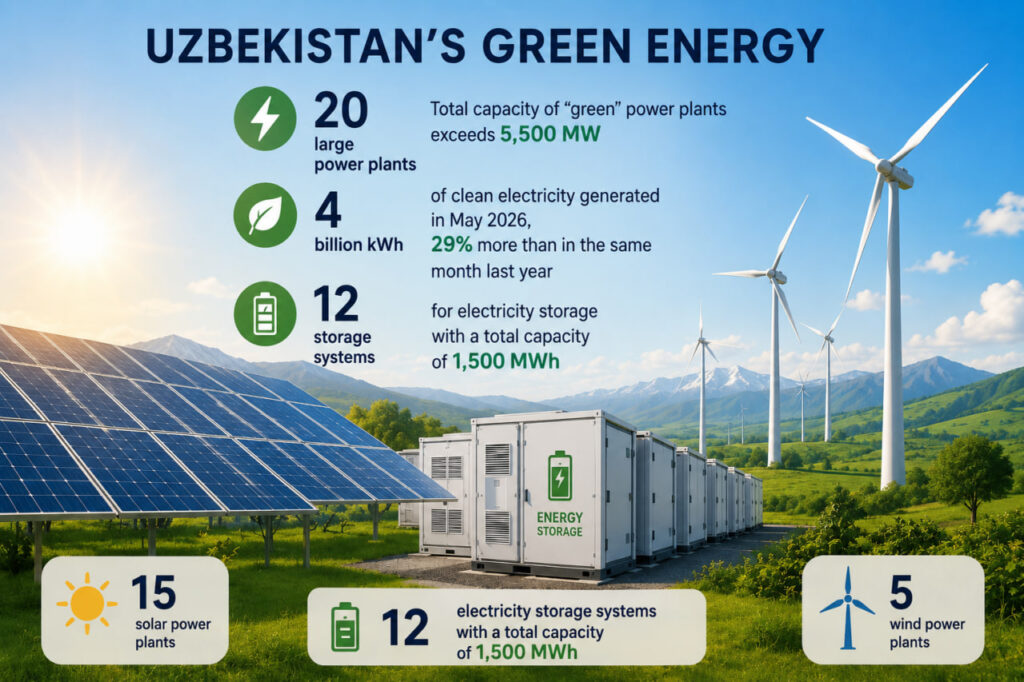
Uzbekistan’s transition towards a sustainable energy grid has gained significant momentum this year, with «clean» electricity production rising by 29% compared to the same period in 2025. According to the Ministry of Energy, the republic has already generated 4 bn kWh of renewable energy by the middle of May.
Current infrastructure and capacity
The country now operates 20 large-scale green power plants with a combined capacity exceeding 5.5 GW. This growing portfolio is currently dominated by solar energy, though wind power is becoming an increasingly vital component of the national mix. The current breakdown of these facilities includes 15 solar power plants and five wind power plants.
In addition to generation facilities, the Ministry highlighted the successful launch of 12 energy storage systems. These systems provide a combined capacity of 1.5 GW, playing a crucial role in stabilising the national grid and managing the intermittent nature of renewable energy sources.
Regional expansion
The transition is not limited to a single area; green energy projects are now active across ten regions of Uzbekistan. Key hubs for these developments include the Andijan, Bukhara and Tashkent regions, as well as the Republic of Karakalpakstan. This geographic diversity ensures a more resilient energy supply and supports regional economic development through new infrastructure.
Targets for 2030
The current progress serves as a springboard for the government’s long-term energy strategy. By 2030, Uzbekistan aims to increase its total renewable capacity to 21 GW.
Under this roadmap, wind power is expected to eventually overtake solar as the primary green energy source in terms of installed capacity:
Wind power target: 11.5 GW
Solar power target: 9.5 GW
Once these targets are fully realised, annual green energy production is projected to reach 60 bn kWh. This expansion is intended to drastically reduce the nation’s carbon footprint whilst ensuring energy security for its growing population and industrial sectors.