Deadly U.S. Airstrike on Oil Tanker Sparks Diplomatic Row with India

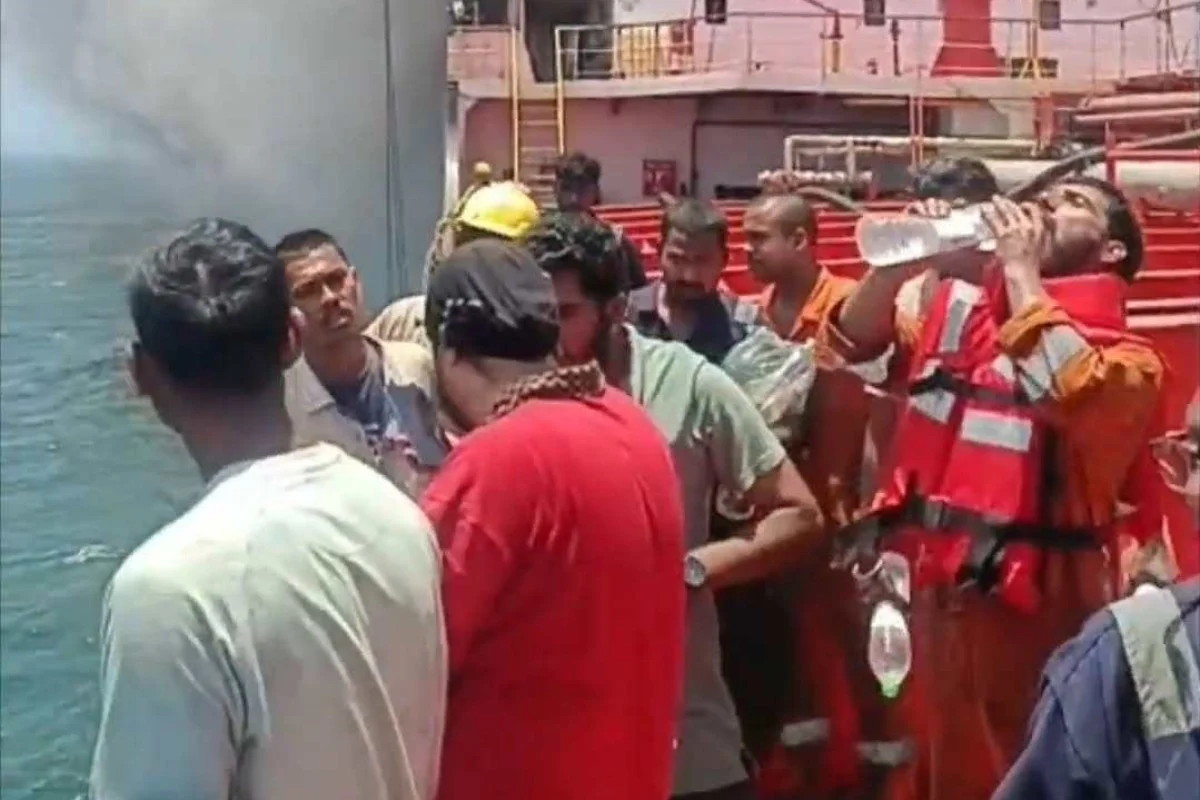
New Delhi has strongly condemned a fatal American military intervention off the Omani coast that resulted in the deaths of three Indian maritime workers. The fatalities occurred when U.S. forces attacked a commercial oil tanker accused of breaching Washington’s ongoing blockade on Iranian shipping.
The incident marks the first confirmed casualties since the United States launched its aggressive maritime embargo on April 13.
Escalation in the Gulf
The fatal strike targeted the Settebello, a Palau-registered tanker navigating the Gulf of Oman. According to statements from U.S. Central Command (Centcom), the vessel was actively attempting to transport sanctioned Iranian petroleum.
American military officials assert that the ship’s crew ignored multiple directives to halt. In response, a U.S. aircraft deployed guided munitions directly into the tanker’s engine room to disable it.
The strike triggered an onboard fire, prompting a distress signal that was answered by the Omani Navy. While emergency responders successfully rescued 21 Indian crew members, India’s Shipping Minister Sarbananda Sonowal later confirmed the tragic loss of three sailors whose bodies were recovered from the wreckage.
Diplomatic repercussions and G7 shadow
The deadly use of force has ignited significant diplomatic friction between New Delhi and Washington. Following the confirmation of the deaths, India’s foreign ministry summoned the U.S. deputy chief of mission to deliver a severe formal protest.
This geopolitical fallout arrives at a highly sensitive juncture. The controversy will undoubtedly overshadow the upcoming Group of Seven (G7) summit, where Indian Prime Minister Narendra Modi and U.S. President Donald Trump are scheduled to conduct bilateral negotiations.
Washington’s maritime embargo
The U.S. operation in the region primarily targets the so-called «shadow fleet». These are typically older, underinsured vessels that utilise flags of convenience to obscure their ownership and bypass international trade restrictions on Iran.
Since the embargo began in mid-April, the U.S. military has maintained a strict grip on the region’s shipping lanes. Recent Centcom data highlights the scale of the operation:
- Vessels disabled: Eight non-compliant ships have been forcefully stopped by U.S. forces. This includes the Settebello and the Marivex, another unladen tanker carrying an Indian crew that was disabled earlier in the week.
- Ships redirected: 134 vessels complied with American military orders and altered their courses.
- Cleared traffic: 42 ships carrying verified humanitarian aid have been permitted safe passage.
Industry outrage and the human cost
The tragedy underscores the severe dangers faced by civilian crews caught up in international military disputes. India remains the world’s third-largest provider of maritime labour, with more than 300,000 of its citizens currently employed across global shipping fleets.
For the families of the deceased, the geopolitical standoff has resulted in devastating personal loss. Relatives of Shivanand Chaurasia, one of the victims, revealed he had been deployed at sea for nine months and had spoken to his father just days before the strike to assure him of his safety.
The United Nations has also weighed in on the escalating violence. Arsenio Dominguez, Secretary-General of the International Maritime Organization, issued a fierce condemnation of the military action. He stated that any tactic endangering the lives of civilian seafarers and the broader safety of international shipping is fundamentally unacceptable.
Adding to the volatile atmosphere, the Indian embassy in Oman confirmed on Thursday that a separate, unspecified maritime incident involving another tanker had just occurred in nearby waters.