Rare Hellenistic Military Camp Discovered in Southern Uzbekistan

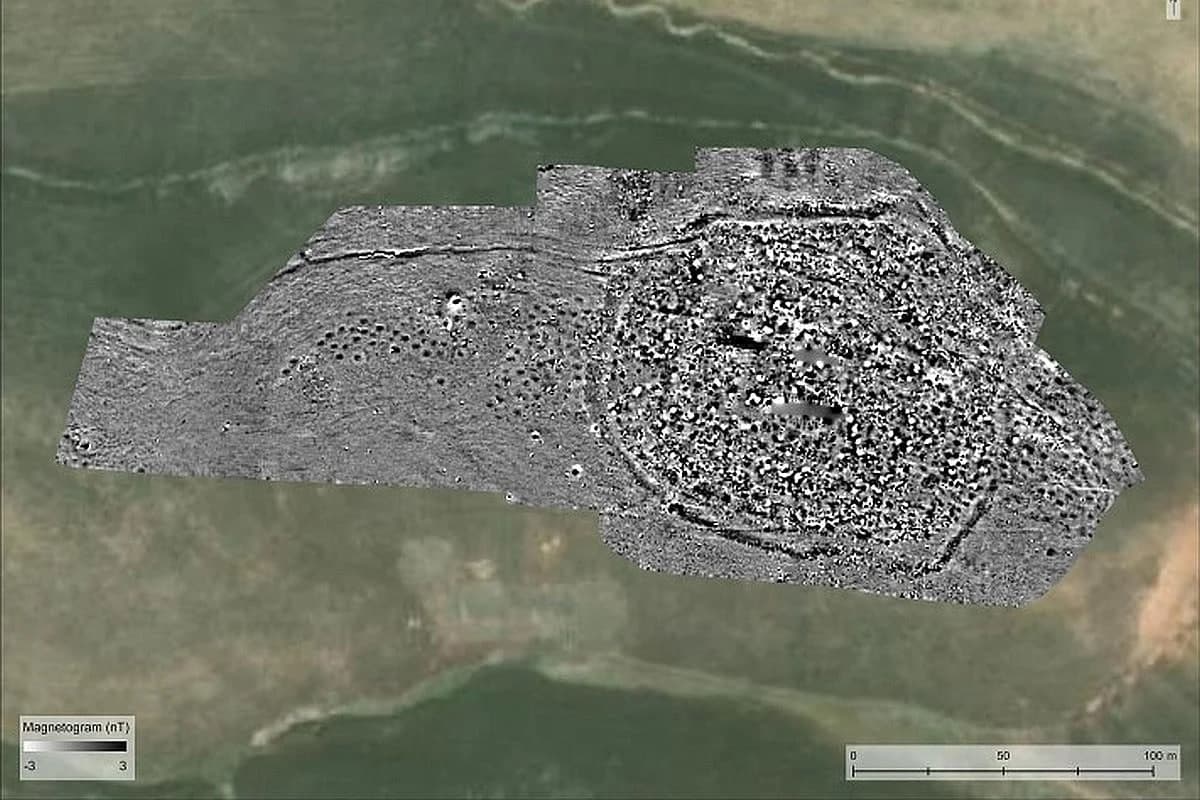
An international team of archaeologists has discovered a rare Hellenistic military camp in southern Uzbekistan.
The findings at the Iskandar-Tepa site, previously identified as a civilian settlement, were published in the Journal of Archaeological Science: Reports. The discovery follows nearly a decade of research by Uzbek and Czech scientists led by Charles University professor Ladislav Stanco.
Researchers used magnetometry and ground-penetrating radar to identify the 6-hectare camp, which was constructed using ancient military architecture principles. A 400-metre defensive ditch surrounds the central area of the site.
Excavations revealed the ditch measured between 4 and 7 metres wide and reached a depth of 85 centimetres. Inside the trench, archaeologists located rows of pits that likely supported a wooden palisade.
Teams also recovered three large ceramic vessels, known as khums, within the camp. Chemical analysis indicated they were used to store water transported from a neighbouring valley. Aerial photography confirmed the presence of a former water canal in the area.
Researchers documented 90 burials on the outskirts of the settlement. The camp was actively used during the 1st century BC to control the border between Bactria and Sogdiana. However, the discovery of silver coins bearing the likenesses of Greco-Bactrian rulers Euthydemus I and Demetrius I indicates the military installation existed as early as the 2nd century BC.