US-Saudi nuclear deal: Why it should be watched in Central Asia

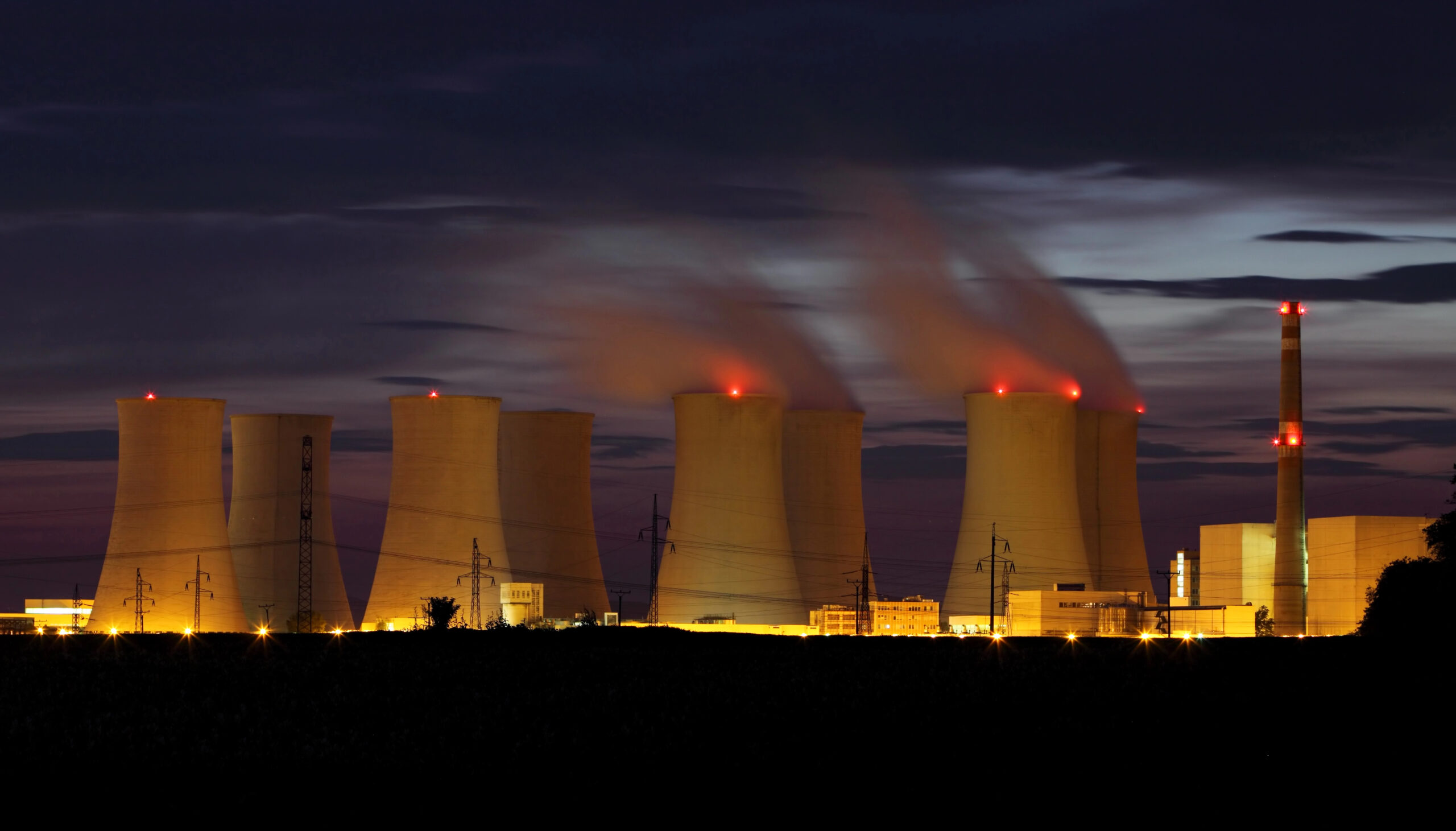
The United States‘ landmark nuclear agreement with Saudi Arabia has sparked debate over non-proliferation standards and regional security. Kursiv Uzbekistan takes a deeper dive into what the deal, and the confusion trailing it, could mean for Central Asia.
Signed on 22 July by US Energy Secretary Chris Wright and his Saudi counterpart Prince Abdulaziz bin Salman, the so-called «123 Agreement» paves the way for long-term civil nuclear cooperation between Washington and Riyadh.
The agreement, the full text of which has yet to be released, has since become the subject of political controversy after President Donald Trump said it would move forward only if Saudi Arabia normalised relations with Israel through the Abraham Accords, adding to uncertainty over the deal’s final shape.
Why does the deal stir controversy?
Buried in the fine print was the deal’s most contentious feature: a pathway, via a two-year feasibility study, for Saudi Arabia to enrich its own uranium. That capability has historically been withheld from states without it, precisely because it sits on the same technical continuum as weapons-grade material. Riyadh also declined to accept the International Atomic Energy Agency‘s (IAEA) Additional Protocol, the enhanced inspection regime that has become standard in comparable deals.
Nonproliferation specialists were already uneasy: the Arms Control Association warned the deal «sets a terrible precedent», while the Nuclear Threat Initiative (NTI) said that it is unclear «how will the world have confidence that there are no undeclared nuclear activities in Saudi Arabia.» Council on Foreign Relations flagged Riyadh’s 2025 defence pact with nuclear-armed Pakistan as evidence the kingdom is hedging its bets regardless of what Washington ultimately allows.
Implications for Central Asia
For Central Asia, the significance lies less in the Gulf theatre than in what the deal reveals about the shifting architecture of global nuclear energy supplies.
Maxim Starchak, a nuclear policy and nuclear industry expert and Queen’s University Fellow, told Kursiv Uzbekistan that the deal is likely to push global uranium prices higher, benefiting Central Asian players. Saudi Arabia may want to invest in uranium mining in Central Asia, triggering broader global investment in the region’s nuclear sector, he maintained.
«Long-term trends may be less rosy for Central Asia. Saudi Arabia has its own undiscovered uranium reserves. It will invest in the exploration and production of uranium on its territory. If the estimated 90,000-tonne reserves are confirmed, Saudi Arabia will be able to meet its needs completely.»
Having developed additional production capacity, Central Asian uranium suppliers will be forced to look for new buyers, Starchak added. Geopolitics has a role to play, too.
«If necessary, the United States will be able to prevent Saudi Arabia from buying uranium from Central Asia if the participation of sanctioned Russian state-owned companies is discovered in the supply chain. Kazakhstan and Uzbekistan will have to create new structures and build an export infrastructure independent of Russia. And this will entail additional costs.»
In theory, both Kazakhstan and Uzbekistan can begin efforts to acquire technology to produce enriched uranium, Pavel Podvig, a Geneva-based analyst and senior researcher at the UN Institute for Disarmament Research, told Kursiv.
«This option exists right now, and there are many reasons neither country moved in that direction. It’s mostly the cost, availability of technology, and the fact that the enrichment market has serious excess capacity, most of which is in Russia, though,» Podvig said.
Proliferation risks
Starchak reminded that the nuclear agreement does not require Saudi Arabia to give up uranium enrichment or spent fuel reprocessing. Either way, it does not make the kingdom accept stricter IAEA inspection rules, such as snap site visits. Washington has usually been strict about nuclear non-proliferation, but it remains unclear whether Riyadh would accept the level of international oversight the IAEA typically expects.
«Formally, Saudi Arabia will have the capacity to enrich uranium. However, the United States wants to monitor Saudi Arabia’s compliance with the non-proliferation regime itself.»
Other regional countries may justify their own programmes by pointing out that Saudi Arabia is not under the IAEA’s control. If Saudi Arabia developed a nuclear programme outside the IAEA’s control, then Iran, having signed the IAEA Additional Protocol and cooperating with this organisation, has the right to develop its own programme, the expert stressed.
There has been a widespread consensus in the international community that the spread of enrichment technologies should not be encouraged, Podvig opined. Although the barrier is now eroding, it is far from disappearing, he noted, adding, «I don’t think the development of indigenous enrichment is going to be a viable economic or political option for quite some time.»
All in all, the US-Saudi agreement undermines the idea that all states should implement the more stringent version of IAEA safeguards, known as the Additional Protocol (AP).
«The US could have insisted on the Kingdom of Saudi Arabia accepting AP obligations, but it didn’t. This will make it more difficult for the US to insist that AP should be a universal standard,» Podvig opined.
However, a scenario in which Saudi Arabia would use uranium enrichment facilities on its territory, or the enrichment technology it might receive from the United States, for weapon purposes is unlikely. The US does not have a commercially viable enrichment technology of its own to launch a nuclear weapons program, the expert concluded.