At least 57 dead as over 48,000 migrants leave Ceuta for Morocco

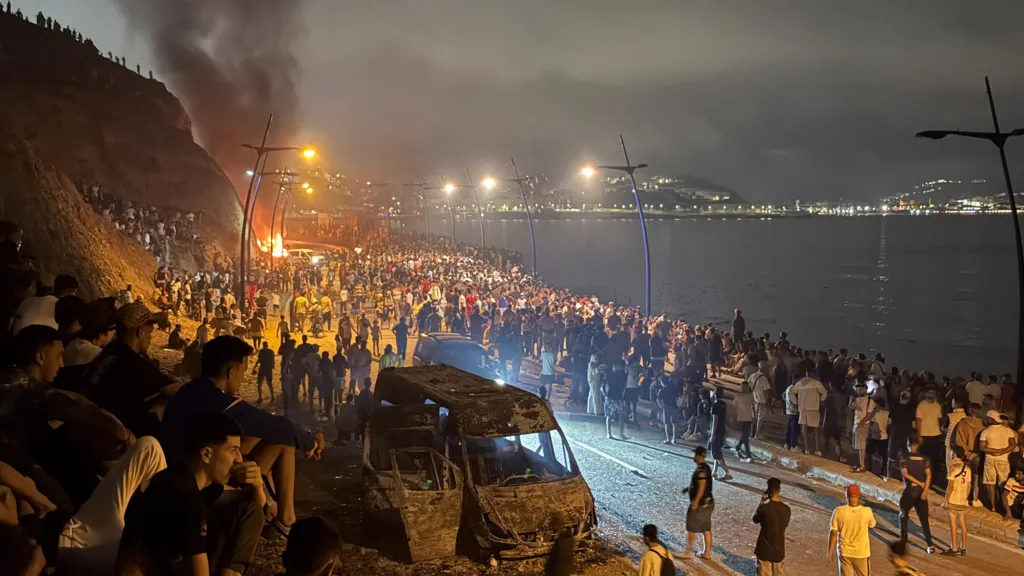
At least 57 people have died during the migration wave into Ceuta, while more than 48,000 individuals have already voluntarily returned to Morocco.
The staggering human toll emerged as local media documented the aftermath of the border breach, which saw roughly 60,000 people cross into the Spanish North African enclave. Prime Minister Pedro Sanchez attributed the chaotic surge to trafficking mafias that deliberately spread a self-serving interpretation of a recent Supreme Court ruling regarding migrants intercepted at sea.
In June 2026, Spain’s Supreme Court ruled that migrants who arrive in Ceuta by sea cannot be immediately deported like those intercepted crossing the physical land fence. However, human trafficking networks distorted this decision and rapidly spread false claims across social media, telling young Moroccans that the sea border was effectively open and that swimming across would guarantee their right to stay in Europe. This widespread misinformation led tens of thousands of people to believe they would face no legal pushback, directly triggering the massive and deadly wave of water crossings.
But by Friday evening, the illegal Moroccan migrants chose to go back across the border. One returning individual spoke to Reuters to express his regret over the dangerous journey, warning others not to attempt the swim because people were dying.
Local residents described a tense atmosphere where businesses closed and families sheltered indoors out of fear as public squares filled with crowds seeking food. Witnesses in Ceuta reported seeing thousands of people in swimming costumes emerging directly from the sea, noting that the overwhelming numbers paralysed normal city functions.
A deadly toll and voluntary departures
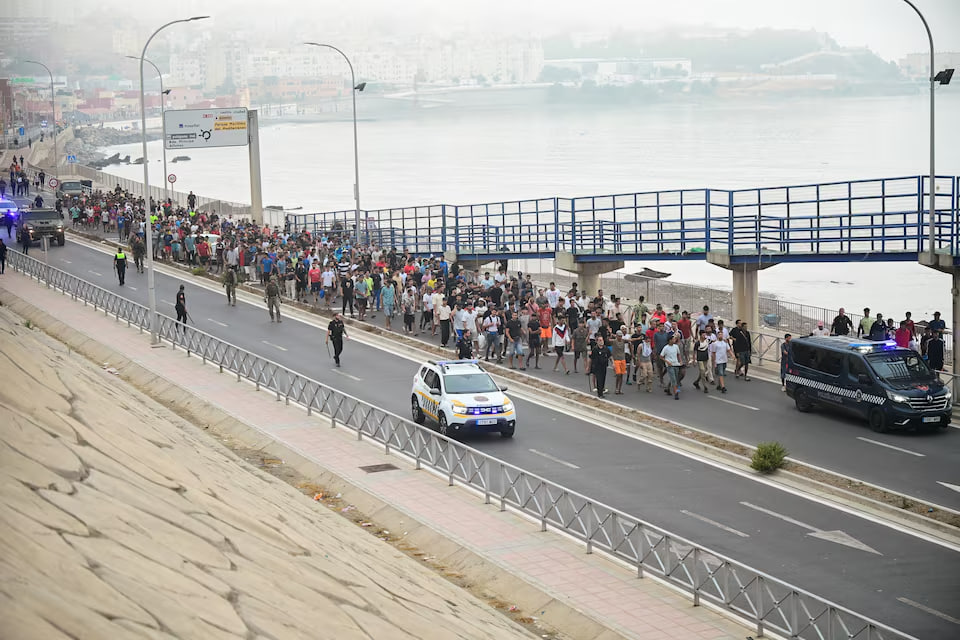
Usually, individuals attempting to enter Ceuta must swim several kilometres from further up the coast, but this time crowds managed to approach the border fence with ease. While some walked along the rocks on the jetty, most had to swim out and around to reach the beaches on the other side.
Among those who crossed the border illegally were approximately 7,000 minors alongside women. Morocco, which suffers from a high unemployment rate, witnessed several Gen Z anti-government protests last year with young people demanding better opportunities and improved public services.
Despite the migrant influx that equated to roughly 70% of the city’s population, the cooperation between Spanish and Moroccan authorities facilitated the repatriation of the tens of thousands who chose to turn back.
Tens of thousands of migrants voluntarily returned to Morocco after realising that reaching Ceuta did not guarantee entry into mainland Europe. Instead of finding new economic opportunities, the arrivals found themselves trapped in a city that resembled an open-air prison with shuttered businesses and exhausted resources. Faced with sheer exhaustion, local hostility and strict containment measures from the deployed Spanish military, mass crowds ultimately abandoned their hopes and walked back through the border checkpoints.
International reactions and repatriation efforts
Spanish foreign minister Jose Manuel Albares dismissed the Italian measures as «partisan demagoguery» and summoned the Italian ambassador to Madrid for formal consultations.
European Commission President Ursula von der Leyen called the images from Ceuta unacceptable and German Chancellor Friedrich Merz demanded immediate deportations. U.S. President Donald Trump also labelled the situation a «catastrophe caused by weak law and bad management.»