Uzbekistan prepares to launch Samarqand-2028 AI-powered satellite

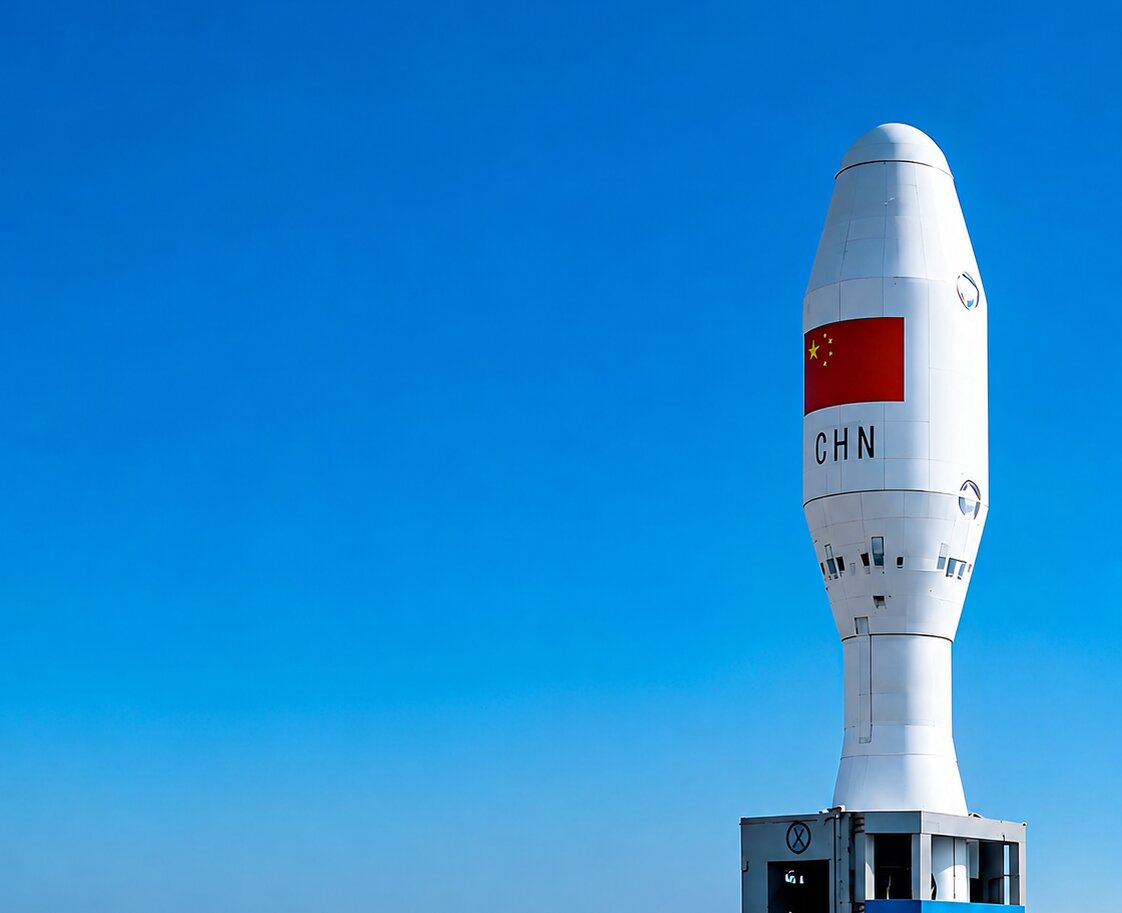
Chinese company will launch an Uzbek satellite Samarqand-2028 into orbit on 5 August. The national space agency Uzbekcosmos announced that the launch window will operate between 7 a.m. and 9 a.m. (GMT+5).
Chinese private aerospace manufacturer Star.Vision will execute the mission from a marine platform located off the coast of Shandong province. The rocket is currently aboard a staging vessel navigating toward the designated offshore launch site. It will simultaneously deploy the Indonesian satellite Lampung-1 into low Earth orbit.
The Samarqand-2028 project features an artificial intelligence module co-developed by Uzbekcosmos engineers and Star.Vision specialists. This integrated system utilises a space computing framework to process information directly on board the spacecraft. By analysing data in orbit, the device drastically reduces the need to transmit massive volumes of raw information back to ground control stations.
Hyperspectral imaging technology photographs the planet across hundreds of narrow light bands to identify the unique chemical signatures of physical materials. This allows scientists to precisely analyse the chemical composition of soil, water and vegetation.
Domestic authorities will utilise the resulting analytics to improve agricultural management, geological surveying, ecological tracking and natural disaster response. Star.Vision already supplies similar artificial intelligence and remote sensing solutions to clients across more than 40 nations in Asia, the Middle East, Africa and Europe.
National astronaut selection underway
Alongside its expanding satellite network, Uzbekistan is actively preparing to send its first citizen into space. Authorities will choose the pioneering individual through an open nationwide public competition. Prospective candidates must satisfy rigorous baseline requirements concerning their age, height, weight, higher educational background and fluency in a minimum of two languages.
The Russian government has pledged technical support for the upcoming crewed mission. Russian Deputy Prime Minister Denis Manturov recently confirmed that Moscow welcomes the space partnership. He stated that Russia stands ready to share its extensive historical expertise and aerospace competencies to ensure the Uzbek initiative succeeds.