Nvidia doubles RTX PRO 6000 price to $16,000 amid memory shortages

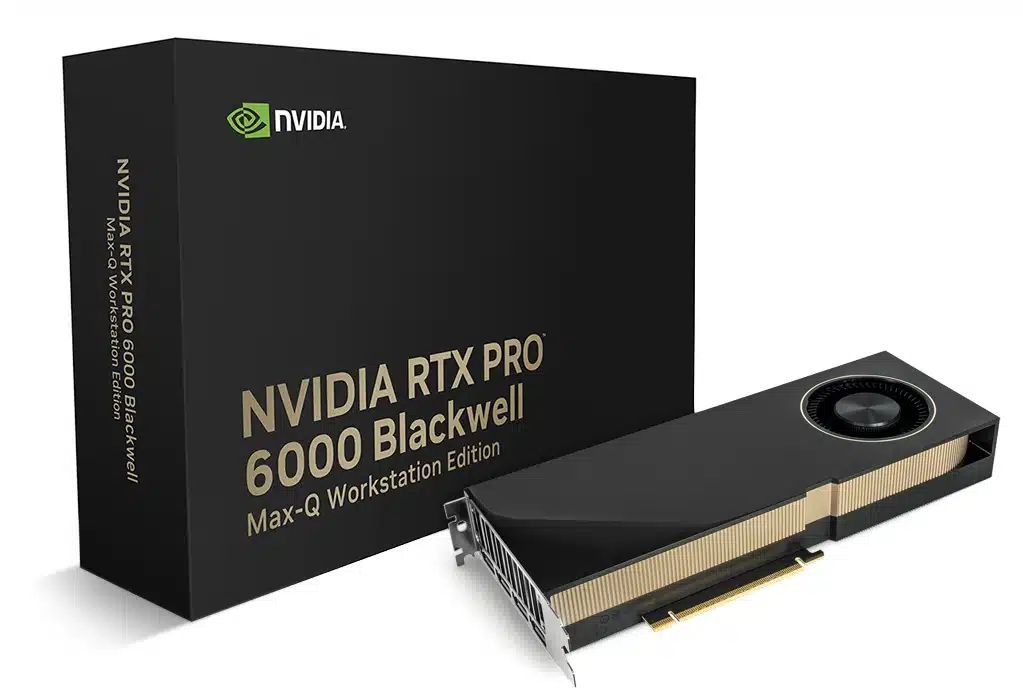
Nvidia has implemented sweeping price increases across its premium graphics card lineup, doubling the cost of its flagship professional model. The RTX PRO 6000 Workstation Edition, built on the latest Blackwell architecture, now carries an official price tag of $16,000.
This marks a dramatic jump from its original $8,000 recommended retail price, setting a new historical peak for the workstation unit.
The revised pricing is already reflected on Nvidia’s official website and through primary channel partners like PNY, who have begun restocking inventory based on the updated valuation.
Powering complex professional workloads
Equipped with a massive 96GB of next-generation GDDR7 memory, the RTX PRO 6000 is an enterprise-grade component engineered to tackle the most demanding computational tasks in modern industries.
Professionals utilise these high-capacity graphics processing units to train large-scale artificial intelligence models, run generative AI applications and process enormous datasets. The card’s architecture excels at executing complex 3D rendering for film and animation studios, allowing creators to manipulate highly detailed scenes in real time without performance drops.
Furthermore, engineers and scientists rely on such hardware to run intricate calculations and simulations. These workloads range from fluid dynamics in aerospace design to molecular modelling in pharmaceutical research. The 96GB memory buffer is a critical requirement for these heavy-duty applications.
It enables workstation systems to load massive project files entirely into the GPU’s ultra-fast memory, bypassing the severe processing bottlenecks that occur when data must constantly swap between the graphics card and standard system RAM.
Supply chain constraints drive inflation
The unprecedented price hike stems primarily from severe shortages in the global supply of memory components. Because the RTX PRO 6000 utilises an unusually large allocation of this high-specification VRAM, industry observers anticipated a significant market adjustment.
This inflation is not isolated to the enterprise sector. The ripple effects of component scarcity are severely impacting the broader consumer hardware market. Nvidia’s flagship consumer graphics card, the RTX 5090, is currently retailing for more than $4,500. This figure is significantly higher than its initial $1,999 launch price.