Three climbers feared dead after summiting Kyrgyzstan’s 6,600m Korumdu Peak

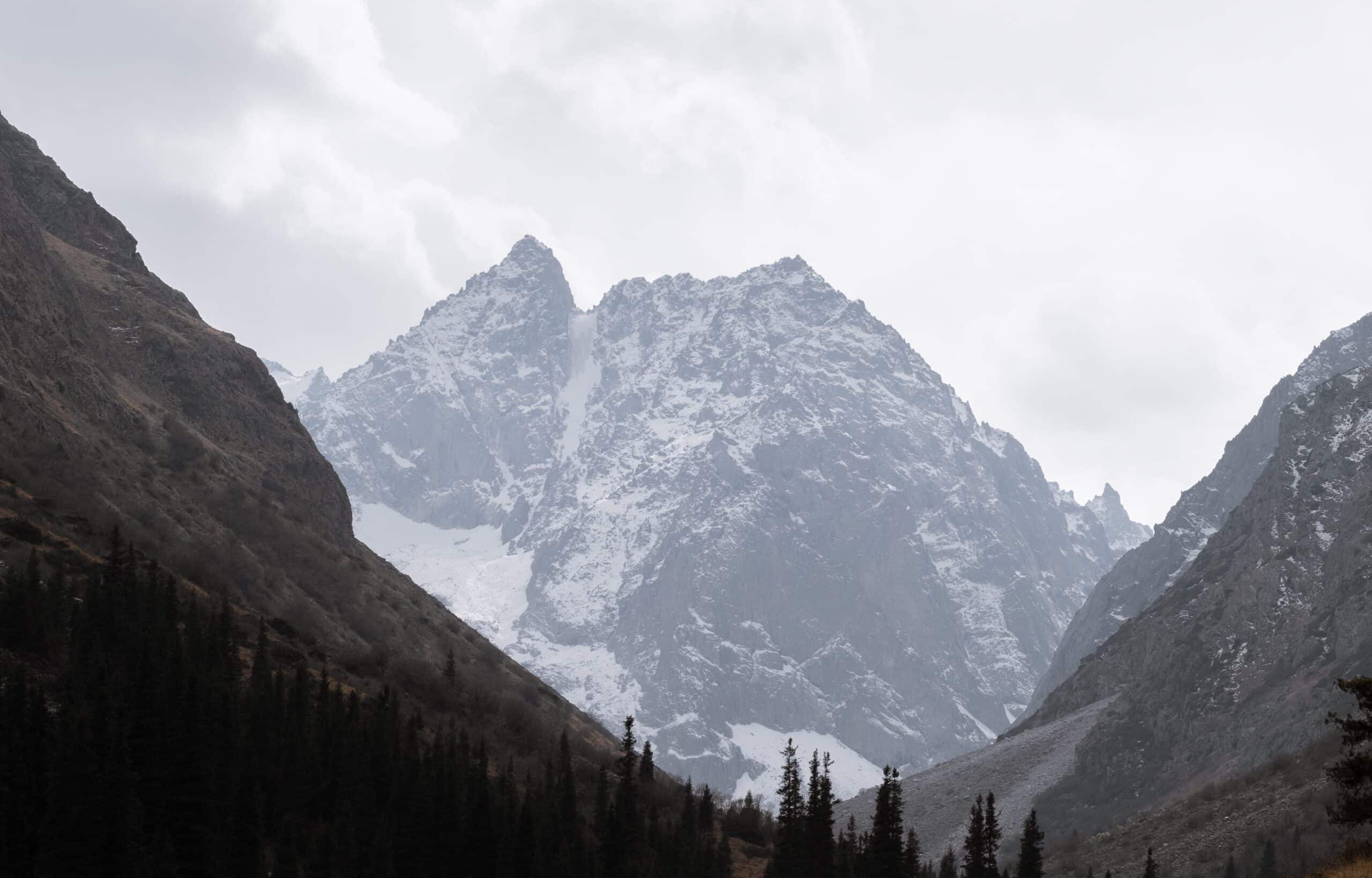
The search for three climbers missing on the Korumdu Peak in southern Kyrgyzstan has entered a grim new phase after drones spotted shapes believed to be their bodies on a remote mountainside.
On August 1, Belarusians Maksim Polyansky, 43, Nikolai Sviridov, 60, and Lithuanian Sergei Rubtsov, 37, summited Peak Korumdu at 6,613 metres. They last spoke the next day, saying they would leave the mountains on 4 August. They never reached the waiting car.
A drone surveying the mountain on 16 August captured the aftermath of a snow-and-rock slide, according to rescuers. The climbers’ gear was found lower down the slope, and investigators saw boots with crampons, clothing, and body shapes in the new footage.
The Belarusian Mountaineering and Climbing Federation said the images likely showed the missing group. Its chairman Alexander Godlevsky told state news agency BELTA that the climbers appeared to be on the same rope.
For now, the drone footage has provided the strongest indication yet of what happened after the trio began their descent — but until rescuers can safely reach the site, their fate remains officially unconfirmed. Kyrgyzstan’s Emergencies Ministry has not confirmed body recovery either.
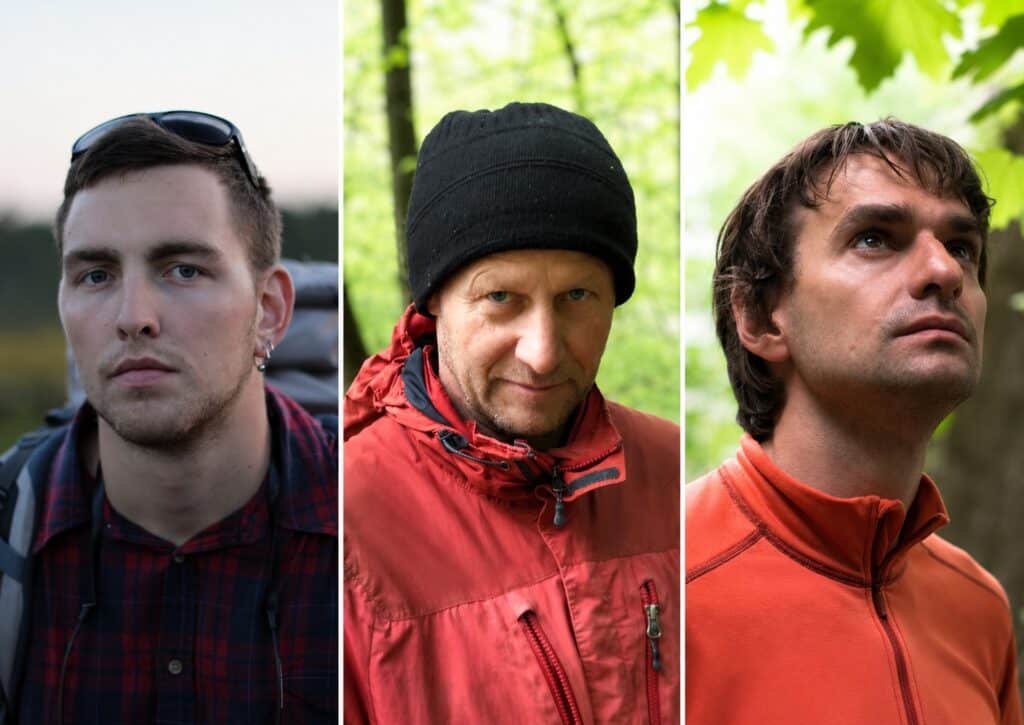
Left to right: Sergei Rubtsov, Nikolai Sviridov, Maksim Polyansky. Photo: kurumdy.by
Most of what the drone captured lay buried beneath snow and stones, but the international search team spotted equipment, clothing, and body shapes. Rescuers must find the bodies to confirm and identify them.
What do we know about the missing climbers
Each of the three men had extensive experience at high altitudes. Polyansky and Sviridov were awarded the coveted mountaineering title «Snow Leopard» for climbing all five 7,000-metre peaks of the former Soviet Union. Sviridov had decades of expedition experience, while Rubtsov had climbed in the Pamirs, Caucasus and Tatra mountains and had previously been on difficult expeditions with the two Belarusians.
Korumdu itself is located in the Chon-Alai range, near the borders of Kyrgyzstan, Tajikistan and China. Its routes are of the highest technical difficulty, and it was only in 2001 that climbers succeeded in summiting.
Specialists have been brought in from Kyrgyzstan, Belarus, Lithuania, Russia and Switzerland. Relatives also raised €109,000 for helicopters, high-altitude rescuers, equipment and access to the remote search area.
Read more: India prepares daring Everest mission to retrieve Green Boots
Kyrgyzstan tightens climbing rules
Kyrgyzstan is reassessing the risks of high-altitude mountaineering following the death of Russian climber Natalia Nagovitsina on Victory Peak in 2025. Her leg broke during the descent, leaving her stranded at 7,100 metres. Nagovitsina was declared dead after an Italian rescuer died attempting to reach her. Her body remains unrecovered.
The Emergencies Ministry of Kyrgyzstan stated this week that work at 7,100 metres depends on wind, visibility, temperature, snow and ice conditions, avalanche risk, and rockfall. Even a brief improvement in the weather does not guarantee a safe rescue opportunity. To its knowledge, no helicopter can land safely at 7,102 metres, and the ministry does not own one.
The case prompted Kyrgyzstan to require Victory Peak climb permits. Before climbing, mountaineers must have search-and-rescue and helicopter evacuation insurance, as well as a contract with a registered tour company or mountain guide. Victory Peak, at 7,439 metres, is the Tien Shan’s highest peak and one of its most difficult.