Largest autism protein map reveals shared pathways for targeted treatments


For decades, researchers have identified hundreds of genes associated with autism spectrum disorder. However, a fundamental question has lingered: how do these genetic changes actually alter brain development?
A landmark study published in the journal Science has finally provided answers, mapping the complex protein interactions that drive the condition. Scientists at the University of California, San Francisco (UCSF), have created the largest molecular map of autism to date.
Their findings suggest that while the genetic causes of autism are incredibly diverse, they often converge to disrupt the exact same biological machinery.
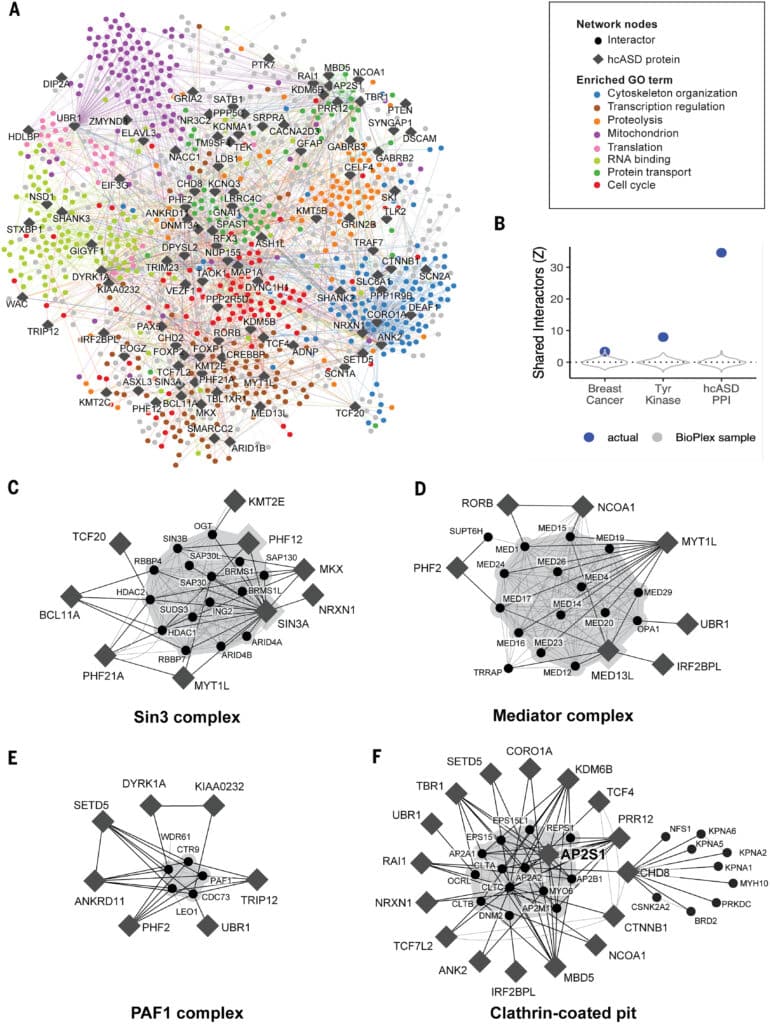
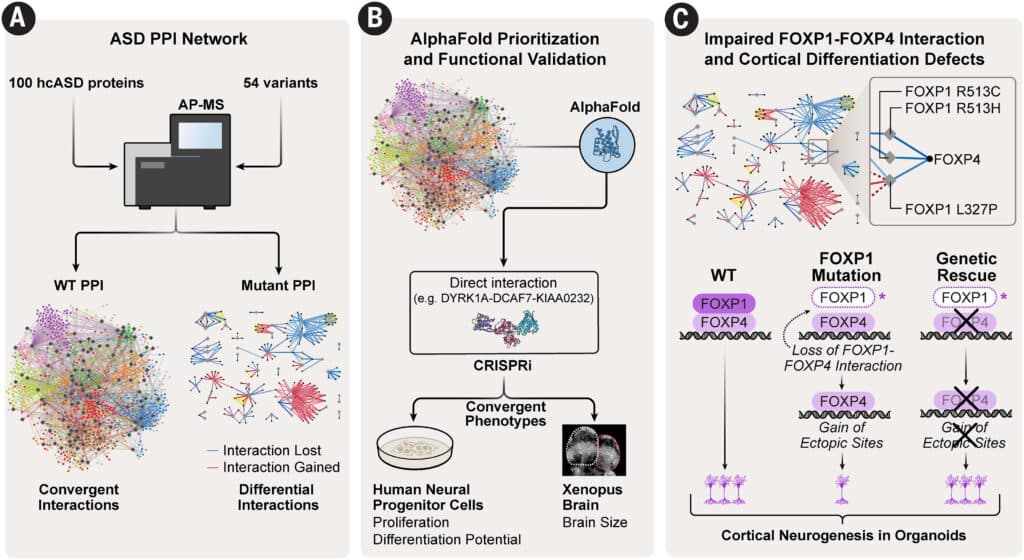
By looking past the genes themselves and focusing on the proteins they create, researchers identified over 1,800 protein interactions. Remarkably, 87% of these connections were completely unknown to science until now. The team examined 100 high-confidence autism risk genes and analysed 54 mutations derived from patients to see what goes wrong at a microscopic level.
Rewiring the brain’s networks
To understand the discovery, it helps to think of genes as an instruction manual and proteins as the workers who actually build and operate the brain. Until now, scientists knew there were spelling mistakes in the manual, but they did not know exactly what the workers were doing wrong on the factory floor.
The UCSF team discovered that disease-causing mutations do not simply break genes. Instead, they rewire the protein networks in the developing brain in predictable ways. By combining their interaction maps with artificial intelligence models, researchers could pinpoint exactly where these mutations disrupt crucial protein connections.
Most importantly, they found that vastly different genetic mutations often damage the very same shared protein complexes. This means that while two individuals with autism might have entirely different genetic profiles, the resulting biological impact on their brain development is often identical.
A single drug for multiple mutations
The immediate impact of this research is profound. Historically, treating genetic conditions has involved complicated gene therapies tailored to very specific mutations. Because autism is linked to hundreds of different genes, developing individual treatments for each one seemed nearly impossible.
However, because so many of these distinct mutations funnel into the same broken protein networks, pharmaceutical companies might not need hundreds of different drugs. The discovery raises the very real possibility that a single small-molecule medication could treat multiple genetic forms of autism at once.
Such drugs would be designed to stabilise beneficial protein interactions or block harmful ones. This approach is generally much easier to manufacture, deliver to the brain and scale for widespread use compared to gene-editing techniques like CRISPR.
Paving the way for precision medicine
The findings are especially relevant to the roughly 30% of individuals on the spectrum who have profound autism, as they often carry rare, high-impact mutations. Recognising the monumental potential of this work, the UCSF Quantitative Biosciences Institute was recently awarded a $46 million grant to accelerate the path from these molecular discoveries to new precision medicines.
Ultimately, the blueprint developed by these scientists extends far beyond a single condition. By establishing a clear method to connect genetic mutations to protein networks and therapeutic targets, researchers have created a universal framework. This strategy could eventually revolutionise how the medical community translates the genetics of almost any human disease into viable treatment.