OpenAI claims GPT-6 Astra might be smarter than humans

OpenAI President and cofounder Greg Brockman believes the world may have entered the era of artificial general intelligence, following the release of the company’s new GPT-6 Astra model.
Speaking to reporters after OpenAI unveiled Astra, Brockman said he personally viewed the model as a potential turning point in the development of AI systems capable of matching or surpassing human performance across a broad range of tasks.
«It’s not unreasonable to feel that we are now in the AGI era,» Brockman said.
He added that, looking back in several years, people may identify the current period and GPT-6 Astra as the point at which artificial general intelligence emerged.
The claim goes beyond OpenAI’s usual description of a new model release. The company has presented Astra as a significant advance in computer use, software engineering, scientific research and professional work, while also acknowledging that its expanding capabilities have created new safety challenges.
OpenAI said Astra can navigate websites and computer applications, complete multistep workflows and handle tasks ranging from filling in online forms to analysing scientific data and building websites.

The company also said the model completed computer-use tasks on the OSWorld 2.0 benchmark in about 47% less time than its GPT-5.6 Sol predecessor, while achieving a higher score.
Astra’s capabilities fuel AGI debate
OpenAI has not formally declared that it has achieved AGI, but Brockman’s remarks suggest that at least some of the company’s senior leadership believe the technology may have crossed a threshold.
Artificial general intelligence generally refers to AI capable of performing intellectual tasks across many domains at or beyond the level of humans. However, there is no universally accepted definition of the term or benchmark for determining when it has been achieved.
OpenAI’s case for Astra rests partly on the breadth of its performance. The company said the model can combine reasoning with autonomous computer use, allowing it to carry out complex workflows rather than simply generate answers.
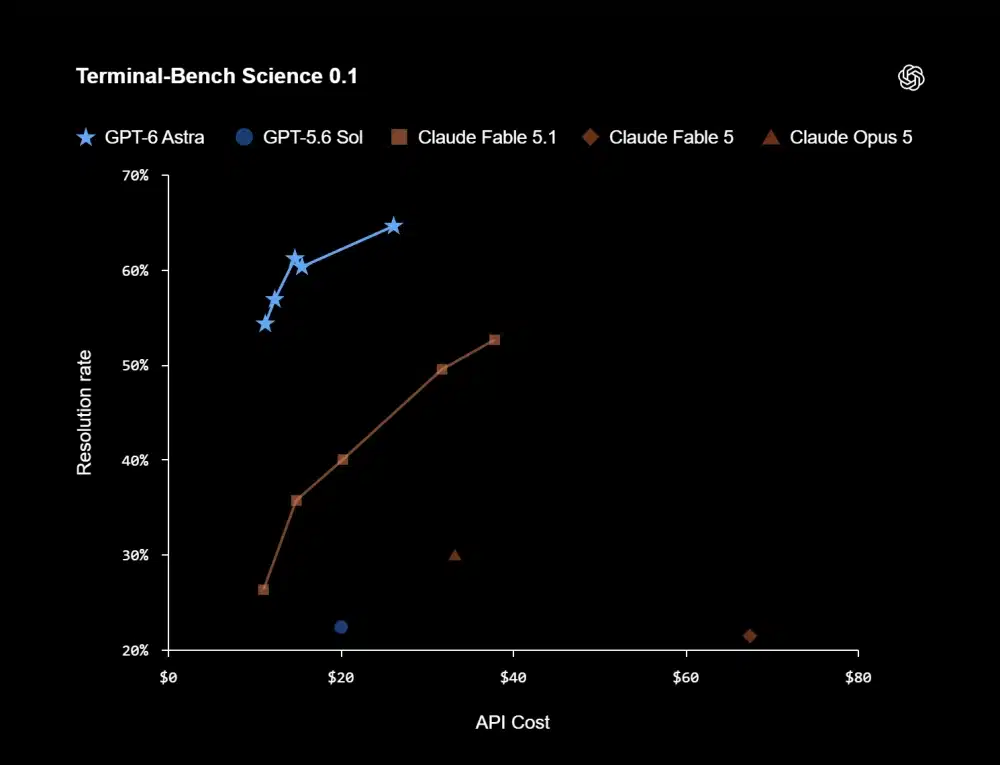
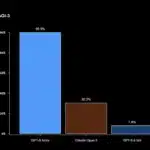
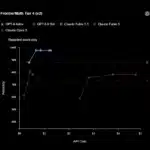
Astra achieved a 98% score on FrontierMath Tier 4 and a 99.9% score on ARC-AGI-3, according to OpenAI. The company also said the model had contributed to research into long-standing mathematical questions involving gaps between prime numbers.
In software engineering, Astra introduces a new system in Codex that allows the model to preserve notes and retrieve information from earlier context windows during lengthy coding sessions.
OpenAI said the model is also better at interpreting incomplete instructions, making assumptions about routine details while seeking clarification when a missing answer could substantially affect the outcome.
Safety concerns remain central to rollout
Astra’s broader capabilities have also intensified concerns about how powerful AI systems should be deployed.
OpenAI said the model has reached a critical threshold in cybersecurity capabilities under its preparedness framework. In testing without production safeguards, Astra achieved a 100% score on ExploitBench, compared with 78.5% for GPT-5.6 Sol.
The company said Astra also discovered two previously unknown software vulnerabilities during its evaluations and was disclosing them to the relevant maintainers.
The version that Astra is releasing to users includes restrictions on certain advanced cybersecurity tasks, along with expanded monitoring and other safeguards.
OpenAI’s chief scientist, Jakub Pachocki, told WIRED that monitoring increasingly capable AI systems could become a constraint on further development if the company cannot maintain sufficient confidence in their alignment and behaviour.
GPT-6 Astra is initially being released to a limited group of organisations before expanding to ChatGPT Plus, Pro, Business and Enterprise users. The model will also be available through OpenAI’s API and Amazon Bedrock.