
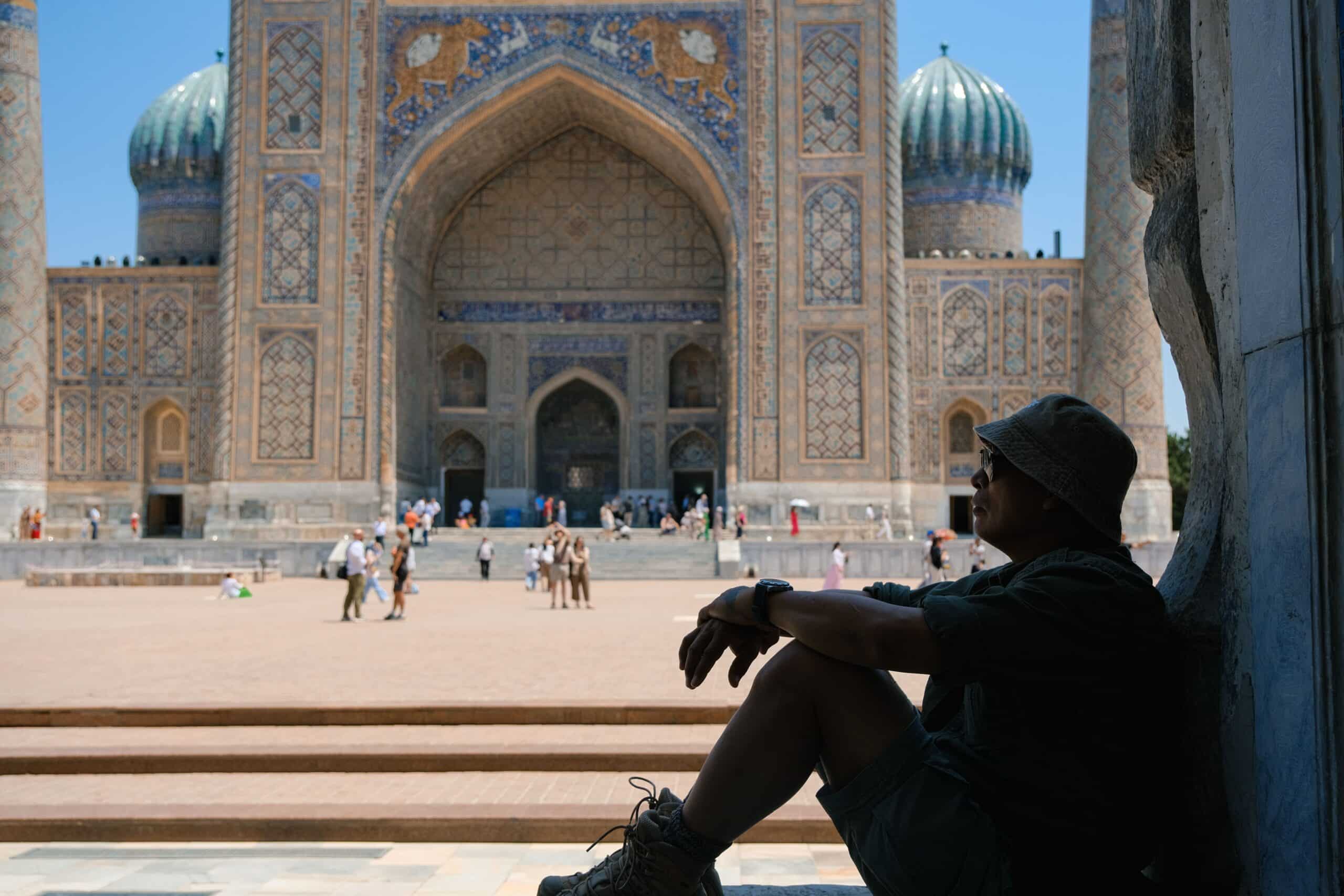
Uzbekistan remains a good-value destination, but a first visit is no longer a shoestring trip once you factor in high-speed trains, entrance tickets and hotel charges. Here is how you explore the country full of UNESCO sites and not spend a fortune.
This travel cost guide for Uzbekistan excludes international flights: a budget traveller should allow about 2–2.6 mln soums ($170–220) for three days, 3.8–5.7 mln soums ($320–480) for seven days or 5.6–8 mln soums ($475–675) for ten days.
A more comfortable trip — with private rooms in mid-range hotels, high-speed trains, restaurant meals and regular taxis — costs roughly 3.4–4.9 mln soums ($290–415), 7.1–10.6 mln soums ($600–900) or 10–14.7 mln soums ($850–1,250), respectively.
Most first-time visitors follow the same route from east to west. Tashkent is the capital and main international gateway. Samarkand is home to the Registan, the country’s best-known ensemble of Islamic architecture. Bukhara has a compact, walkable old city, while Khiva is a small walled city in the far west, reached through nearby Urgench.
- Uzbekistan travel cost at a glance
- Flights: calculate these separately
- Accommodation: check final price, not headline rate
- Tourist levy can change the real room cost
- Trains and domestic flights
- Food: learn the dishes before reading the menu
- Taxis, buses and the Tashkent Metro
- Sightseeing: Samarkand needs the largest budget
- Mobile data, visas and spending money
- How much should you budget for Uzbekistan really?
Uzbekistan travel cost at a glance
| Trip | Sensible first-time route | Budget trip | Comfortable trip |
| 3 days, 2 nights | Tashkent and Samarkand | 2–2.6 million soums ($170–220) | 3.4–4.9 million soums ($290–415) |
| 7 days, 6 nights | Tashkent, Samarkand and Bukhara | 3.8–5.7 million soums ($320–480) | 7.1–10.6 million soums ($600–900) |
| 10 days, 9 nights | Tashkent, Samarkand, Bukhara and Khiva | 5.6–8 million soums ($475–675) | 10–14.7 million soums ($850–1,250) |
Prices were checked on 4 September, 2026.
Read more: Travel in Uzbekistan: planning tips I wish I’d had before
Flights: calculate these separately
International fares vary too much by origin and date to fit into a reasonable Uzbekistan budget. Search multiple departure dates and compare a standard return to Tashkent to a multi-city, or «open-jaw» itinerary.
The open-jaw option is especially useful during a ten-day trip. Instead of returning to Tashkent, see if you can fly into and out of Urgench, Khiva’s airport. Urgench has fewer international connections, so this option may not be suitable for all origins, but even a slightly more expensive international ticket can save the cost and time of a domestic flight or overnight train.
Accommodation: check final price, not headline rate
Hostels and family-run guesthouses offer the best value and often include breakfast. September 2026 searches produced Tashkent dormitory beds from about 71,000–83,000 soums ($6–7) and basic twin rooms in Bukhara from roughly 295,000 soums ($25) before all charges.
A realistic range for a well-reviewed double room is 295,000–590,000 soums ($25–50), while a polished mid-range hotel may cost 650,000–1.2 million soums ($55–100) per room.
Autumn is a busy period in Samarkand, Bukhara and Khiva, so the cheapest decent rooms can disappear quickly. Compare the total price at checkout: the first figure shown may not include VAT, a service charge or the tourist levy.
Read more: How to claim a tax refund in Uzbekistan: Everything you need to know as a tourist
Tourist levy can change the real room cost
Foreign visitors aged 16 or over pay a compulsory levy for each night. Under the government’s tiered accommodation rules, the amount depends on the property’s legal category and size. From 1 September 2026, the main rates are:
| Registered accommodation type | Levy per foreign adult, per night |
| Guesthouse or other qualifying individual accommodation | 8,800 soums ($0.75) |
| Hotel with up to 10 rooms | 22,000 soums ($1.87) |
| Hotel with 11–40 rooms | 44,000 soums ($3.73) |
| Hotel with more than 40 rooms | 66,000 soums ($5.60) |
The levy is calculated per person, not per room. A couple staying nine nights in a hotel with no more than ten rooms will pay 792,000 soums ($67) less than they would in a hotel with more than 40 rooms. A legally registered guesthouse can be even cheaper.
Hotels, hostels, and guesthouses should all register foreign guests with the authorities. If you stay in private accommodation, confirm with the host how registration will be completed; the government requires foreign visitors who stay for more than three working days to register their place of stay.
Read more: Uzbekistan plans more checks on the registration of foreign visitors
Trains and domestic flights
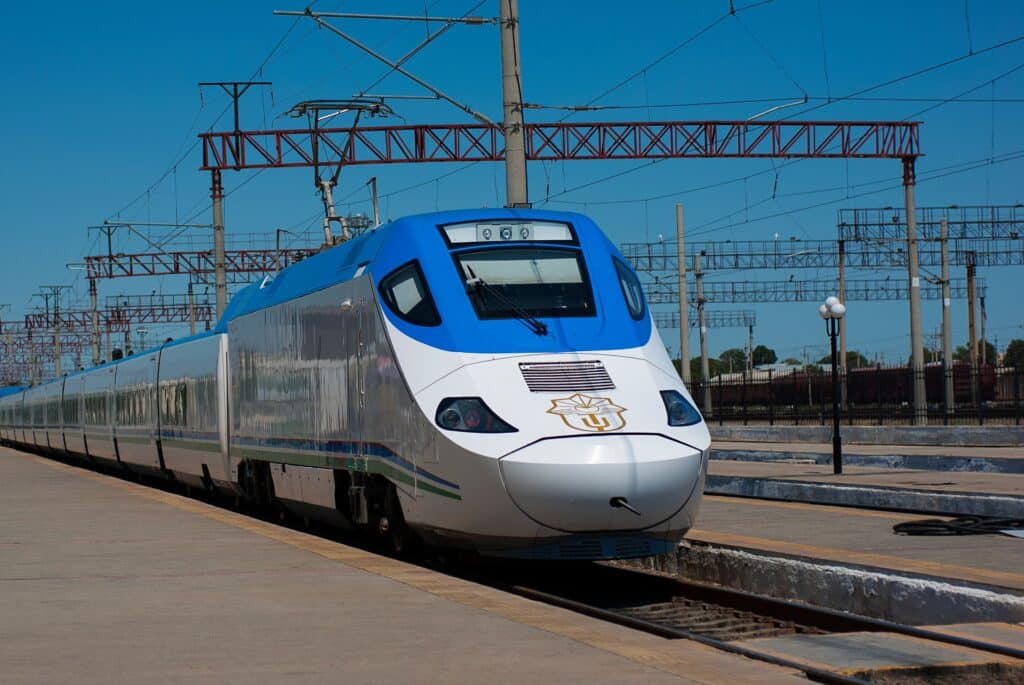
Uzbekistan’s trains are usually the simplest way to travel between the main cities. Afrosiyob and Jaloliddin Manguberdi are two modern high-speed services. Sharq is slower but cheaper, while long-distance night trains offer open-plan bunks or enclosed four-berth compartments.
| Route and service | One-way fare |
| Tashkent–Samarkand, Sharq seat | 200,060 soums ($16.96) |
| Tashkent–Samarkand, Afrosiyob economy | 311,000 soums ($26.37) |
| Tashkent–Bukhara, open-plan sleeper bunk | 177,990 soums ($15.09) |
| Tashkent–Bukhara, Afrosiyob economy | 509,000 soums ($43.15) |
| Tashkent–Khiva, open-plan sleeper bunk | 245,140 soums ($20.78) |
| Tashkent–Khiva, four-berth compartment | 348,550 soums ($29.55) |
| Tashkent–Khiva, Jaloliddin Manguberdi economy | 780,000 soums ($66.13) |
Check schedules and live prices through Uzbekistan Railways’ e-ticket service. Afrosiyob saves useful sightseeing time between Tashkent, Samarkand and Bukhara, but the slower train is still perfectly workable for budget travellers. For Khiva, a sleeper can replace a hotel night as well as a day of travel.
Read more: Afrosiyob ticket prices rose 15% in February 2026
Domestic flights are another option for the long western leg. Uzbekistan Airways lists a minimum Lite fare of 484,298 soums ($41.06) from Tashkent to Urgench and 276,741 soums ($23.46) from Tashkent to Bukhara.
Food: learn the dishes before reading the menu
A traveller eating at bakeries, markets, and simple local restaurants can survive on 120,000-200,000 soums ($10-17) per day, provided breakfast is included in the room. Allow between 300,000 and 500,000 soums ($25-42) for coffee, snacks, and two sit-down meals in tourist areas.
Numbeo’s 2026 user-reported data put an inexpensive restaurant meal at about 70,000 soums ($5.93) in Tashkent and Samarkand and 84,000 soums ($7.12) in Bukhara.
The names most newcomers will encounter are straightforward:
- Plov, also called osh, is rice cooked with meat, carrots, onions and spices. It is filling and usually best at lunch, but beware the oiliness and fat content.
- Somsa is a savoury pastry baked in tandir (tandoor, or a clay oven), typically filled with meat and onions.
- Lagman is a noodle dish served either in broth or stir-fried with meat and vegetables.
- Shashlik is skewered, charcoal-grilled kebab meat.
- A choyhona is a teahouse that often functions as a casual restaurant serving full meals.
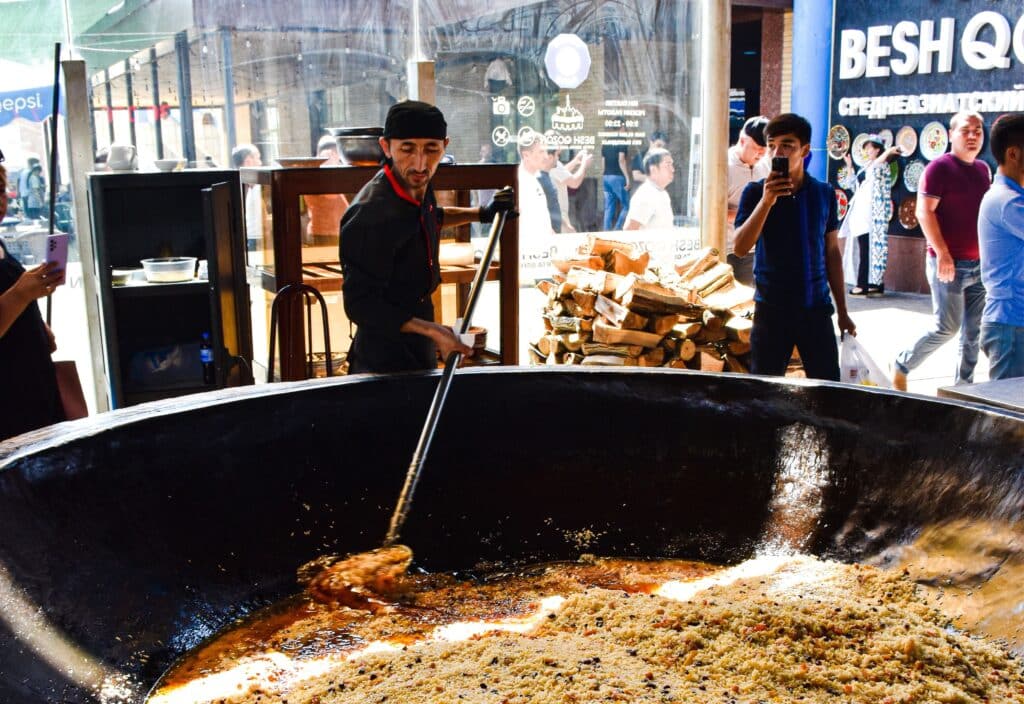
Make lunch the main meal if you want good plov at a local price. Specialist osh restaurants cook it in large cauldrons and may sell out by late afternoon. Check the bill before paying, as some restaurants add a service charge.
Taxis, buses and the Tashkent Metro
Public transport has little effect on the total cost of an Uzbekistan trip. A Tashkent bus or metro journey costs 1,700 soums ($0.14) when paid with a contactless bank card, mobile payment or ATTO transport card. A single QR ticket costs 3,000 soums ($0.25). Many gates and validators accept international Visa and Mastercard contactless cards, but carrying small bills is still a good idea.
Ride-hailing is inexpensive and removes the need to negotiate. Yandex Go’s published Start tariff in Tashkent has a minimum fare of 4,600 soums ($0.39), followed by distance and time charges before any surge pricing.
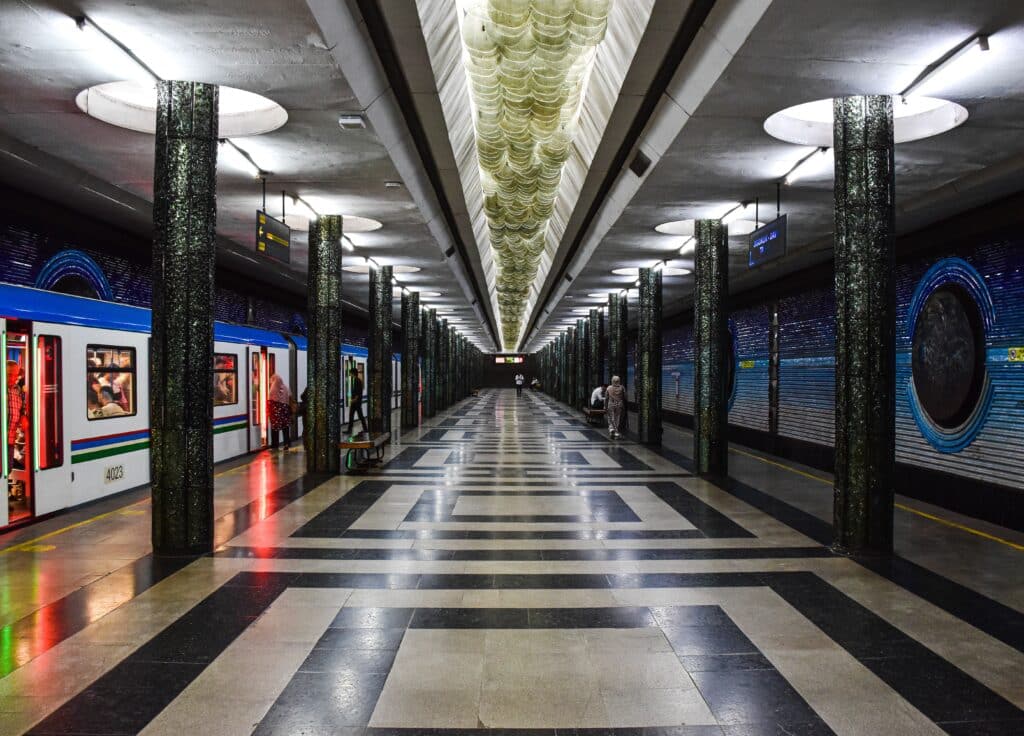
At airports and railway stations, order a car using an app rather than accepting the first driver who arrives. In Samarkand, Bukhara, and Khiva, staying in a room close to the historic centre can save you money on transport.
Read more: How to pay while travelling in Uzbekistan
Sightseeing: Samarkand needs the largest budget
Historic streets, bazaars and the exteriors of many monuments are free to explore. Paid interiors accumulate quickly in Samarkand, however.
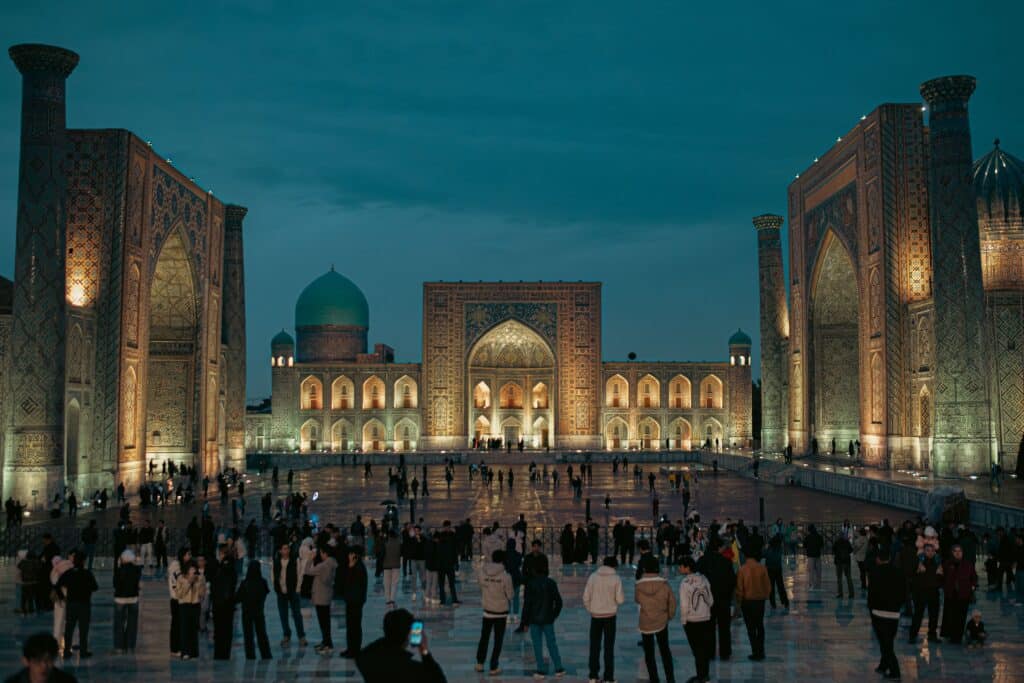
The famed Registan square costs foreign adults 100,000 soums ($8.48), while the reported 2026 prices for Shah-i-Zinda, the Gur-e-Amir mausoleum where Tamerlane was buried, and the Bibi-Khanym Mosque are 80,000 soums ($6.78), 75,000 soums ($6.36), and 65,000 soums ($5.51), respectively. Visiting those four sites costs 320,000 soums ($27.13).
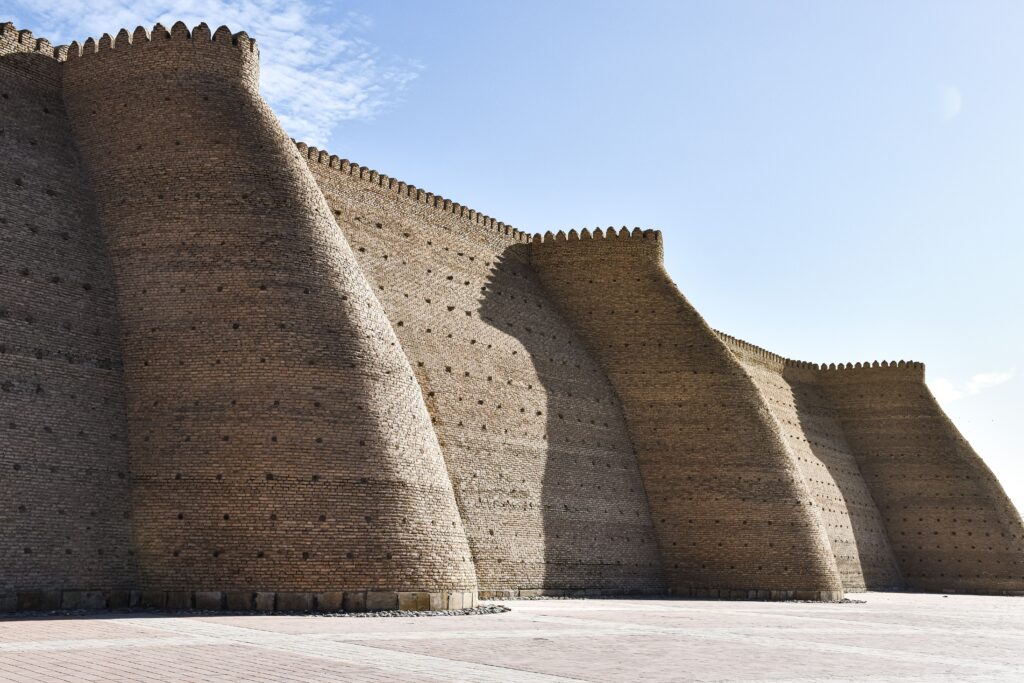
In Bukhara, much of the old city is open to pedestrians without a ticket. Entry to the Ark, the former citadel of Bukhara’s rulers, costs 60,000 soums ($5.09) for a foreign adult.
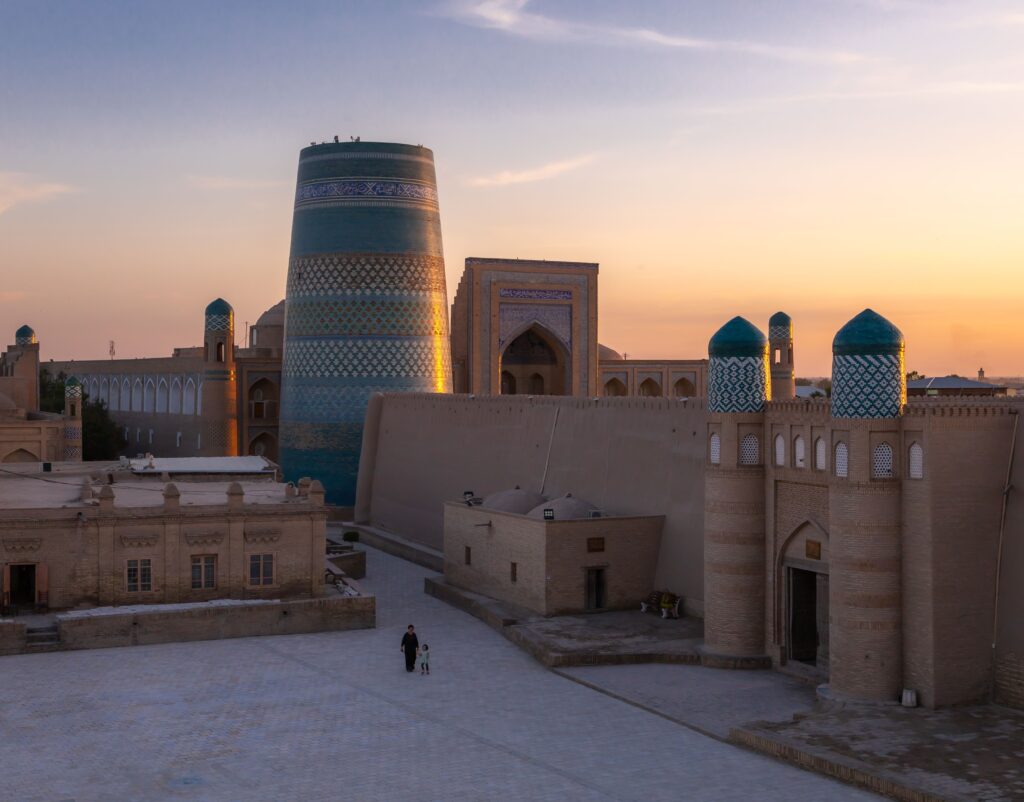
Khiva’s old city is called Ichan Kala. Its lanes can be explored without entering every museum, while a combined museum ticket was reported at about 250,000 soums ($21.20) in 2026. Some minarets, towers, and the city wall walk may incur additional costs.
The cheapest strategy is to deliberately choose interiors rather than skipping the major sights. The Registan, for example, can be seen and photographed from the public square for free; however, a ticket is required to enter its three historic religious schools, known as madrasas.
Mobile data, visas and spending money
Uztelecom’s Travel 5 tourist package costs 55,000 soums ($4.66) and includes 6GB of data, 500 domestic minutes and 500 texts. Ask the mobile operator to register the SIM as non-resident. Registering a phone costs nothing for the short trips described in this guide. Longer-term visitors should check current rules with the national SIM registration operator, UzIMEI.
Uzbekistan grants its citizens visa-free entry to over 90 countries, although the permitted duration of stay depends on the passport they hold. The cost of an electronic visa is $20 for a single entry, $35 for two entries or $50 for multiple entries.
Carry both your bank card and some soums. Card payments are widely accepted in larger hotels, supermarkets, and modern restaurants, but cash remains useful in bazaars, small cafés, and family guesthouses. Before accepting a conversion, compare any bank or ATM fees to the Central Bank rate.
Shopping is not included in these budgets. Foreign visitors buying eligible goods may be able to reclaim part of the VAT when leaving the country.
So, how much should you budget for Uzbekistan?
- A reasonable Uzbekistan budget for a traveller sharing simple rooms and travelling independently through Tashkent, Samarkand, and Bukhara is approximately 4.7–5.3 million soums ($400–450), excluding the international flight.
- Khiva raises the cost of a trip to Uzbekistan primarily due to its distance from the other three cities, not because daily life there is particularly expensive.
- A ten-day budget trip should cost between 7.1 and 7.7 million soums ($600-650) per person. Allow closer to 11.8 mln soums ($1,000) for private mid-range hotels, faster transport, restaurant meals and more taxis.
- Maintain at least a 10% contingency. The most common pressure points are a cheap train that sells out, taxes omitted from an accommodation listing, an overpriced monument, and more taxis than expected in hot weather.