Why AfD’s landslide victory will echo across Central Asia

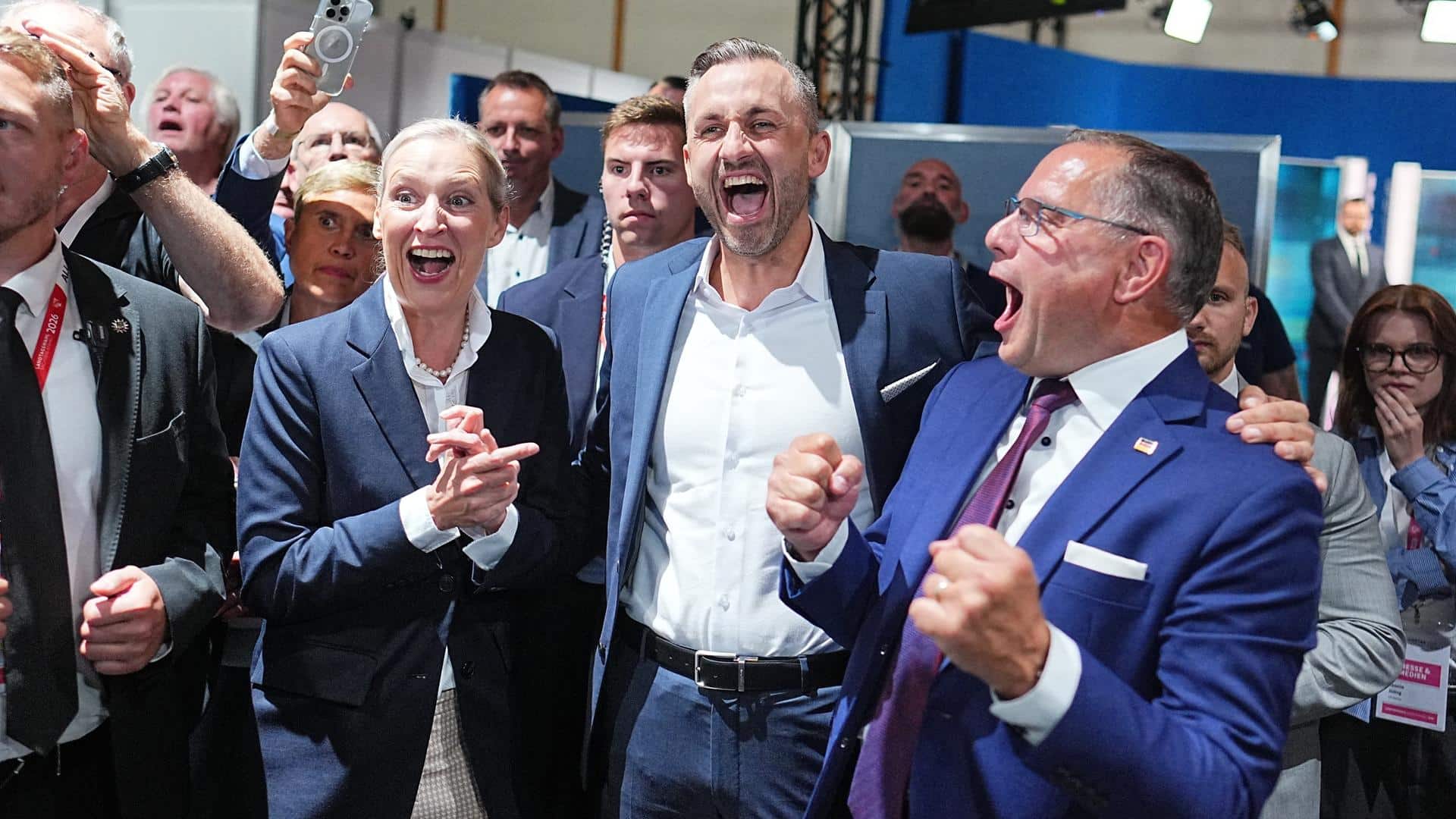
For Central Asians considering a job or tuition, the Alternative for Germany’s (AfD) landslide victory in Saxony-Anhalt sends an unsettling signal. The party seeking to govern this troubled region believes in Germany that is free from the «culturally alien» Muslim constituencies.
The far-right AfD won 43.8% in Saxony Anhalt’s election on 6 September. The result will not be enough for a parliamentary majority, but it marks the first time a German far-right party has risen to popularity since World War II.
Ulrich Siegmund, who leads the AfD’s regional branch, already knows something of Central Asia and Uzbekistan in particular. Back in June 2025, he visited Tashkent and Samarkand with a delegation from the Saxony-Anhalt regional parliament.
That trip’s agenda included labour mobility and academic cooperation, which are Germany’s most attractive selling points for Uzbeks and Central Asians alike. Now, his previous statements raise questions about whether that was simply a public diplomacy smoke screen.
What AfD actually thinks of migrants
Earlier in July, when asked where Germany would get workers to fill 17,000 vacancies, Siegmund insisted: «Certainly not from abroad.» He argued that Germany should solve the labour shortage «from its own strength» through family policy, cuts to bureaucracy and technology rather than immigration.
Siegmund cautiously avoided voicing blunt anti-immigration rhetoric in public, but it has sometimes slipped out nonetheless.
«Cultural foreignness begins where one questions our own system, where one does not abide by our laws,» he told German outlet ntv.
According to media reports, he is part of the AfD chapter that the domestic intelligence agency in Germany considers «right-wing extremist» and that has ties to white nationalist groups and think tanks. Siegmund was present at a secret meeting near Berlin in 2023, where extreme right-wing activists discussed a radical plan for «remigration» – a far-right term for the expulsion of millions of people with a migration background.
The AfD’s state programme allows for selected skilled immigration but ultimately rejects recruiting workers it calls «kulturfremd» — culturally alien in German — even in healthcare. It does not name Central Asians, but its objections plainly extend beyond irregular migration.
Foreign employees covered by social insurance rose from 20,260 to 75,300 over ten years, reaching that total in 2025, according to the Federal Employment Agency. Meanwhile, the Saxony-Anhalt’s German workforce has shrunk as older employees retire.
What Central Asians could feel first
For Uzbekistan, the stakes reach beyond one German state. Around 1.4 million Uzbeks work abroad, including 258,000 in European countries, according to Migration Agency figures in a Central Bank review. As Kursiv Uzbekistan has reported, labour migration is spreading beyond Russia, giving workers a wider range of destinations.
An AfD administration could make part of that European market far less friendly. Its programme proposes diverting €1.2 million earmarked for integration guides to staff coordinating return programmes.
Existing residents would face different risks according to their status. The election itself does not invalidate work or study permits. However, state and local authorities administer residence matters and enforce deportations, giving a government practical influence over how migrants experience the system.
Pressure for returns also puts Tashkent in an uncomfortable diplomatic position. It has already denied reports of negotiations to host EU deportation centres.
Wider partnership still runs through Berlin
Education adds another point of friction. Germany and the five Central Asian states reported more than 500,000 German learners across the region in February. Their declaration also outlined a higher-education forum in Halle, in Saxony-Anhalt. A colder reception could influence where students apply, even without a change to admissions rules.
The AfD nevertheless wants to use the Bundesrat, which represents state governments nationally, to press for development aid to depend on cooperation with returns. That could complicate the agenda behind Uzbekistan and Germany’s preparations for development talks if it gains wider support.