OpenAI drains five Olympic pools to solve century-old maths problem

An artificial intelligence breakthrough that cracked a 90-year-old mathematics puzzle carried a hidden physical cost. To solve the Navier-Stokes equations, scientists spent an estimated average of 12.5 mn litres of water just to cool the data centres powering the computation carried out by the newly released GPT-6 Astra.
In the first 88 hours, 10,000 AI agents sent nearly three million messages and generated 130bn tokens. Multiple agents can share GPU infrastructure, and one agent can use multiple processors. The median electricity consumption for this mathematical search was 10 gigawatt-hours, assuming five to 20 kilowatts per active agent-equivalent.
This 10-GWh figure represents the annual power usage of more than a thousand households. Once data centre overheads such as networking and power conversion are factored in, the energy demand remains staggering.
Cooling millions of dollars in silicon
Translating gigawatt-hours into water consumption depends entirely on local electricity mixes and facility cooling infrastructure. Industry standards typically allocate between 0.2 and two litres of water per kilowatt-hour of electricity consumed. Applying these metrics to the 10-GWh medium estimate yields a water footprint of about 12.5 million litres.
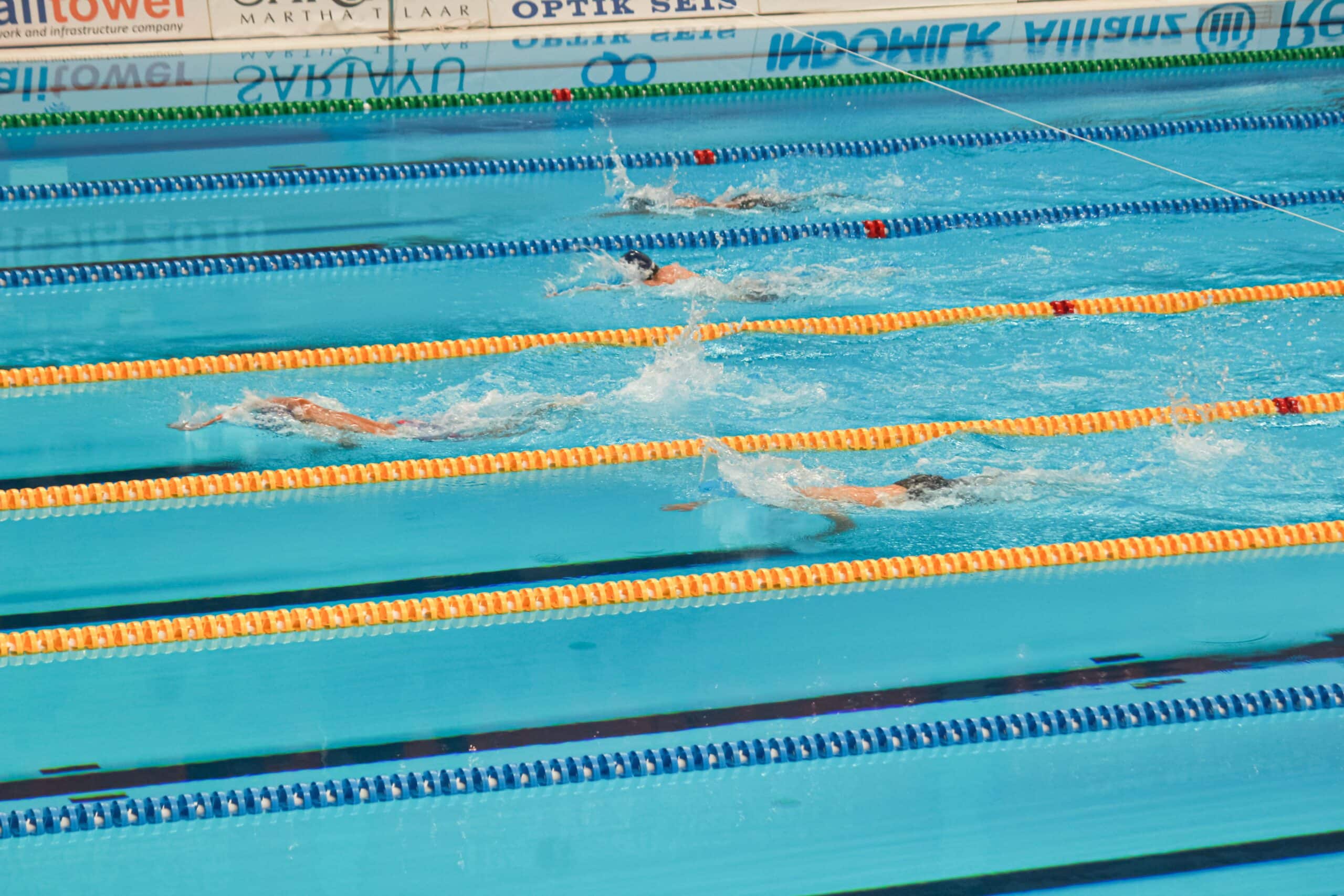
This volume is equivalent to five Olympic-sized pools evaporated for hardware safety. This physical scale matches the estimated financial burden. Standard corporate tariffs estimated $10 mn for compute resources for the 88-hour project. Even at a conservative $5 mn, the scientists spent nearly $1,000 per minute to solve the problem.
Why the Navier-Stokes equations matter
Understanding the Navier-Stokes equations helps explain why this mathematical proof is significant. These 19th-century equations describe how liquids and gases move. They form the mathematical basis for weather prediction, aircraft wing design, ocean current modelling, and human blood flow.
Engineers use approximations of these equations every day to design aeroplanes and weather models, but mathematicians haven’t proven that smooth, reliable solutions always exist.
While the algorithmic milestone partially resolves a Millennium Prize problem regarding fluid dynamics, the environmental footprint highlights the intense resource requirements behind modern machine learning. The Clay Mathematics Institute initially offered $1mn for this proof, though the developers have stated they will not claim the reward.
Read more: Halve Earth’s population by 2200 or lose the planet, academics suggest