PISA 2025: Uzbek school students rank best in science across CIS


Uzbekistan has achieved a historic milestone in the OECD’s Programme for International Student Assessment (PISA) 2025, recording a massive short-term performance increase globally.
The nation’s 15-year-olds demonstrated remarkable improvement and secured the highest science score within the Commonwealth of Independent States (CIS) region. Due to data inconsistencies, reading and mathematics scores for Uzbekistan were not reported, making science and digital learning the primary focus of this year’s assessment.
Uzbekistan’s mean science score reached 438 points. This represents an 83-point jump from the 2022 assessment, allowing the country to climb 32 places in the global ranking.
| Country | Mean science score |
| Uzbekistan | 438 |
| Moldova | 422 |
| Kazakhstan | 420 |
| Azerbaijan | 409 |
| Armenia | 369 |
| Kyrgyzstan | 363 |
| Dushanbe (Tajikistan) | 334 |
On a global scale, China claimed the absolute first place in science with a leading score of 597 points and also secured the top position worldwide in mathematics, while Singapore topped the global ranking.
Championing educational equity
The report underscores Uzbekistan’s success in building an inclusive and supportive educational framework where socio-economic background has a minimal impact on student achievement.
While the OECD average shows students from more advantaged families scoring 85 points higher in science than their less advantaged peers, Uzbekistan has maintained a lower performance gap of 22 points.
Furthermore, 22 per cent of disadvantaged students are considered ‘academically resilient’ – meaning they are in the top quartile of science performance nationally. Such inclusiveness is further enhanced by the presence of peer-to-peer tutoring in 98.4 per cent of schools and a very positive school discipline climate that scored 0.82 on the index.
Preparing for a digital future
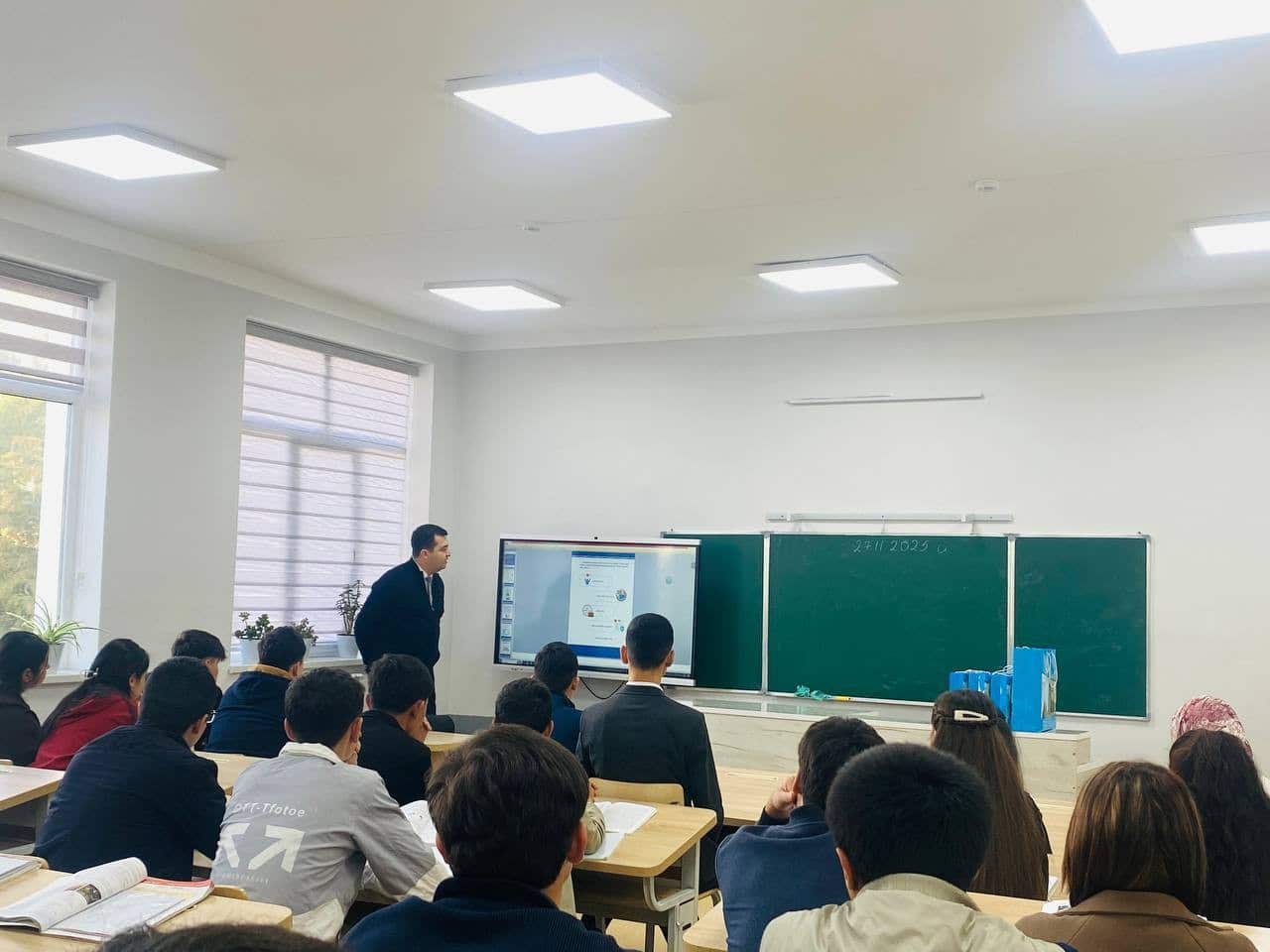
Uzbekistan is integrating technology into its classrooms, preparing students for an AI-driven landscape. The country scored 402.4 points in the new «Learning in the Digital World» domain, and its classroom practices demonstrate strong digital readiness.
80.6% of students are learning to critically evaluate AI-generated information in their lessons, which is important because active AI users with this skill perform best academically. The national school capacity to improve teaching with digital devices scored 0.93, which is very high.