Senate approves new Latin-based Uzbek alphabet

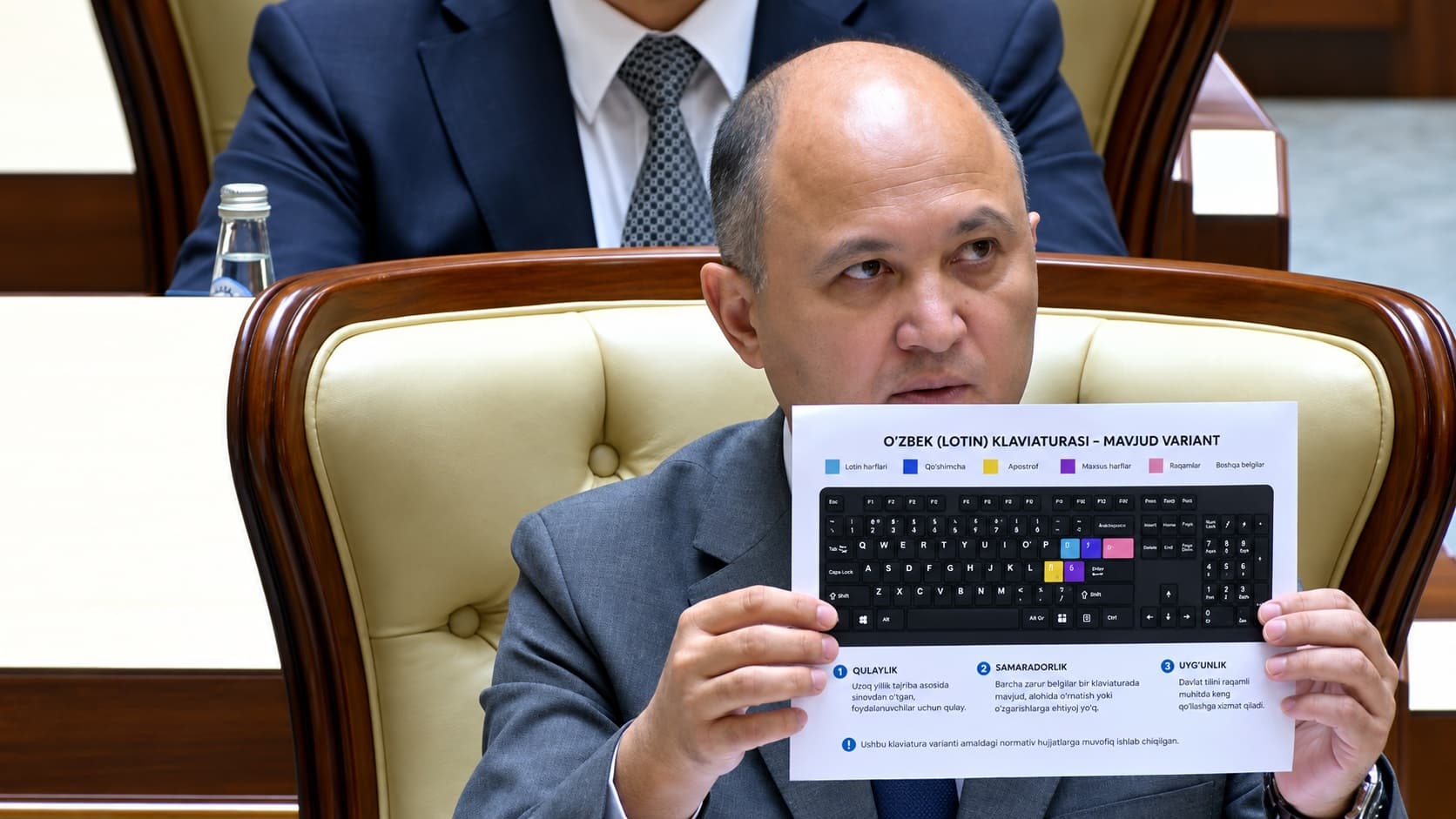
Uzbekistan’s Senate has approved amendments introducing a new version of the Uzbek Latin alphabet, replacing several existing letter combinations with individual characters and setting the stage for a gradual transition across schools, the media and state institutions.
The changes aim to address long-standing problems with typing and processing Uzbek text in digital systems.
The approved version will contain 28 letters and one apostrophe, replacing the current system of 26 letters alongside three letter combinations. The letters O‘, G‘, Sh and Ch will become Ö, Ğ, Ş and Ç, respectively.
The reform follows years of debate over Uzbekistan’s Latin-based writing system. The country formally adopted a Latin script in 1993, with amendments made in 1995.
The current system has continued to coexist with Cyrillic, while combinations such as sh and ch and the apostrophes used in o‘ and g‘ have created difficulties for digital text processing and spelling.
New alphabet to reshape education and media
The transition will extend beyond the alphabet itself. Uzbekistan plans to move school textbooks to the revised writing system between 2027 and 2031, according to the Ministry of Preschool and School Education. First-grade textbooks are expected to switch earlier.
Senator Husan Ermatov said Uzbekistan still had not completed its transition from Cyrillic to the existing Latin script and warned that introducing another version without a coordinated approach could leave the country with what he described as a risk of having «three alphabets» in use.
The change is also intended to address problems encountered by search engines, databases and artificial intelligence systems when Uzbek letters are represented through combinations of characters rather than single symbols. Supporters have argued that dedicated Unicode characters will make Uzbek text easier to process across digital platforms.
Read more: Oxford University introduces Uzbek and old Uzbek language courses
What will happen to Uzbek keyboards?
The proposed keyboard arrangement gives dedicated keys to the four new letters. One proposed layout assigns W to Ş, C to Ç, [ to Ö and ] to Ğ, allowing users to enter the characters without combining an existing letter with an apostrophe or using two-letter combinations.
Software developers have already begun preparing for the transition. The Savodxon project, for example, has developed a Windows keyboard that allows users to type the proposed characters on a standard QWERTY keyboard.
Read more: Google’s Gemini chatbot adds Uzbek language support