
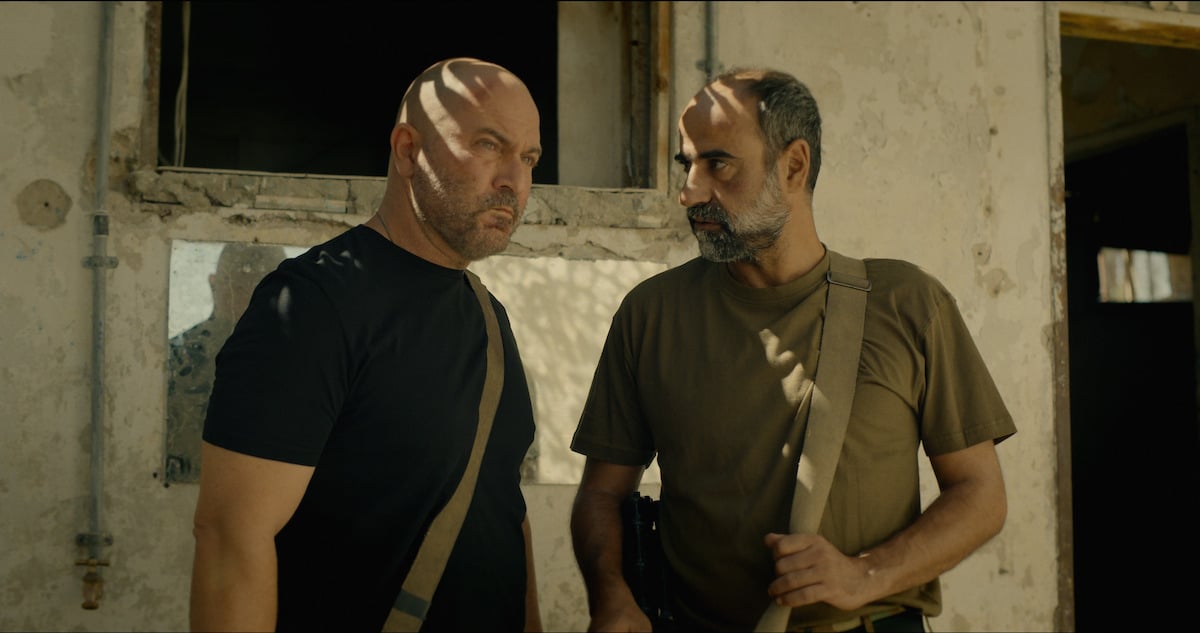
As Venice Film Festival rewarded NAZA for investigating the alleged machinery behind civilian deaths in Gaza, Netflix released a fifth season of Fauda built around Israel’s wounds from 7 October.
NAZA, directed by Israeli Oscar-winning filmmakers Yuval Abraham and Rachel Szor, received the Special Jury Prize at the 83rd Venice Film Festival following a reported 25-minute standing ovation. The stripped-back documentary draws on testimony from 24 Israeli intelligence officers and soldiers, who explain how the security forces selected targets for their hit list.
Fauda, meanwhile, returned to Netflix on 8 September with 11 new episodes of its fifth season. The series quickly climbed viewing charts across the Middle East, including reaching No. 1 in Lebanon, according to Ynet, citing third-party streaming tracker FlixPatrol.
That’s an extraordinary result for an Israeli war drama in a country that the Israeli Defence Forces (IDF) have consistently invaded.
The timing makes the two works difficult to separate. Yet the film is not quite a Palestinian story colliding with an Israeli one: both were made by Israelis. The real divide lies in where the camera is positioned, whose pain shapes the narrative, and what remains outside the frame.
Read more: «Unavoidably political» Venice Film Festival opens with Murdoch drama
NAZA watches the machinery, Fauda watches the wound
NAZA is an acronym used by the Hebrew military to refer to projected civilian casualties, or the people expected to die along with the designated target. Abraham and Szor’s film does not focus on the chaos of the battlefield; instead, it examines the systems, calculations, and permissions that enable an air strike.
Its anonymous witnesses, mostly filmed in silhouette on Tel Aviv rooftops, describe screens, databases, chains of command and decisions taken at a distance from the people who will live their consequences.
Among the documentary’s most explosive allegations is a whistleblower’s claim that a strike expected to kill as many as 500 civilians could be approved to eliminate a single Hamas figure.
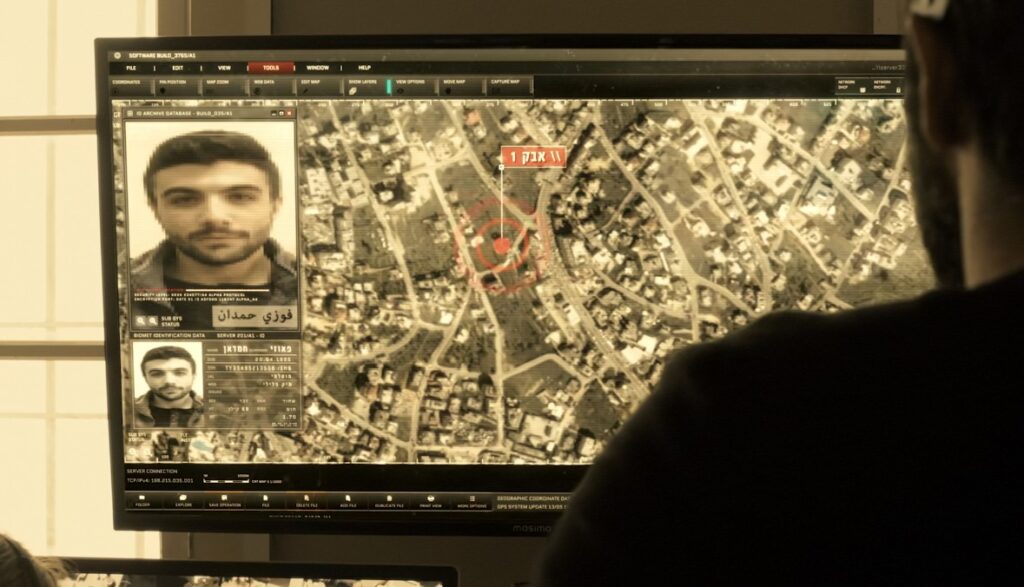
The IDF called that account «completely false», saying it had never approved an operation with anything approaching such an anticipated civilian toll. It also disputed the film’s depiction of AI in targeting and questioned whether the anonymous interviewees’ positions could be independently verified.
Read more: UN Commission says Israel committed genocide in Gaza
Where NAZA looks down a military chain of command, Fauda looks inward, towards the Israeli psyche after the Hamas-led attack on 7 October 2023.
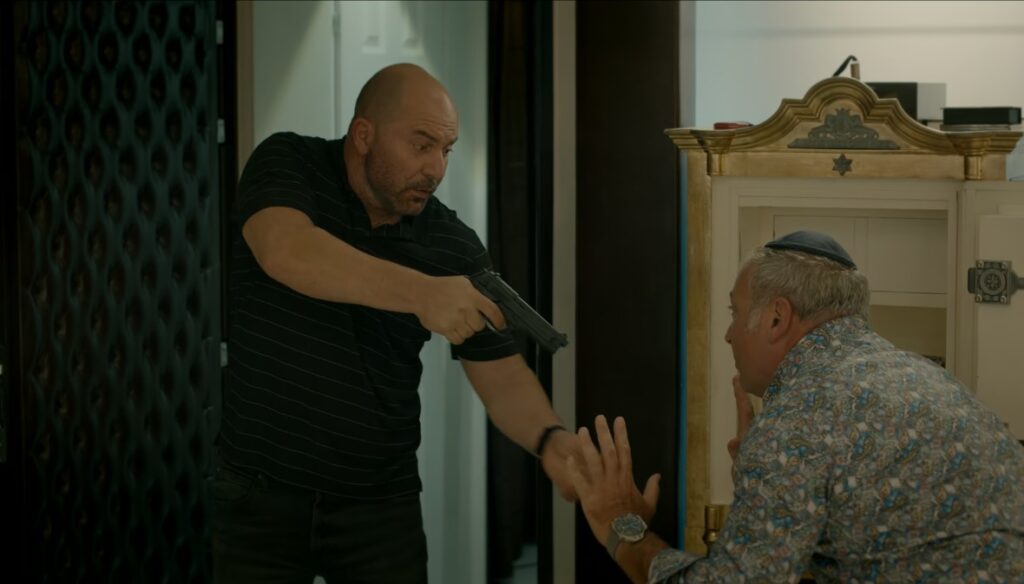
Creators Lior Raz and Avi Issacharoff abandoned much of their original plan for the fifth season after 7 October. The finished series recreates the terror at the Nova music festival, the attacks on homes and the helplessness of people waiting for rescue.
Raz’s protagonist Doron Kabilio is once again drawn into an off-the-books operation, beginning with a revenge mission in Marseille and expanding into the hunt for a Hamas cell preparing another major attack.
But this season is less interested in showing Doron as an unstoppable operative. He and his former commander Eli are damaged men, carrying the burden of having failed to save people when it mattered most.
The trauma is not scripted: Raz volunteered in southern Israel after 7 October 2023. Cast member Idan Amedi was seriously wounded in Gaza and does not appear this season. Matan Meir, a long-time member of the production team, was killed in Gaza in December 2023; the opening episode is dedicated to him.
Fauda translates to «chaos» in Arabic, and Raz and Issacharoff chose «Tha’r,» which means «blood revenge» or «blood feud,» as the definitive subtitle and guiding motif for this 11-episode season.
Two powerful works, two incomplete frames
Israeli voices in NAZA describe Palestinian civilians’ suffering and how an institution accepted their deaths. The most terrifying idea is that bureaucracy can make cruelty seem procedural.
Palestinian suffering is harder to see in Fauda. Although Hamas operatives are enemies, plotters, and a threat, the show rarely discusses their motives and personal histories. Martyrdom and revenge often explain everything.
The imbalance does not devalue the season artistically. Fauda is tense, sharp, and unusually willing to emotionally defeat its action heroes.
Read more: Israel cleared for 2026 Eurovision as four countries pull out