New People party leads Russia’s expat exit polls. How new are they?

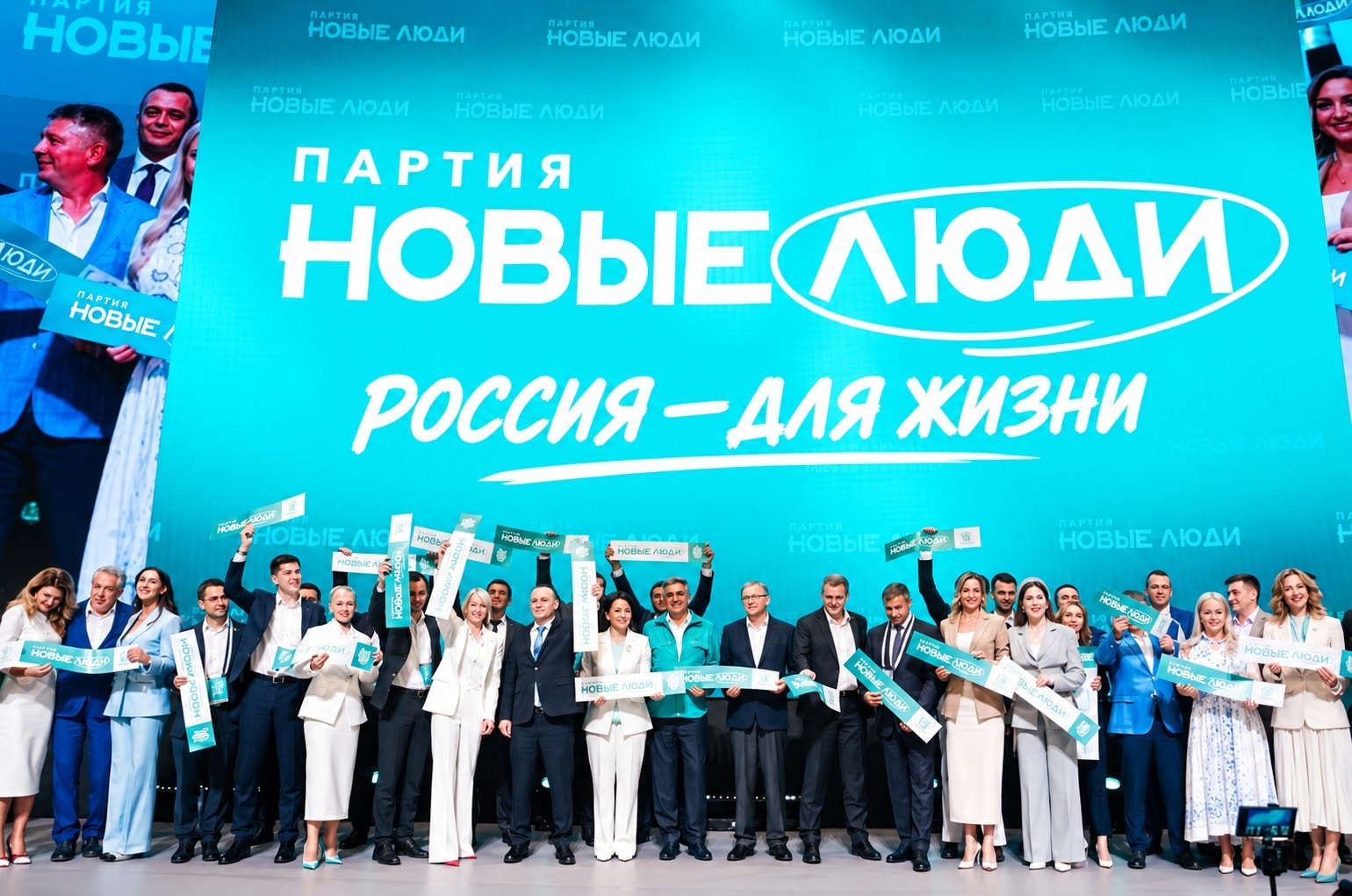
The ruling United Russia party has won the nationwide parliamentary elections, having secured over 57% of votes. Outside Russia, a pro-business, declaratively moderate New People party appeared to win almost two dozen expat constituencies. Who are they?
An overseas exit poll by independent civic movements Vesna and Progress collected 9,157 responses at 18 polling locations. New People led in all locations where results were published, with support ranging from 29% in Oslo, Norway, and 32% in Seoul, South Korea, to 56% in Yerevan, Armenia, 57% in The Hague, The Netherlands, and 63% in Belgrade, Serbia.
They also came first among respondents in the US, Germany, France, Spain and Argentina.
- What Russian exit polls show
- Who are the New People?
- What New People's other talking points are?
- New language, old topics
- New People’s take on Central Asians
What Russian exit polls show
That is dramatically different from the Russia-wide exit poll by VTsIOM. Its survey of 266,354 voters at 1,755 polling stations in 69 regions put:
- The ruling United Russia party at 49.4%;
- The left-wing Communist Party of the Russian Federation at 14.2%;
- The right-wing Liberal Democratic Party at 10.7%;
- and New People came fourth at 9.7%.
Notably, 44.9% of those approached declined to answer, according to VTsIOM.
These are not competing electorate measurements: VTsIOM, a state-owned polling organisation, serves clients from the Kremlin and federal ministries. Vesna and Progress, who oppose the Kremlin, openly supported the anti-war Yabloko party before its federal list was removed.
Read more: Ovechkin pops up in Russian election ad. Here are 5 other sports stars who colluded with politicians
While their poll is independent of the Russian state, it fails to meet impartiality criteria. Furthermore, the published dataset does not include Uzbekistan, Kazakhstan, Kyrgyzstan, Tajikistan or Turkmenistan, so the results cannot tell us how Russia’s sizeable expatriate communities in the region voted.
Who are the New People?
New People really are new by the standards of Russia’s parliamentary system. Cosmetics entrepreneur and Faberlic founder Alexei Nechaev established the party in 2020, according to business paper RBK. It won 5.32% in the 2021 Duma election, becoming the first new party in years to form a parliamentary faction.
Its most recognisable politicians include Nechaev himself, the 2024 presidential candidate Vladislav Davankov and former Yakutsk city mayor Sardana Avksentyeva. The outgoing Duma faction had 15 MPs.
The brand targets younger urban Russians, entrepreneurs, freelancers and people who dislike regulation without necessarily identifying with traditional liberal opposition.
What New People’s other talking points are?
New People’s own campaign material stresses internet freedom, small business and resistance to what it calls unnecessary bans. It highlights its votes against penalties involving VPN use, the increase in Russia’s upper military conscription age and tax collection without a court ruling.
By all means, New People are not an anti-war party: Reuters described the other parliamentary parties that remained on the federal ballot as broadly aligned with the Kremlin on the war, while Yabloko was the only registered party openly opposing it.
The overseas numbers should not be interpreted as ideological support for the party. One possible explanation is that after Yabloko was removed from the party ballot, New People became the closest available protest or reform vote for some Russians living abroad.
New language, old topics
The party’s new 12-point programme is considerably more specific than its name suggests.
New People propose a legal presumption of good faith for citizens and businesses, court approval before blocking websites, AI courts for simple civil disputes, tax holidays for technology startups, and stronger rights for freelancers and the self-employed.
Other topics, such as deregulation, entrepreneur protection, bureaucracy reduction, and monopoly reduction, have a longer history. Subsidised housing, state technology investment, and extensive family benefits give the platform a more interventionist edge.
More revealing is what the programme does not cover. Its eight pages contain no detailed policy on Ukraine, labour migration, Central Asia or the Eurasian Economic Union, of which three regional countries — Kazakhstan, Kyrgyzstan and Tajikistan — are members.
New People’s take on Central Asians
New People have been much more vocal about Central Asian migration outside their manifesto.
The party has championed a Migrant ID system which combines foreigners’ biometric data with information on criminal records, health insurance, language certificates, mobile numbers and even property and vehicles. Nechaev has said that registration with the authorities should be necessary to work, use public services or open a bank account, with migrants themselves helping pay for the system through fees.
Read more: Russia records 15% drop in Central Asian migrant worker arrivals
Davankov has gone further, saying Russia should reduce its dependence on cheap foreign labour and use automation to replace some jobs now done by migrants.
For Central Asia, that creates perhaps the most consequential contrast in the New People offer. Their manifesto promises fewer arbitrary restrictions and greater protection from the state for Russian citizens and businesses. In turn, their migration policy proposes considerably more state monitoring of foreigners.
Back in the region, that contrast is not a marginal issue: around 834,200 Uzbek citizens were working in Russia, according to recent official estimates, even though the number heading there for employment has fallen and labour migration has diversified towards Europe, Asia and the Gulf.