‘He will see a weakened superpower’: Analysts on Xi Jinping’s US visit

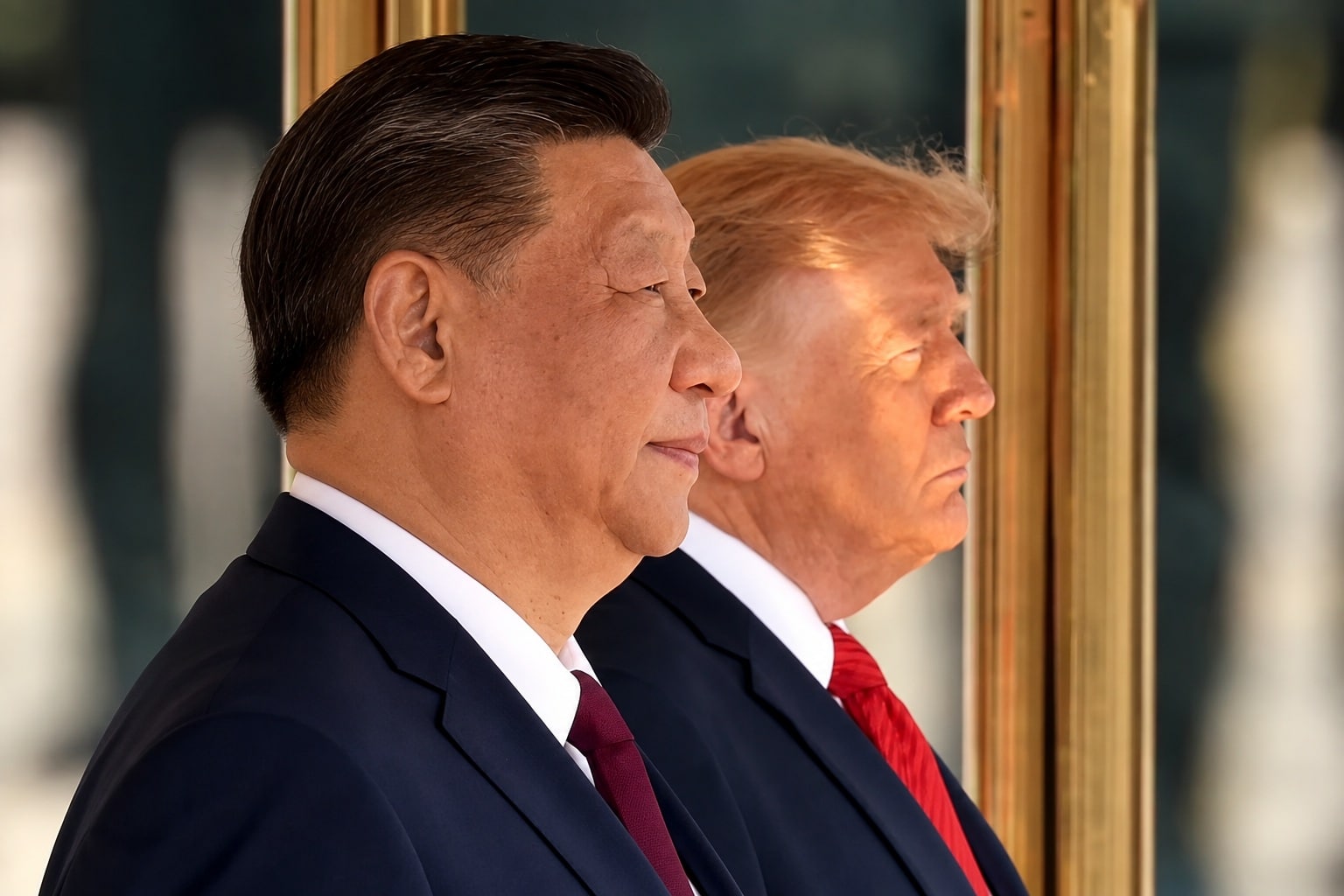
Across US media and foreign-policy think tanks, the dominant expectation for Xi Jinping’s Washington visit is a carefully managed pause in rivalry — with trade, rare earths, AI and Taiwan taking precedence over the state-dinner pageantry.
Xi will be in the United States from 23 to 25 September, with president Donald Trump personally greeting him at Joint Base Andrews before a formal White House state arrival on 24 September.
The Chinese leader’s visit to Washington is his first state visit since 2015 and the second Trump-Xi summit this year, following Trump’s visit to Beijing in May.
Analysts quoted below warn not to expect a sweeping deal from the summit.
- «The visit is likely to be heavy on optics and symbolism but light on substantive progress»
- «Xi arrives at the helm of a country that’s transformed»
- «The United States will not arrive at the summit in a position of strength»
- «The real audience is not in Beijing or Washington»
- «China has many weaknesses — but should not be underestimated»
- «Xi winds up patiently over years and then pops at the propitious moment»
«The visit is likely to be heavy on optics and symbolism but light on substantive progress»
The Centre for Strategic and International Studies says Xi’s central objective is to present China as an equal to the United States and portray his relationship with Trump as essential to bilateral stability. It also says Indo-Pacific states fear that a US-China rapprochement could narrow their room for manoeuvre and weaken their investment and trade diversification away from China.
«Despite deep mistrust between officials in both countries, Xi wants continued stability to focus on China’s lagging economy, while President Trump wants to concentrate on the conflict with Iran as well as the upcoming midterm elections.»
Read more: Trump and Xi seal one-year trade pact as US cuts China tariffs to 47%
«Xi arrives at the helm of a country that’s transformed»
CNN noted that China’s rare-earth dominance now gives Beijing meaningful leverage over Washington. It also identifies Taiwan as one of the summit’s most sensitive issues, particularly whether the island or US arms sales become part of a wider bargain between Trump and Xi.
«Throughout policy circles in Beijing, there is a consensus: gone are the days when the US could make one-directional demands of China.»
«The United States will not arrive at the summit in a position of strength»
The Atlantic Council experts believed a formal AI agreement remains distant because technological rivalry leaves little room for common guardrails. On trade, they expect a narrow agenda rather than a major breakthrough, while China’s domestic economic weakness gives Xi an incentive to preserve US demand for Chinese exports.
«The Trump administration has overplayed its hand in the trade war with China: it imposed and then lifted export controls on chips that Beijing nevertheless declined to buy, and launched a war with Iran that has exposed vulnerabilities in the US military while driving up energy prices.»
Read more: Up to four Trump-Xi meetings expected in 2026 as US-China relations stabilise
«The real audience is not in Beijing or Washington»
The National Interest argues that allies will judge the summit less by ceremony than by whether Washington reassures them their interests remain central.
«The meeting’s strategic significance will be determined less by what it means for the bilateral US-China relationship than by what it signals to America’s allies. This reflects a fundamental shift in the international security environment. For most of the post-Cold War period, US-China relations could largely be understood through a bilateral lens. Today, they cannot.»
«China has many weaknesses — but should not be underestimated»
Chatham House opined that China’s property slump, debt problems and weak household demand coexist with formidable industrial strength in EVs, batteries, solar, drones and telecommunications.
«Xi will see a weakened superpower: with historically unprecedented deficit spending and a burgeoning debt of $40 trillion. Washington now spends more on interest on its debt than on its military. Its dire finances are raising its borrowing costs and jeopardising the future of the US dollar as the global reserve currency.»
Read more: Kazakhstan faces US pressure over membership in China’s WAICO
«Xi winds up patiently over years and then pops at the propitious moment»
The Atlantic’s article argues that Trump places considerable weight on his personal relationship with Xi, while Xi’s record suggests he is far less sentimental about personal rapport.
«At the time of Trump’s first term, Xi was accustomed to playing politics as a quiet, intense poker match, in which the Chinese leader read the opposing players and considered his cards with characteristic subtlety. Trump, meanwhile, approached politics and policymaking more like a gambler on a hot streak at one of the casinos he owned.»