Central Asia joins Afghanistan talks in Moscow as tensions over Pakistani strikes soar

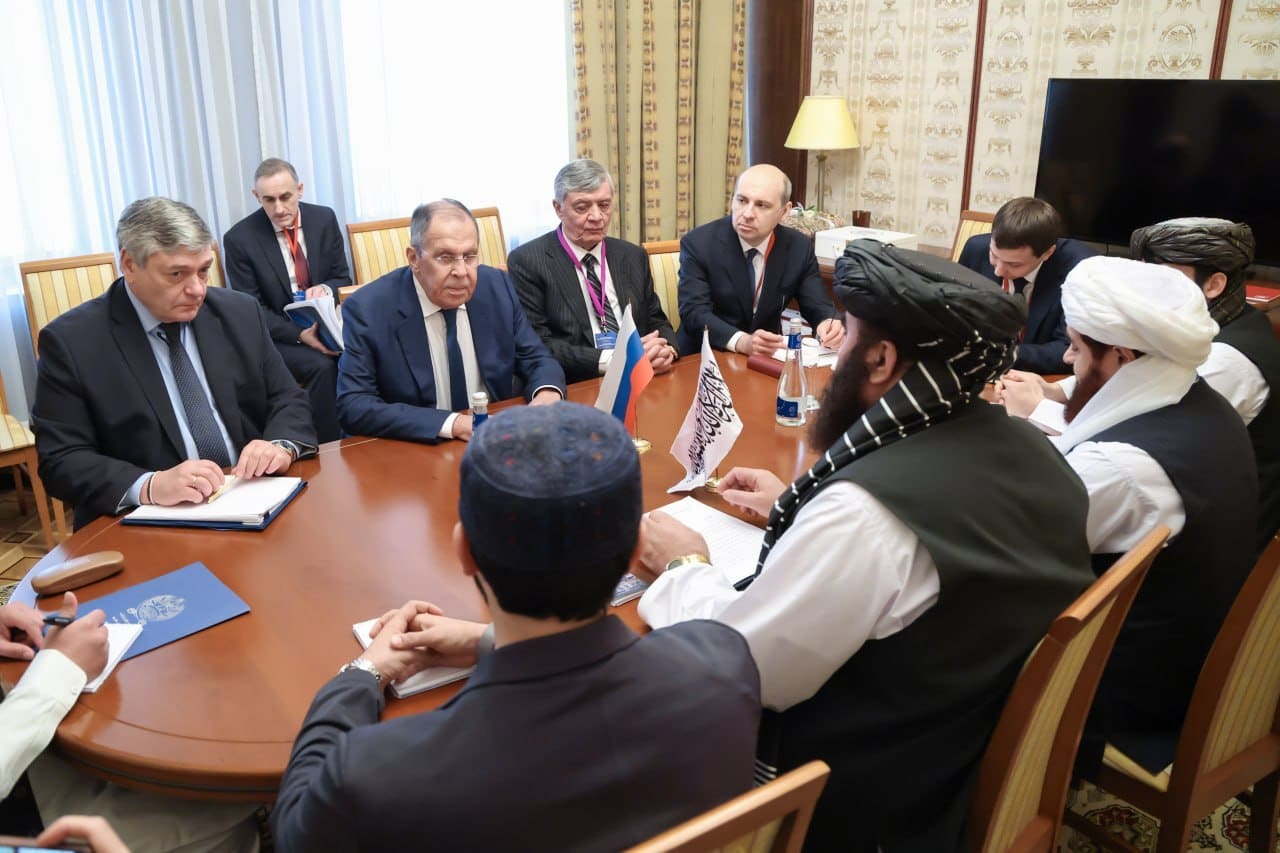
Russia hosts talks on Afghanistan this Monday, 5 October, on the heels of renewed Pakistani airstrikes that killed numerous Afghan civilians.
The eighth Moscow Format meeting involved senior officials from Afghanistan, Pakistan, Russia, China, India, Iran, Kazakhstan, Kyrgyzstan, Tajikistan, and Uzbekistan.
Afghan Foreign Minister Amir Khan Muttaqi is leading Kabul’s delegation and will hold separate talks with Russian Foreign Minister Sergey Lavrov. Pakistan sends its Afghanistan envoy, Mohammad Sadiq, and its ambassador to Kabul.
Russia’s special envoy for Afghanistan, Zamir Kabulov, said the participants would discuss the confrontation alongside the meeting’s broader agenda of economic cooperation, counterterrorism and drug trafficking.
«All participants in the Moscow Format would like this conflict to end and normal relations to be established,» Kabulov said ahead of the meeting, as quoted by Kommersant.
Our explainer: Why Pakistan and Afghan Taliban keep fighting — and how they became foes
UN confirms civilian deaths
The meeting occurs as a long-running dispute over militant sanctuaries has resulted in another round of cross-border attacks. Islamabad accuses the Taliban government of sheltering armed groups involved in attacks in Pakistan. Kabul, for its part, denies the allegations and condemns Pakistan’s strikes as violations of its sovereignty.
The UN Assistance Mission in Afghanistan, UNAMA, said airstrikes in Kunar and Helmand provinces on 1 October killed at least 10 civilians, most of them children, and injured nine others. It called for de-escalation, dialogue and measures to prevent further civilian harm.
Read also: Pakistan launches new airstrikes in Afghanistan, kills nine
Why Afghanistan and Pakistan are fighting
At the centre of the dispute is Tehreek-e-Taliban Pakistan, or TTP, an armed movement that fights against the Pakistani state. It is separate from Afghanistan’s ruling Taliban, although the two movements have longstanding ideological and personal ties.
Pakistan initially welcomed the Afghan Taliban’s return to power in 2021. Relations deteriorated as attacks inside Pakistan increased, and Islamabad accused Kabul of providing militant groups with sanctuary and support. The Taliban government denies those accusations.
Trade also on the agenda
Economic cooperation is another declared priority of Monday’s talks. For Uzbekistan, that includes efforts to establish rail connections through Afghanistan to Pakistan’s ports.
Kazakhstan, Uzbekistan and the UAE recently agreed to study a proposed railway corridor connecting the region with Pakistan through Afghanistan. The work will examine infrastructure requirements, economic feasibility and possible financing. No final route, construction timetable or project cost has been announced.
Kabulov said ahead of the meeting that plans to develop Afghanistan as a regional transport crossroads depended on restoring normal relations with Pakistan.